It’s easy to assume that all hybrid cars work in the same way, by using a battery and an electric motor to help out the engine and reduce your fuel usage.
This is broadly true, but there are actually four main types of hybrid vehicle – and understanding the differences, as well as the strengths and weaknesses of each, will be key to what your next car might be.
The picture is sometimes made even more complex by the terminology used by manufacturers. Some refer to hybrids as “self-charging”, while others claim enormous efficiency figures – like hundreds of miles per gallon – without quite making it clear how such a feat is achieved.
Plugging in often and using the engine sparingly is the answer, but we’ll come back to that later. For now, here’s a brief explanation of what each of the four types of hybrid car is, how they work – and, crucially, what that means for you.
Mild hybrid
The technology driving mild hybrids, or mild hybrid electric vehicles (MHEV), goes all the way back to the original Toyota Prius from its global launch in 2000. This type of car is predominantly driven by a petrol or diesel engine, but with a small electric motor and a battery ready to help out in certain situations.
This includes assisting the engine during acceleration, and operating the car’s start-stop function in traffic. Mild hybrids cannot be plugged in, and instead charge their battery solely with regenerative braking, where a generator harvests energy during coasting and braking then feeds it back into the battery.
Mild hybrids have much smaller batteries than other electrified vehicles, measuring around 0.5-1kWh. That’s tiny compared to the 10-30kWh battery packs of most PHEVs, and circa 40-100kWh of fully electric cars. They also operate at just 48 volts, a far lower voltage than a 400V PHEV or 800V EV.
Mild hybrids cannot drive on electric power alone, but instead the battery constantly deploys and charges as you drive – helping the engine whenever it can, raising efficiency and lowering fuel consumption.
Examples of mild hybrid cars
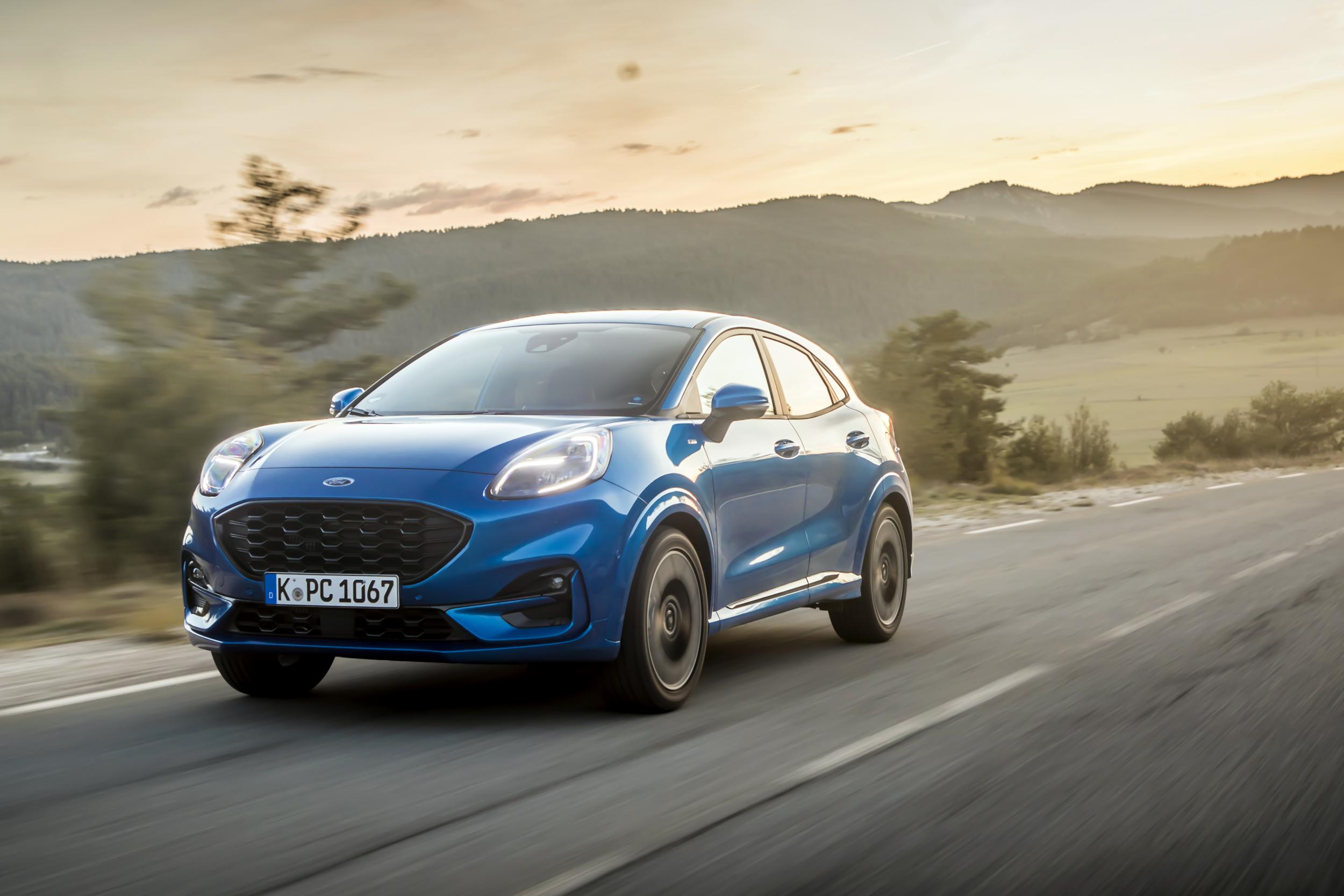
- Ford Puma
- Volkswagen Passat
- BMW 5 Series
Pros of mild hybrids
- Cheapest form of electrified car
- No need to plug in
- Can improve MPG
- Feels most like a normal petrol or diesel car
Cons of mild hybrids
- Can’t drive on electricity alone
- Real-world fuel savings are limited
- Few tax benefits
Full hybrid
A full hybrid electric vehicle, or FHEV, differs from a mild hybrid because it has a larger battery and can drive on electric power alone for short amounts of time.
Best for city driving, full hybrids automatically top up their battery when braking and coasting – and by using the engine – then deploy that electricity to take over from the engine when conditions allow. Full hybrids tend to offer just a couple of miles of electric-only driving, but instead of using this all up in one go, they intelligently switch between the engine, motor, and a combination of both to deliver maximum efficiency.
Full hybrids tend to shut their engine off in slow, stop-start traffic, letting the electric motor do the work. They also do this when cruising at higher speed, so if you ease off the accelerator on a motorway, you might see the engine shut down and the electric motor take over. These cars are often described as self-charging hybrids, since they have no plug socket and instead use regenerative braking (and the engine as a generator) to fill the battery.
Examples of full hybrid cars
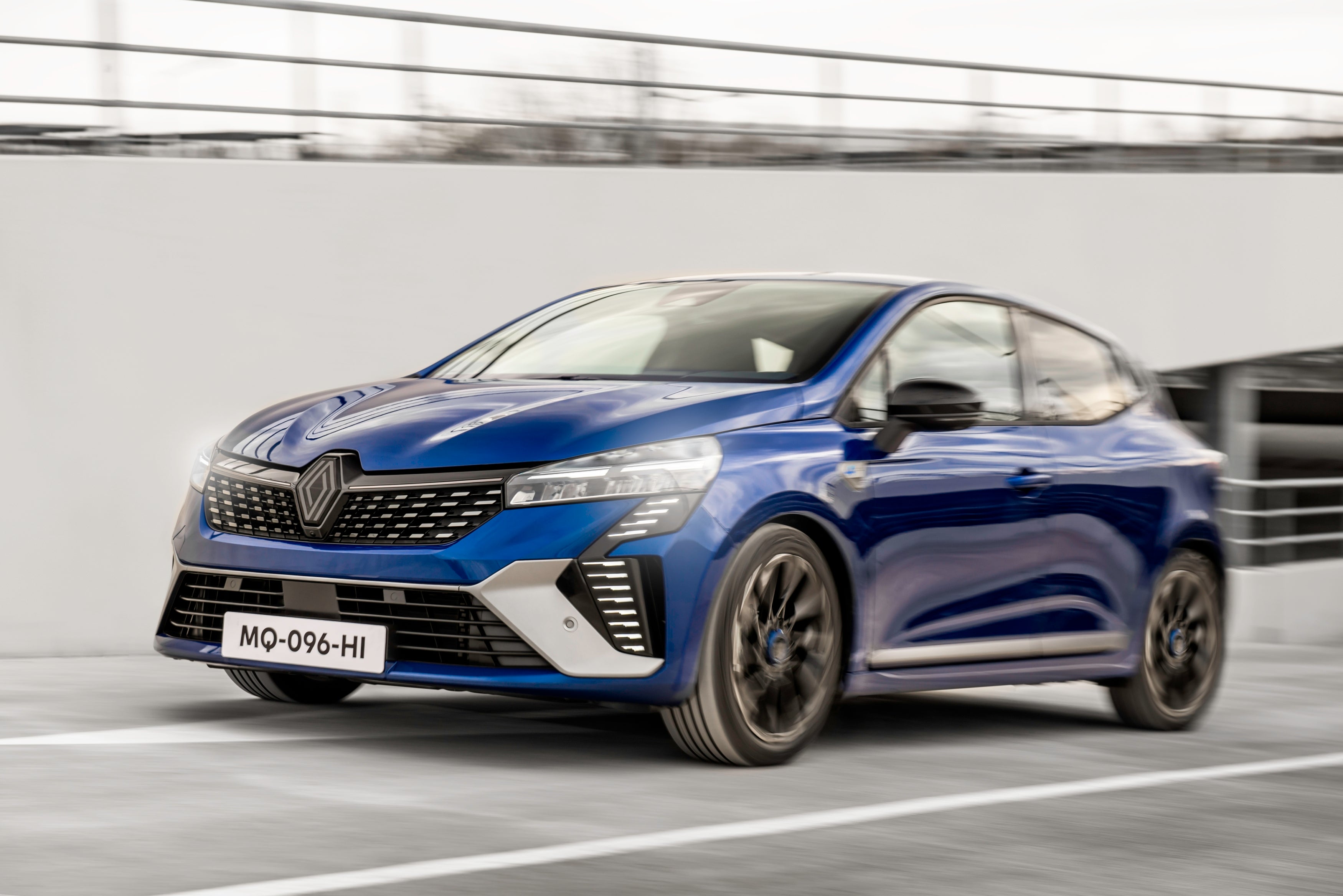
- Renault Clio E-Tech
- Honda Civic
- Toyota Corolla
Pros of full hybrids
- Low fuel consumption in slow traffic
- No need to plug in for charge
- Can act as an EV for brief periods
Cons of full hybrids
- Limited electric-only range (and often speed too)
- Higher price compared to equivalent non-hybrids
- Battery can reduce boot space in some models
Plug-in hybrid (PHEV)
.jpg)
Now for what’s likely the best-known type of hybrid. The plug-in hybrid, or PHEV, is a car that combines an engine, a battery and an electric motor (or sometimes several) to deliver two entirely different personalities.
PHEVs can drive just like a fully-electric car, keeping their engine switched off and, in the case of the latest generation, cover dozens of miles on a charge, and even drive at motorway speeds without calling on the engine.
A key feature of PHEVs is how they can be plugged in, just like an EV. Their batteries can be filled up using a domestic three-pin socket, a home wallbox charger like those used by fully-electric cars, and public charge stations too. Charge rates are generally lower than EVs, but because PHEV batteries are relatively small – in the region of 10-30kWh – they fill up quickly.
Most PHEVs offer several drive modes, including one that lets the car automatically juggle between the engine, battery and both for maximum efficiency, and one that uses just the battery. Charge up at night, use that mode on your commute, and in some modern PHEVs you’ll potentially not burn a single drop of petrol for the entire working week.
Other common PHEV functions include modes for holding a certain amount of battery charge (because you plan to use it later, in city traffic for example), and for using the engine to charge the battery while driving – but that tends to put a serious dent in your average MPG.
Often, the best approach is to charge frequently (cheaply overnight, or perhaps at your workplace) then leave the hybrid system to automatically work out what’s best on each journey. Driving long distances with a flat battery, which is then essentially a dead weight, won’t help your fuel bill.
Examples of PHEV cars
- BYD Seal 6 DM-i
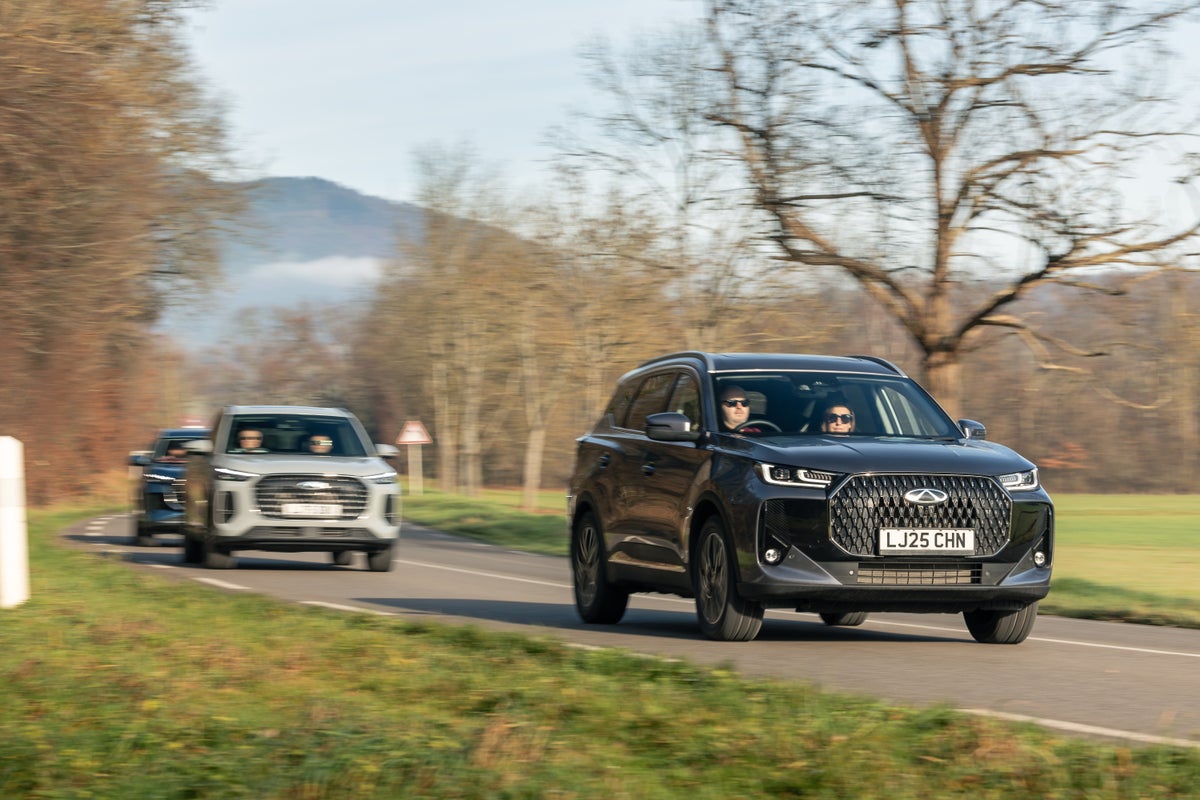
- Chery Tiggo 8 Super Hybrid
- BMW 530e
Pros of PHEVs
- Potential for dozens of electric miles per charge
- Uses same chargers as an EV
- Engine and fuel tank mean no range anxiety
- Electrification can boost performance
Cons of PHEVs
- Requires regular charging
- Can be more expensive to buy
- Often heavier than equivalent petrol or mild hybrid
- Larger battery can rob boot space
Range-extender hybrid (EREV, REX or REEV)

Lastly, a type of hybrid you might not be familiar with – but which has the potential to become more popular in the years ahead. These work like normal fully-electric cars, but also have a small engine for topping up the battery while you drive.
The engine doesn’t send power to the wheels. Instead, it acts as a generator, creating electricity which is sent to the battery or directly to the motors as required. The benefit is you get a car that drives like a normal EV – and produces no emissions when the engine isn’t running – but which has a much larger range when the engine is called on to help out.
This type of hybrid might be ringing a distant, BMW-shaped bell in the back of your gear. The electric i3 was available with a range-extender option for part of its life, incorporating a tiny, 650cc engine that came from a scooter and produced just 34 horsepower, but which added a chunk of range to BMW’s quirky little EV.
Fast forward to 2026, and Lotus has added a range-extender engine to its Eletre electric SUV, creating the Eletre X. This car pairs a 70kWh battery and two electric motors with a 2l turbocharged engine. Range is a claimed 218 miles from the battery alone, but jumps to over 750 miles when the engine is drinking from the 50l petrol tank. As well as feeding a generator to charge the battery, the engine can also help drive the front wheels when cruising on the motorway.
Although relatively unheard of in the UK and Europe – and mostly unavailable here for now – Chinese brands like BYD, Yangwang and Leapmotor are making range-extender hybrids. Volkswagen also has plans for range-extenders, having shown off its ID Era concept in 2025 and confirmed such hybrids will be coming to Europe.
Examples of range-extender hybrid cars
- Mazda MX-30 R-EV
- Lotus Eletre X
- Leapmotor C10 Ultra Hybrid
Pros of range-extender hybrids
- Removes EV range anxiety
- Lower emissions than regular petrol/diesel cars
- Smaller battery than equivalent EV
Cons of range-extender hybrids
- Local emissions reduced, not removed
- Regulation classes them as PHEVs, not EVs
- Added complexity