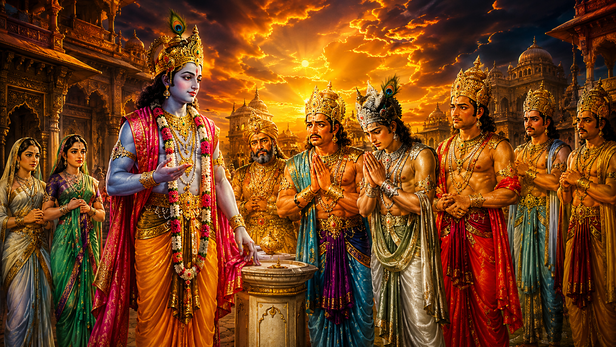
We often read the Mahabharata as a story of victory and defeat. Pandavas win. Kauravas lose. End of story or so it seems. But what if that is not the real message? What if Kurukshetra was never designed to create a winner… but to reveal something far more unsettling? Because when you look closely, every victory feels heavy, every loss feels meaningful, and every character walks away changed not victorious in the traditional sense, but transformed in a way that questions the very idea of winning itself.
The Illusion of Victory
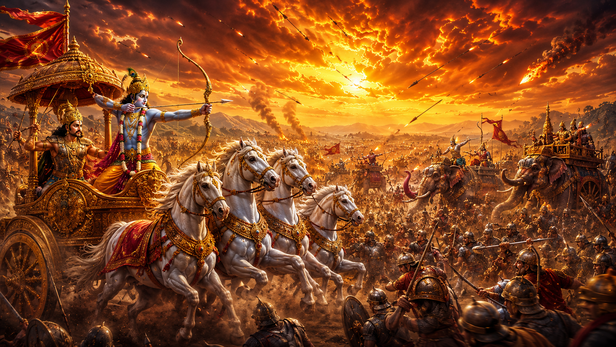
The war in Mahabharata appears simple on the surface: one side wins, the other loses. But if you look deeper, the so-called winners carry unbearable loss. Families are destroyed, emotions shattered, and relationships erased forever. Even the Pandavas, who sit on the throne, are not peaceful or fully satisfied. Their victory is mixed with grief and moral confusion. This creates a powerful idea: maybe the war was never meant to produce happiness or success. Instead, it shows that victory without emotional and moral balance is incomplete and deeply hollow.
When Dharma Became the Real Battlefield
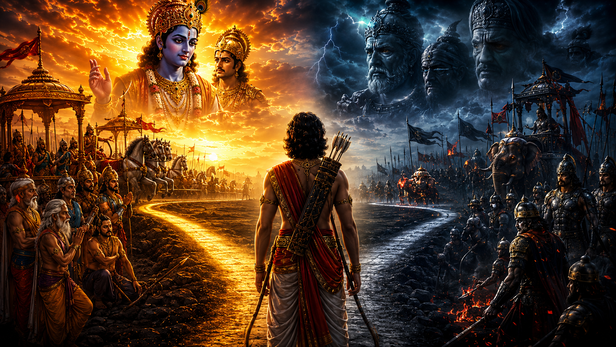
In Mahabharata, the real conflict was not just between two families, but between choices. Dharma right action keeps shifting depending on situation, pressure, and relationships. Every warrior faces inner conflict more intense than external war. Arjuna hesitates not because of fear, but because he sees moral confusion everywhere. This shows the battlefield was symbolic. It was never about defeating enemies alone. It was about understanding responsibility when every option feels painful. The war becomes a mirror of human decision-making, where doing the “right thing” is more difficult than winning or losing.
Krishna’s Hidden Purpose
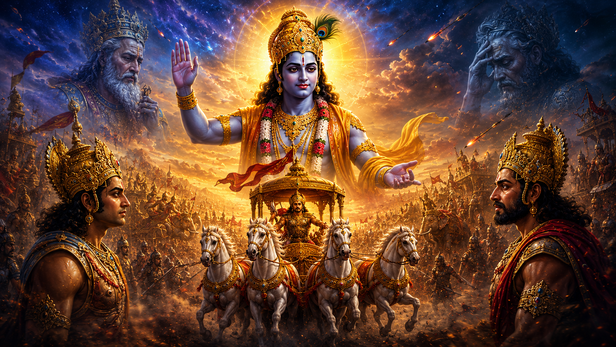
Krishna never fights the war directly, yet he influences every turning point. But his goal is not simply victory for the Pandavas. His role feels deeper like guiding humanity toward awareness. He pushes Arjuna to act, not to win, but to fulfill duty regardless of emotional attachment. His teachings suggest that life is not about outcomes alone. It is about action without illusion. Through Krishna, Mahabharata reveals a radical idea: sometimes the purpose of events is not success, but awakening. Even war becomes a tool for inner realization, not just external achievement.
The Heavy Cost of Winning
After the war ends, there is no celebration that feels complete. The earth is silent, filled with loss. The Pandavas gain the kingdom, but not peace. Mothers lose sons, wives lose husbands, and entire generations vanish. Even victory feels like punishment in disguise. Yudhishthira struggles with guilt. Arjuna carries emotional burden. The crown becomes heavier than expected. This reveals a powerful truth: winning can sometimes demand more than losing. In Mahabharata, victory is not an end it is a responsibility filled with sorrow, reflection, and irreversible consequences.
The Lesson the Modern World Ignores
In today’s world, we are obsessed with winning success, competition, and comparison. But Mahabharata challenges that mindset completely. It suggests that life is not designed to reward victory alone. It is designed to test understanding, balance, and awareness. Every choice has unseen consequences, and every success carries hidden cost. The real lesson is not how to win more, but how to act with clarity when winning is not the only outcome. True wisdom lies in seeing beyond results and understanding purpose. That is the message that still feels strikingly relevant today.
Mahabharata Message for Today
Maybe the Mahabharata was never focused on who finally wins the war. Instead, it gently pushes us to question something deeper within ourselves. What do we truly lose while chasing victory? And even after achieving success, who are we becoming in the process? Every character in the epic is changed not just by battle, but by the emotional and moral weight of their choices. Some gain power but lose peace. Others lose everything but gain understanding. In the end, the story suggests that victory is temporary, but the transformation it brings inside a person lasts far longer than the war itself.
Unlock insightful tips and inspiration on personal growth, productivity, and well-being. Stay motivated and updated with the latest at My Life XP.
Frequently Asked Questions (FAQs)
1. Was the Mahabharata war really about winning?Not entirely. On the surface it looks like a battle for the throne, but deeper reading shows it was about dharma, choices, and the consequences of human actions.
2. Why do people say winning wasn’t the real point?
Because even the “winners” like the Pandavas did not gain lasting peace. Their victory came with emotional loss, guilt, and heavy responsibility.
3. What is the main message of Mahabharata?
The epic focuses on duty, moral confusion, and the complexity of right and wrong, rather than simple victory or defeat.
4. How does Krishna fit into this idea?
Krishna guides action without attachment to results, teaching that purpose is more important than outcome.
5. What lesson does it give for modern life?
It reminds us that success without peace or awareness is incomplete, and real growth comes from inner transformation, not just external wins.