Imagine if your favorite hoodie had +5 confidence. Or if your old sneakers gave +3 agility but -2 style. It sounds absurd, right? But what if life actually worked like that? What if everything you wore, touched, or used came with visible stats that influenced how you performed in the world?
It might seem like a fantasy, but the concept is surprisingly relatable. With the growing influence of gamification, virtual logic is seeping into everyday life. Even platforms like Leon casino Australia are embracing game-inspired systems to make digital experiences feel more dynamic and rewarding. So, what would happen if this approach extended to everything around us?
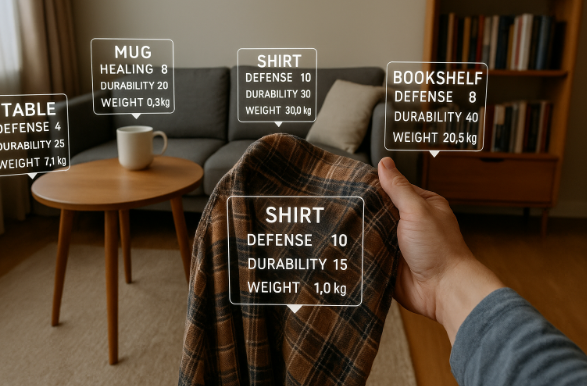
Welcome to Stat-Boosted Reality
Let’s take it further.
You wake up and put on your “Productivity Socks” (+4 focus, -1 warmth). You grab your “Caffeinated Mug of Momentum” (+3 speed, +1 risk-taking). Your office chair? It's legendary tier: +10 posture, +2 decision-making.
You step outside. Every object you encounter either helps or hinders your day. Crossing the street with headphones? -2 awareness, +3 vibe. Entering a crowded room? Your “Social Armor” determines how many awkward silences you'll survive.
Sounds ridiculous? Maybe. But it's also strangely helpful. Turning real life into a game—where actions and tools carry weight—might make us see value in the smallest things.
Why This Idea Works
Adding stats to everyday objects changes how we think. It makes invisible value visible. Suddenly, your stained hoodie isn't just comfy—it’s “maxed out in comfort” but has low “social charm.” It helps you rest but maybe not impress.
Here’s why this gamified perspective is useful:
- It encourages intentional choices: You pick items not just for looks, but for function and outcome.
- It adds fun to boring routines: Commuting isn’t just a drag—it’s a stealth mission with gear bonuses.
- It helps you reflect: What do you really need for a good day—energy, calm, presence?
Stat logic simplifies priorities.
The New Shopping Mindset
Now picture online shopping in a stat-based world. You’re not just browsing T-shirts. You’re scanning for boosts. That black tee? +2 charisma, +1 comfort. The red one? -1 subtlety, +3 boldness.
Retailers already lean into this logic—think “performance shoes” or “energy drinks.” Adding visible “bonuses” to products makes them easier to categorize and compare.
Soon, websites might let you filter clothes by:
- Focus boost
- Chill mode
- Romantic confidence
- Creative spark
And guess what? We already do this, but without numbers. We say, “This outfit makes me feel powerful.” A stat-based framework just makes it more fun.
How This Could Actually Work
Stat tagging might start off playfully, but it can have practical layers. Here's how it could be implemented:
- User-based feedback loops: Shoppers rate items not only by comfort or fit, but by how they felt emotionally or mentally.
- AI prediction tools: Wear this combo three times? The system tags it as high in “presentation power” for interviews.
- Contextual item ratings: Glasses you wear for reading? +3 clarity, +1 nostalgia. But for clubbing? -5 nightlife appeal.
Of course, none of these stats are “real.” But they’re based on how people feel—and that’s the power of emotional tagging.
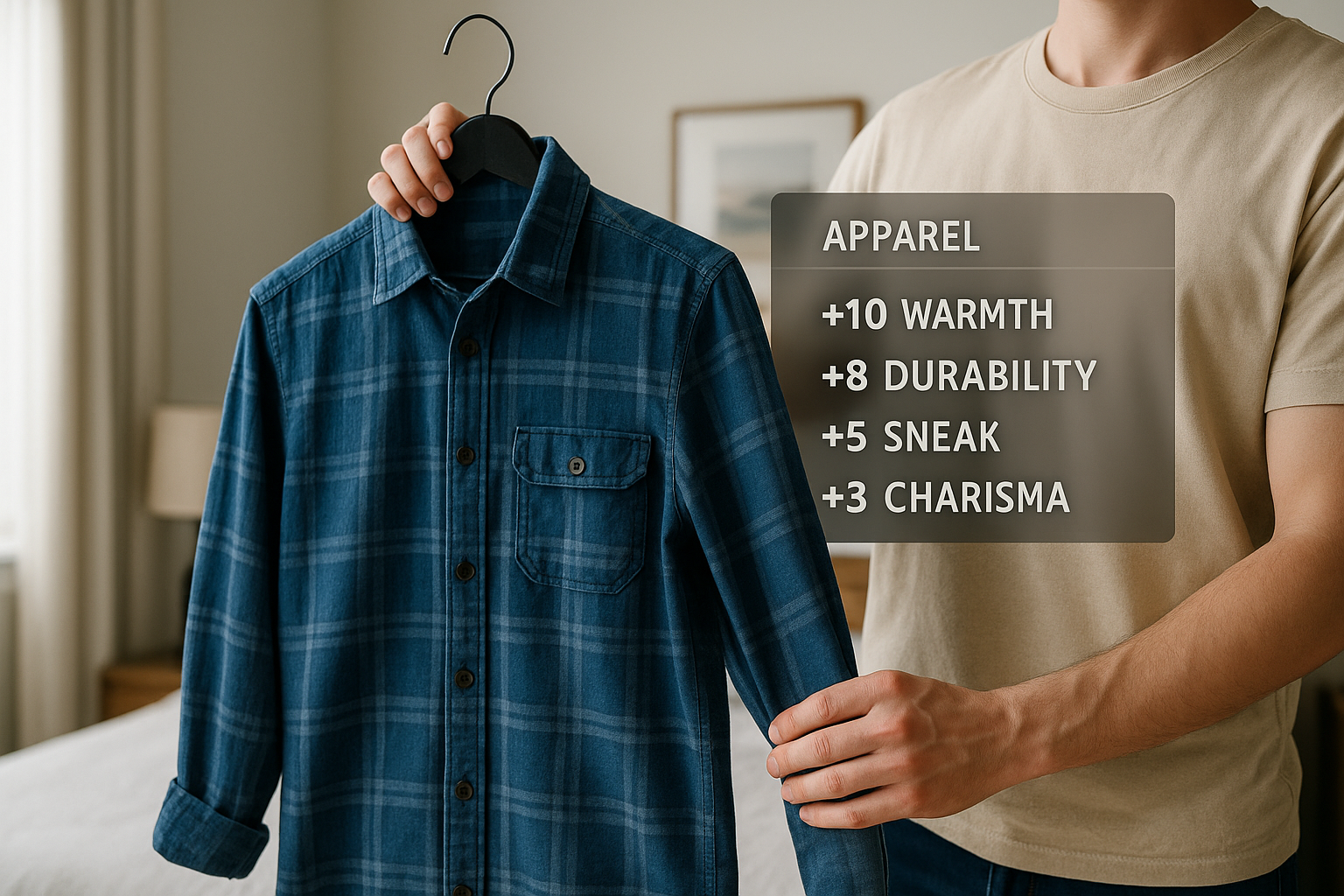
Gaming the Day
What happens when you live each day with this game logic? You build “loadouts” for each situation:
- Monday Workday Loadout: Blazer (+3 credibility), blue light glasses (+2 energy), black coffee (+4 reaction speed)
- Date Night Loadout: Leather jacket (+5 confidence), cologne (+2 charm), lucky socks (+1 outcome optimism)
- Rainy Day Loadout: Oversized hoodie (+3 comfort), playlist (+2 resilience), herbal tea (+1 reflection)
The day becomes an adventure. You face bosses (difficult meetings). You collect XP (finishing tasks). You avoid debuffs (toxic conversations). And your “gear” supports your journey.
Why It Feels So Good
This mindset works because it turns abstract feelings into a game with rules. And people love games. We love progress. We love symbols that tell stories. A dented water bottle isn’t trash—it’s a +2 hydration relic with survival history.
Also, it helps you deal with setbacks. Bad day? You didn’t fail—you just wore the wrong gear. You’ll change it tomorrow. It’s not the end. It’s a respawn.
Where Entertainment Meets This Concept
We’re already seeing this crossover. Fitness apps give badges. Finance tools reward “saving streaks.” Even gambling platforms like Leon casino Australia lean into quests, levels, and progressive bonuses to make the user experience feel game-like and evolving.
People want to feel like they’re progressing. They want their effort to mean something. Stats give weight to action.
Final Thoughts
Gamifying real life doesn’t mean we stop taking it seriously. It just means we see it through a more colorful lens. A helpful lens. One where objects, routines, and decisions have context and character.
So next time you grab your jacket, ask yourself: Is this +1 chill or +3 go-getter?
Because maybe, just maybe, the secret to living a more playful, energized, and intentional life isn’t adding more things—but looking at the things you already have… like a player choosing the perfect gear for the next level.