The Heartland. It's that place political pundits talk about but seldom visit.
It's an ambiguous term for the middle of the U.S., sometimes dismissed as "flyover" country.
A new report released Thursday defines exactly what part of the U.S. comprises the Heartland and how it is faring compared with the rest of the country. It takes in 19 states including Missouri and Illinois. St. Louis sits smack dab in the middle.
The findings tell us many things we already know: Those living in the Heartland weigh more and make less. They use more opioids and fewer of them are college educated. And a larger percentage of them do not have access to high-speed internet compared to rest of the country.
But when it comes to agriculture, the Heartland shines, producing more than the 31 other states and leading the country in exports. And the cost of living is significantly less, especially when it comes to housing.
The report was created by The Brookings Institution and the Walton Family Foundation for the latter's Heartland Summit, which is running Thursday through Sunday in Bentonville, Ark.
"The Heartland is the epicenter of many of America's biggest challenges," explains the foundation in promoting the summit. "Too many well meaning conversations about the future of the Heartland take place outside of it. It's time we bring the conversation home."
The summit will bring together "350 business and thought leaders united by a shared sense of purpose _ to make the middle of the country the best it can be," organizers said.
The four-day event features actress Jennifer Garner, an ambassador for Save the Children; author Deepak Chopra; former New Orleans Mayor Mitch Landrieu; and Academy Award-winning artist and activist Common.
The report's authors say having a firm definition of the Heartland helps get the right players into the same room so substantial, sustainable improvements can be made.
"Two years after a national election that experts say pitted the 'American Heartland' against the rest of the nation, pinning the region down has only gotten trickier," said the authors, three from Brookings and one from Walton. "In fact, the proliferation of 'red vs. blue' maps and apocalyptic talk show punditry has, if anything, made it hard for the region to get a clear sense of itself and how it is doing."
Robert Maxim, a senior research analyst at Brookings, said that after studying 26 socioeconomic markers, the main takeaway was that the Heartland was doing better than portrayed in East Coast-driven media reports and by politicians. For example, wages are increasing and poverty is decreasing.
But painting with a broad brush such a large expanse of the country _ roughly one third of the U.S. land mass _ does not provide a completely accurate picture. For example, the Dakotas have added population as quickly as non-Midwestern states, and the job market is strong in agricultural areas such as Nebraska and Kansas. But areas such as Louisiana, Mississippi and Alabama continue to struggle with poverty, obesity and addiction.
As for the St. Louis region, situated in the heart of the Heartland, it is doing better than the rest of the designated area when it comes to wages and poverty. It also has a slightly higher employment rate.
In addition to Missouri and Illinois, the Heartland includes Alabama, Arkansas, Indiana, Iowa, Kansas, Kentucky, Louisiana, Michigan, Minnesota, Mississippi, Nebraska, North Dakota, Ohio, Oklahoma, South Dakota, Tennessee and Wisconsin.
"The national debate purveys conflicting, distorted images that often portray the region either as a vast 'flyover' interior where jobs have disappeared and anger is pervasive, or else as an idyllic expanse of wheat fields, reviving factories and midsized cities filled with startups," Maxim and the other researchers said in explaining their report. "But what Heartland change makers really need now is a more clarifying look at the region."
The Heartland has a population of nearly 99 million people, compared with almost 227 million in the rest of the country. Its economy is bigger than Germany's and slightly smaller than Japan's.
In the Heartland, those who have a bachelor's degree stands at 28 percent, compared with just under 33 percent outside the country's middle. Of the top 100 research universities, only 25 of them are in the Heartland.
In middle America, more than 32 percent of adults are obese. In the rest of the country it is just more than 28 percent. In the Heartland, there are 81 opioid prescriptions for every 100 residents, significantly higher than the 60 for every 100 residents elsewhere.
"I would note that perhaps the scariest portion of that statistic is that four Heartland states _ Alabama, Arkansas, Tennessee and Mississippi _ have more than 100 opioid prescriptions for every 100 people, led by Alabama at 121," Maxim said. "In other words, there are more opioid prescriptions in those four states than there are people."
Maxim noted that although it was likely that there were people with more than one prescription, which skews the outcome, "the numbers are quite disturbing."
Health drivers were included in the study because they can affect job productivity and health care costs, and be deterrents to investing or expanding in a region, said Maxim and another study author, Mark Muro.
The finding that most surprised the two was the disparity in venture capital spending. The investment in the Heartland accounts for only 5.2 percent of that spending.
"We had to look at those numbers twice. We didn't believe it," Maxim said. And if Chicago was not included in the Heartland number, the percentage would be even lower, he said. The overwhelming percentage of investment remains in New York and California. And while venture capital spending has shown a decrease since 2010 in the Heartland while growing elsewhere, Missouri is bucking that trend.
The Post-Dispatch reported this month that Missouri companies attracted $365 million of venture capital in the third quarter, the largest 90-day sum going back to 1995.
While, in general, the Heartland is doing OK, it has to move more quickly if it wants to catch up or surpass other parts of the country, Muro said. Particularly, he said, it must focus on increasing its college-educated workforce and reducing obesity and opioid addiction. These fall into an area the researchers refer to as human capital.
"For the moment, the region looks pretty good, but one wonders about the shadow of these human capital challenges on the future," Muro said. "With house values being accessible, there is an opportunity for migration and investment, but the human capital issues are pushing against that."
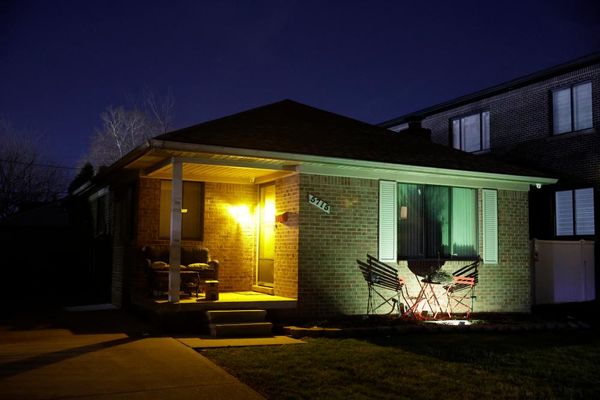
The average home price in the Heartland is $135,000, compared with $215,000 elsewhere.
Organizers of the summit say the focus on the Heartland is for the greater good of the U.S.
"As a region and a nation, we are strongest when we are most connected to each other and the economy," the Walton Family Foundation said in promoting this weekend's summit. "The Heartland and the coasts need each other, not only to survive, but to thrive."