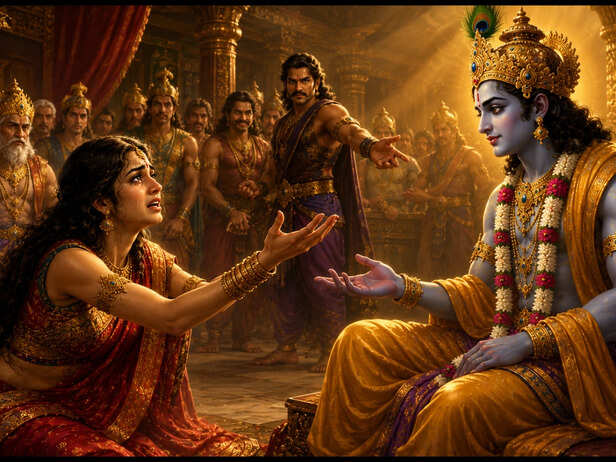
Draupadi’s life was filled with moments that could make anyone ask one painful question: “Why me?” She faced humiliation, injustice, loss and a war that changed the course of the Mahabharata. Yet, according to the powerful dialogue attributed to her and Shri Krishna, her suffering was not presented as the end of her story.
The deeper message was far more surprising. Krishna reminded Draupadi that she was not born simply to continue an old system. She was part of a generation that had to create a new order.
The Question Behind Draupadi’s Pain
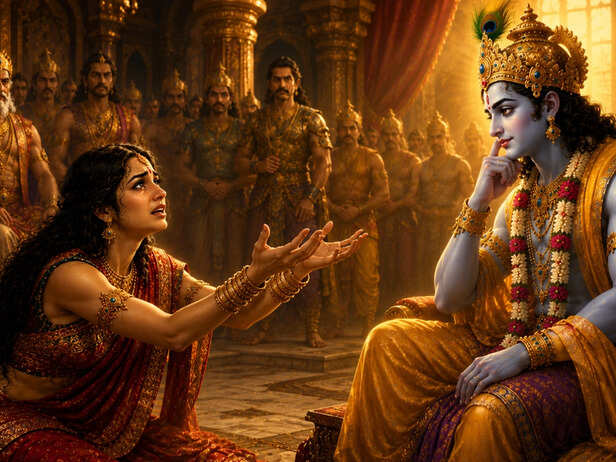
Draupadi had every reason to question her destiny. She was born into royalty, yet her life became deeply connected with conflict and injustice. Her humiliation in the Kuru court became one of the most remembered moments of the Mahabharata. In such a situation, asking Krishna why she had to suffer feels deeply human. The important part is that Krishna’s response does not simply comfort her. Instead, it gives her suffering a larger meaning connected with the future.
Krishna’s Answer Was Bigger Than Comfort
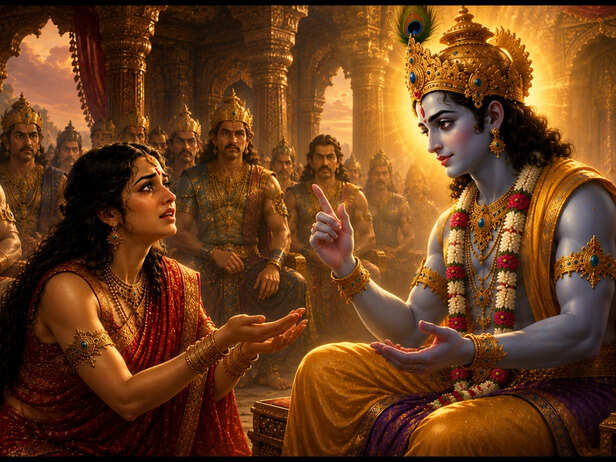
The message attributed to Krishna suggests that Draupadi was not meant to simply inherit an old world and accept everything as it was. She represented change. The old system had created injustice, silence and imbalance, and someone had to challenge it. This makes her character especially powerful. Krishna’s answer turns her pain into responsibility. Instead of seeing herself only as a victim of circumstances, Draupadi could see that her actions had the power to influence what came next.
She Was Not Born to Repeat the Past
One of the strongest ideas in this story is that every generation faces a choice. It can protect the mistakes of the past, or it can build something better. Draupadi’s story reflects this struggle. She did not quietly accept the injustice around her. Her questions, anger and determination became part of the larger conflict that eventually changed the political order of the Mahabharata. This is why her character continues to attract attention even centuries later. Her story is not only about suffering. It is also about refusing to accept injustice as normal.
Why Her Story Still Feels Relevant
Today, people also face moments when life feels unfair. Someone may work hard and still fail. Someone may remain honest and still be treated badly. Someone may wonder why difficult situations keep appearing in their life. Draupadi’s story offers a different way to look at such moments. It does not mean that every painful event has a predetermined purpose. Instead, it reminds us that our response can shape what happens next. Sometimes, the most important question is not why life changed, but what we choose to do after it changes.
The Hidden Lesson in Krishna’s Words
The deeper lesson is about purpose and responsibility. Krishna does not appear to tell Draupadi that her suffering should simply be accepted. Rather, the message points toward action. When an existing system becomes unjust, change requires people willing to question it. Draupadi becomes important because she refuses to remain silent. Her courage becomes part of a much larger transformation. This makes the dialogue powerful even today. A difficult beginning does not always decide the ending. Sometimes, a person’s response to injustice becomes the beginning of something much bigger.
What Draupadi’s Story Teaches Us
The story leaves us with a simple but powerful thought. We may not always choose the circumstances we are born into, but we can choose how we respond to them. Draupadi could have been remembered only for the suffering she endured. Instead, she became one of the strongest figures of the Mahabharata. Her story reminds us that asking “Why me?” is natural, but eventually we must ask another question: “What will I do now?” That shift from helplessness to action is perhaps the most enduring lesson hidden within her conversation with Krishna.
Unlock insightful tips and inspiration on personal growth, productivity, and well-being. Stay motivated and updated with the latest at My Life XP