
- Breame's Sensify brakes are entirely electric
- It has announced the first car is being produced with them
- We don't yet know which car brand will use them
The biggest car revolution in years, or a serious safety downgrade? That’s what drivers are wondering after parts manufacturer Brembo announced its all-electric Sensify braking-by-wire system is going into a production car — saying goodbye to traditional hydraulic brakes entirely.
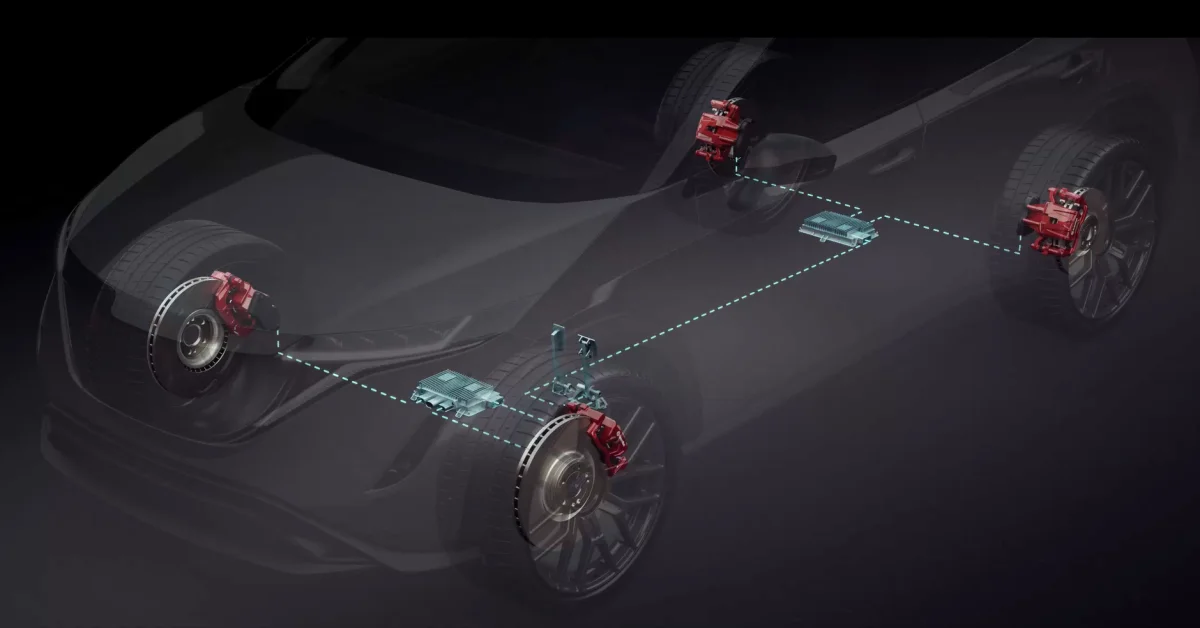
Breame says Sensify uses data from the vehicle, the driver, and the environment (such as road conditions) to apply an appropriate braking force to each wheel independently. According to the company the system is safer as it gives a greater sense of stability compared to traditional braking, and leads to a smoother braking experience — eliminating the panic that causes nervous passengers to reach for a grip handle according to Breame.
It also argues this system is easier to maintain because it doesn’t require brake fluid, and it’s apparently easier on your tires.
While it is currently remaining tight-lipped on who is behind the vehicle that will deploy Sensify — though we know it has worked with Tesla, Ferrari, and Maserati — the product page FAQ stresses the usefulness of Sensify in autonomous vehicles, especially in a fleet that can share driving data between multiple vehicles, so I wouldn’t be surprised if Sensify’s customer has major autonomous vehicle ambitions.
An accident waiting to happen?
Seeing this story on my timeline today my initial reaction matched that of many online: “Surely that can’t be safe.”
While our tech is normally incredibly reliable we’ve all experienced glitches. Normally these problems are a minor frustration for a few minutes, but if there’s an electrical hiccup when you’re trying to brake the consequences could be much more of a problem.
But as I spent a bit of time looking into things, an electrical breaking system isn’t quite as scary as it first seems.
Firstly, a lot of us probably don’t use our hydraulic brakes that often in 2026 — hybrid and electric vehicles still have them, but also offer regenerative braking which slows the car while also recharging it, and a lot of drivers rely on that for their daily journeys.
Secondly it’s not like hydraulic brakes are perfect. They wear down parts, and can also fail or have reduced effectiveness if not looked after properly.
As for safety, Breame has been working on this tech for years, with it first being presented five years ago in 2021, so I’d hope it would have various kinks worked out by now. Plus cars are heavily regulated. If a manufacturer wants to deploy this tech they’re likely confident that it has the necessary fail safes to convince regulators it’s roadworthy.
As with all new tech we’ll need to wait and see how the rollout progresses, but if things go how Breame hopes, 2026 could be the beginning of the end for hydraulic brakes.