What a tangled web spiders weave in Jerusalem enchanted forest
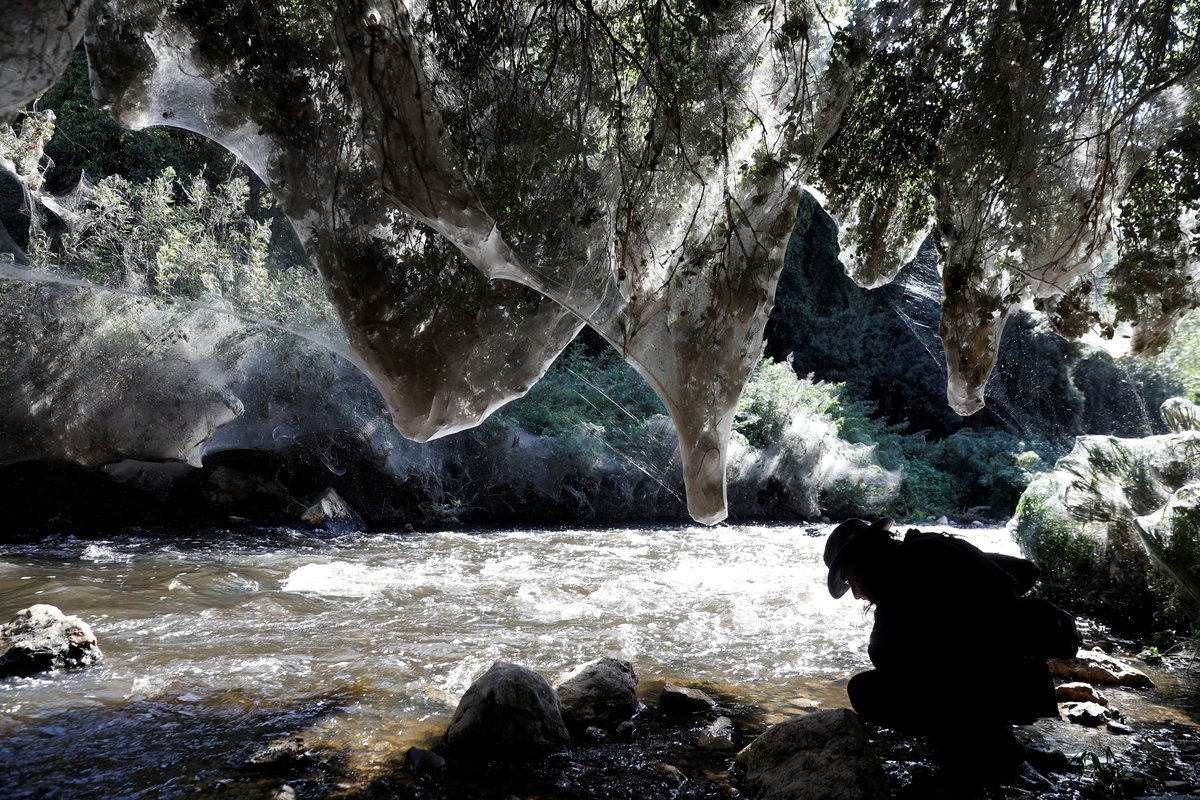
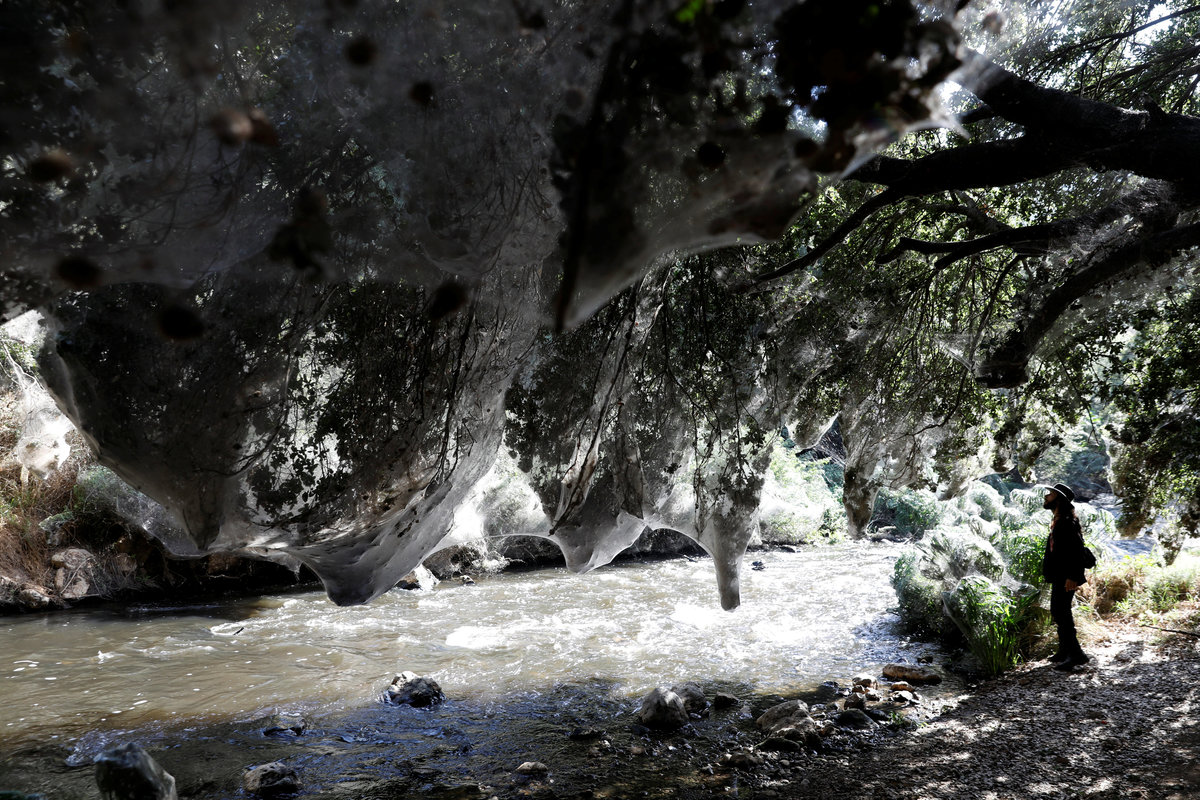
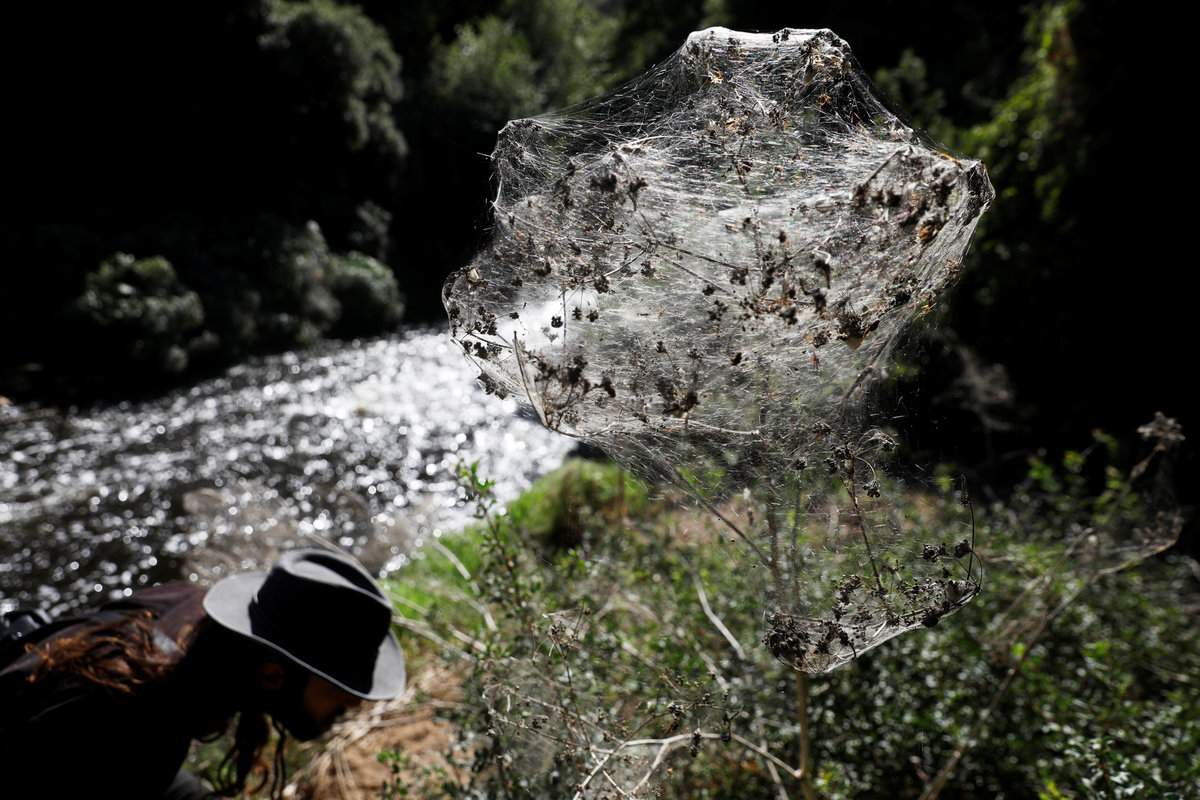
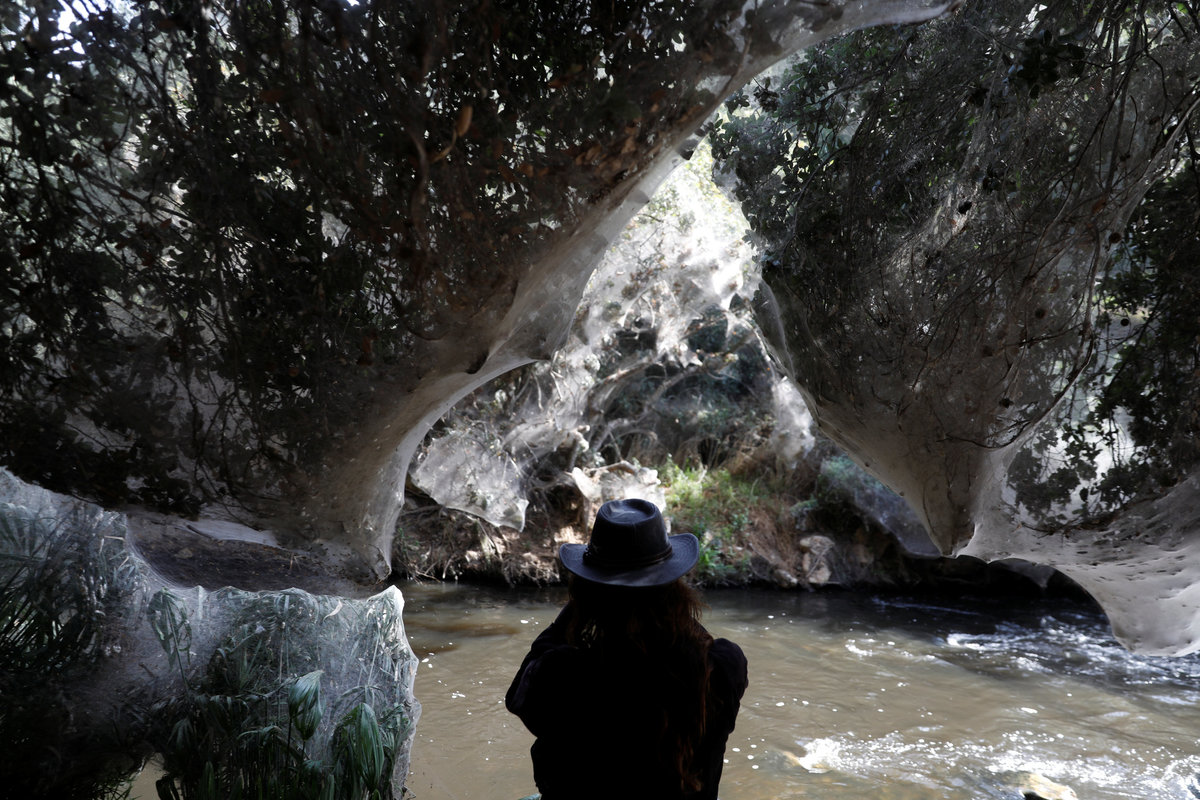
Igor Armicach, a doctoral student at Hebrew University's Arachnid Collection, looks onto giant spider webs, spun by long-jawed spiders (Tetragnatha), covering sections of the vegetation along the Soreq creek bank, near Jerusalem November 7, 2017. REUTERS/Ronen Zvulun
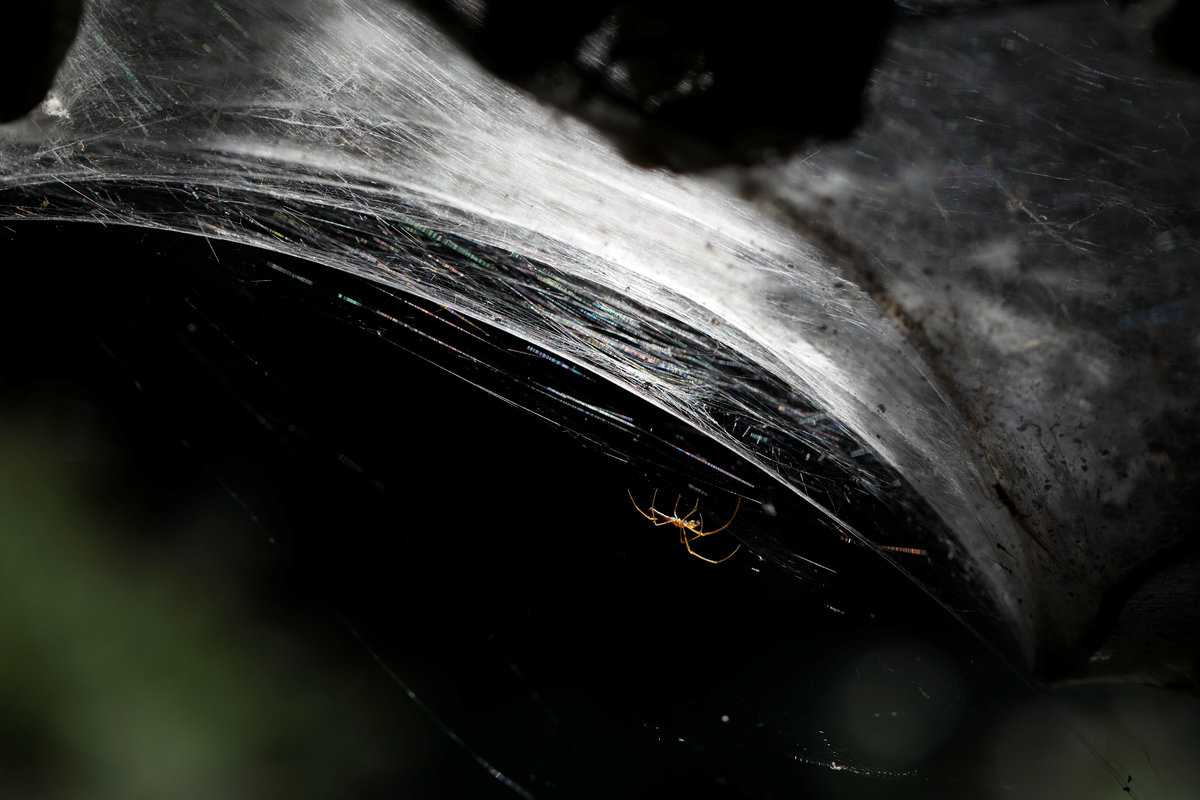
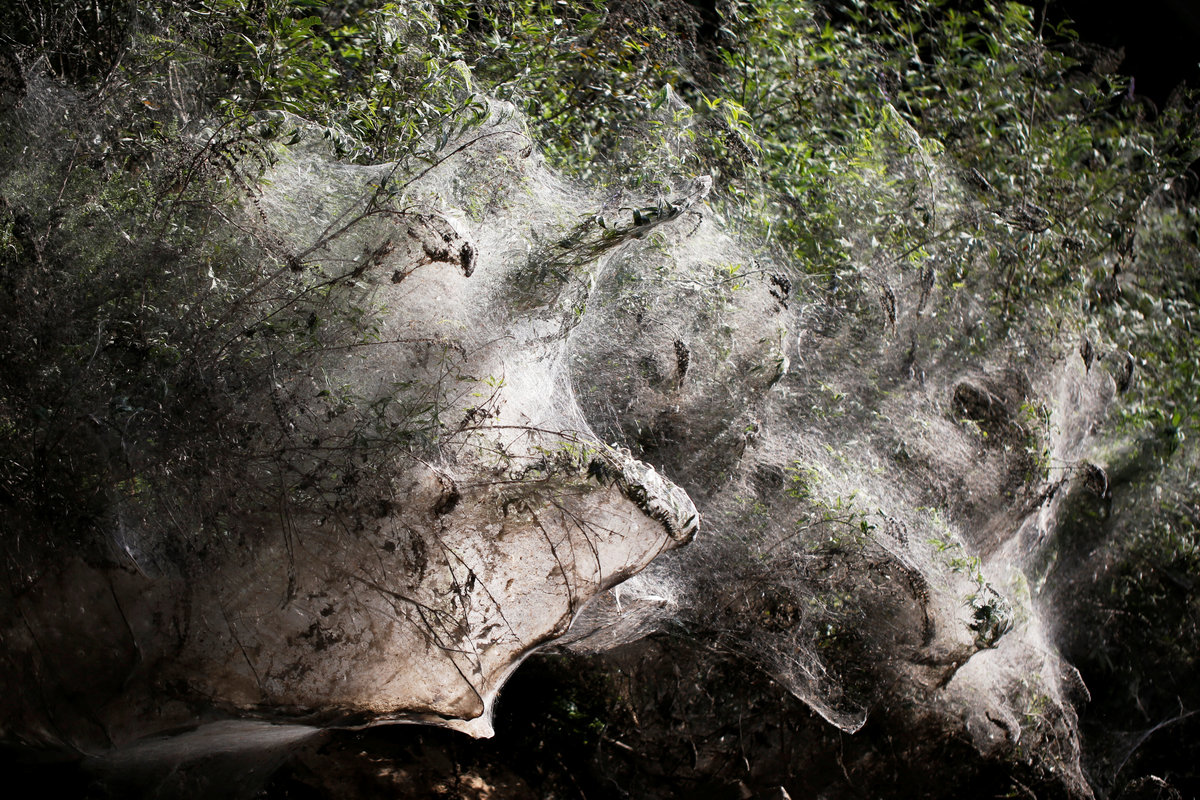
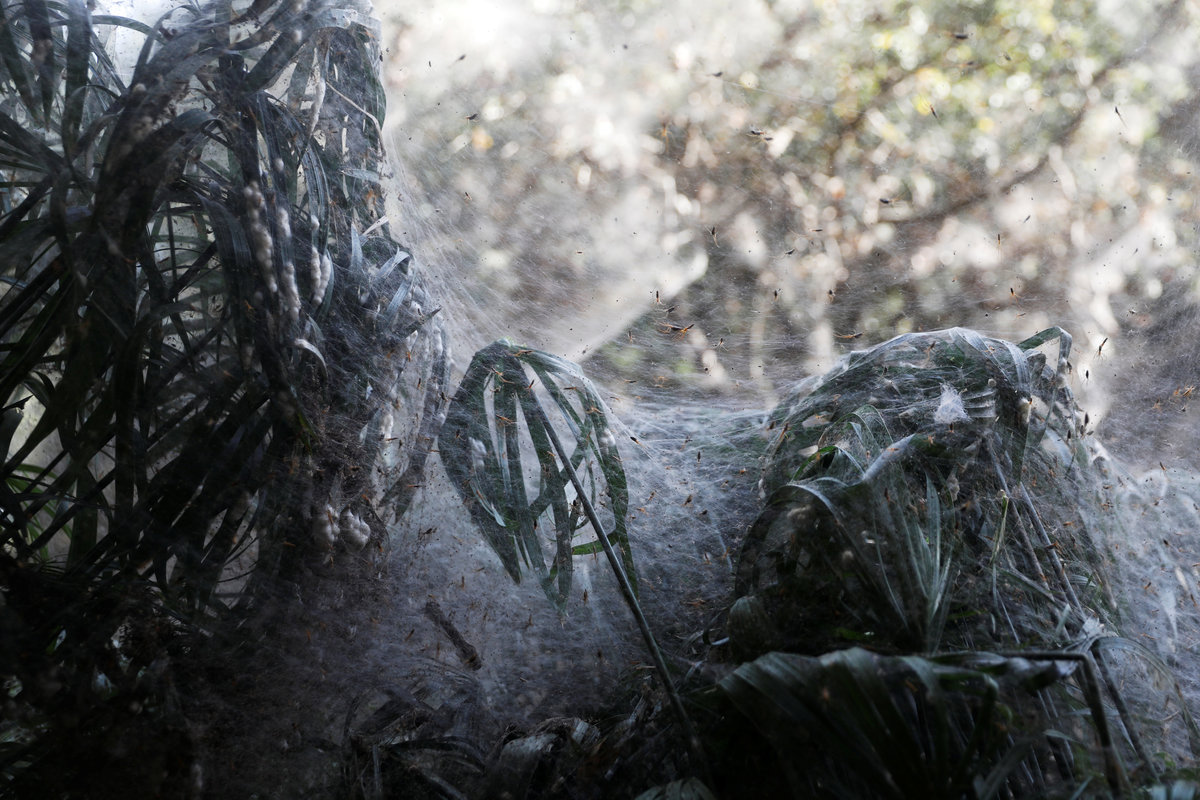
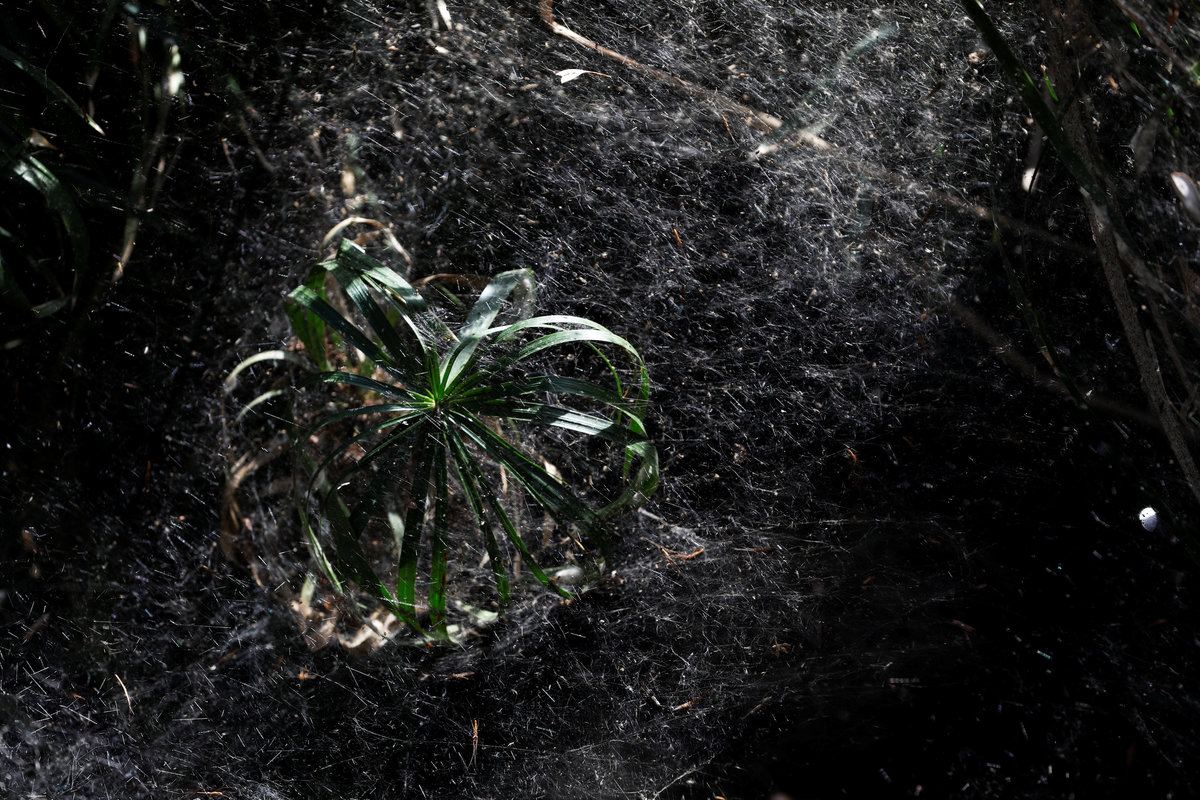
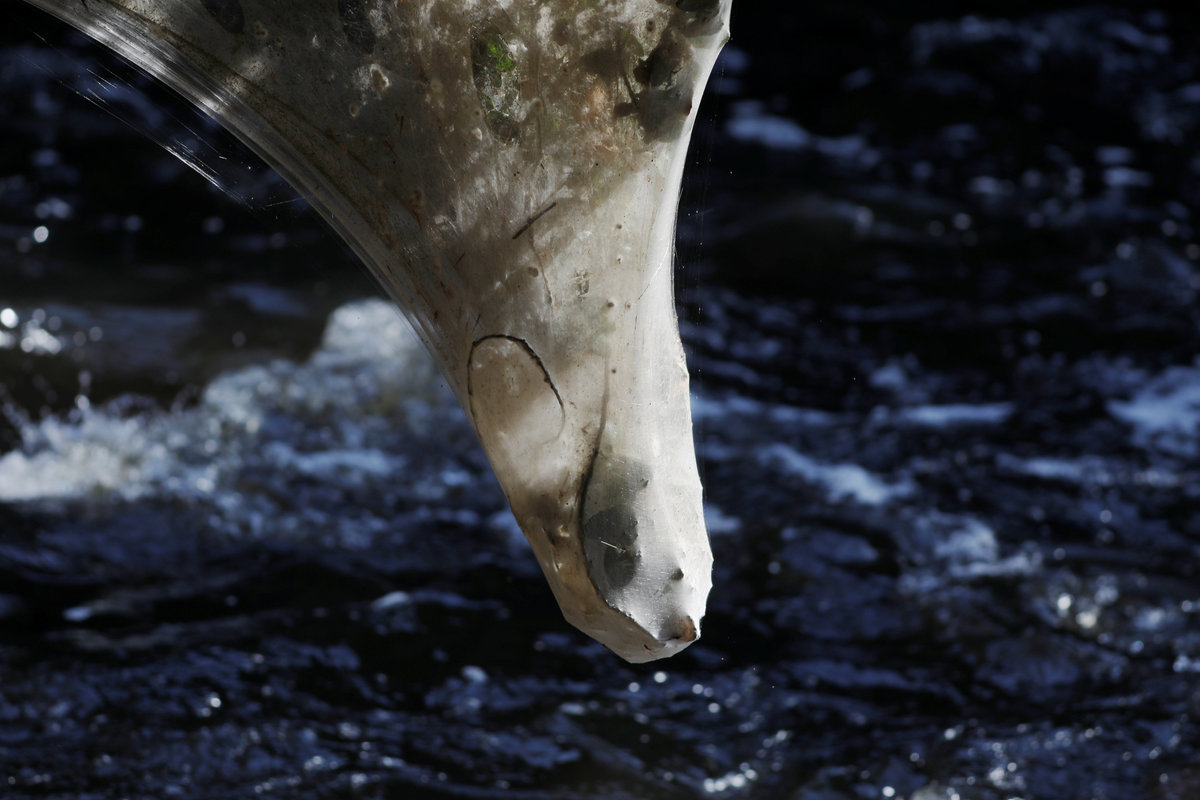
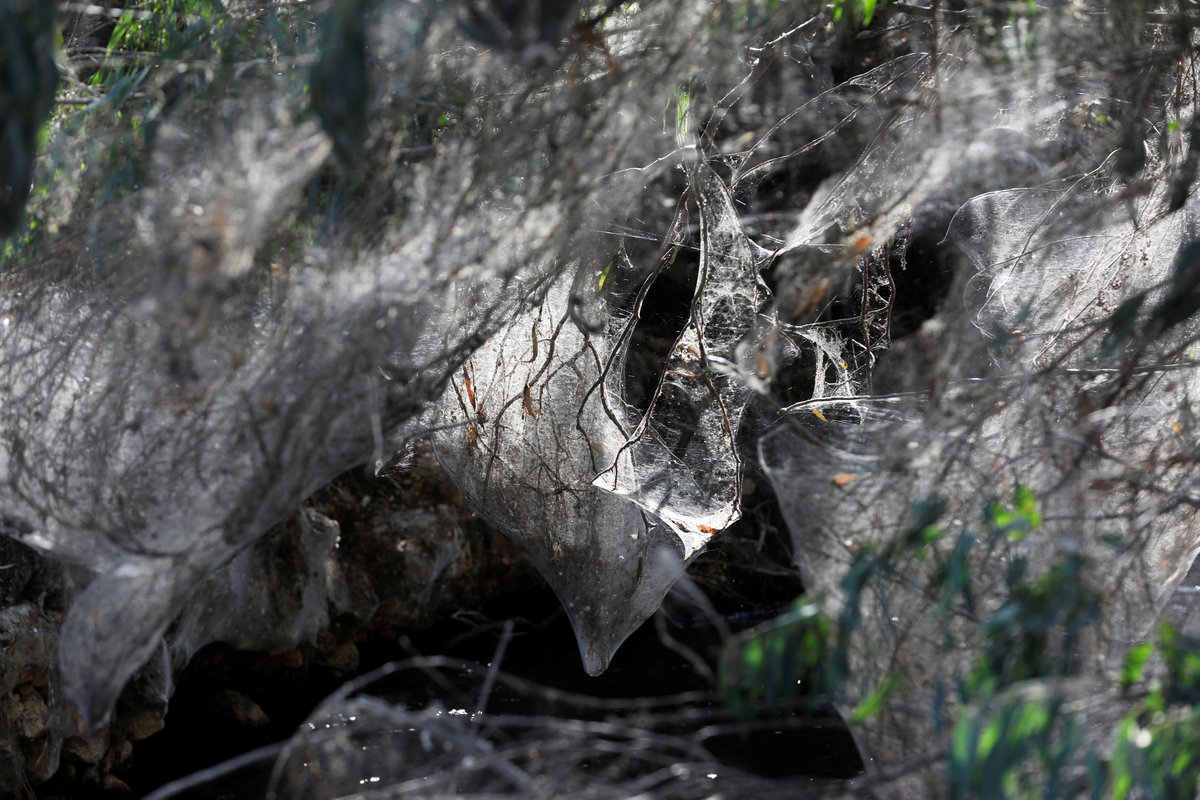
JERUSALEM (Reuters) - On the banks of a creek near Jerusalem stands an enchanted forest, its trees shrouded by giant cobwebs woven by long-jawed spiders.
Science and nature combined to create the unusual sight: the Soreq creek largely contains treated sewage full of nutrients that promote the proliferation of mosquitoes that serve as a source of food for spiders, which then reproduce in multitudes.
"It's an exceptional case," said arachnophile Igor Armicach, a doctoral student at Hebrew University’s Arachnid Collection.
A long-jawed spider (Tetragnatha) weaves a spider web over sections of the vegetation along the Soreq creek bank, near Jerusalem November 7, 2017. REUTERS/Ronen Zvulun
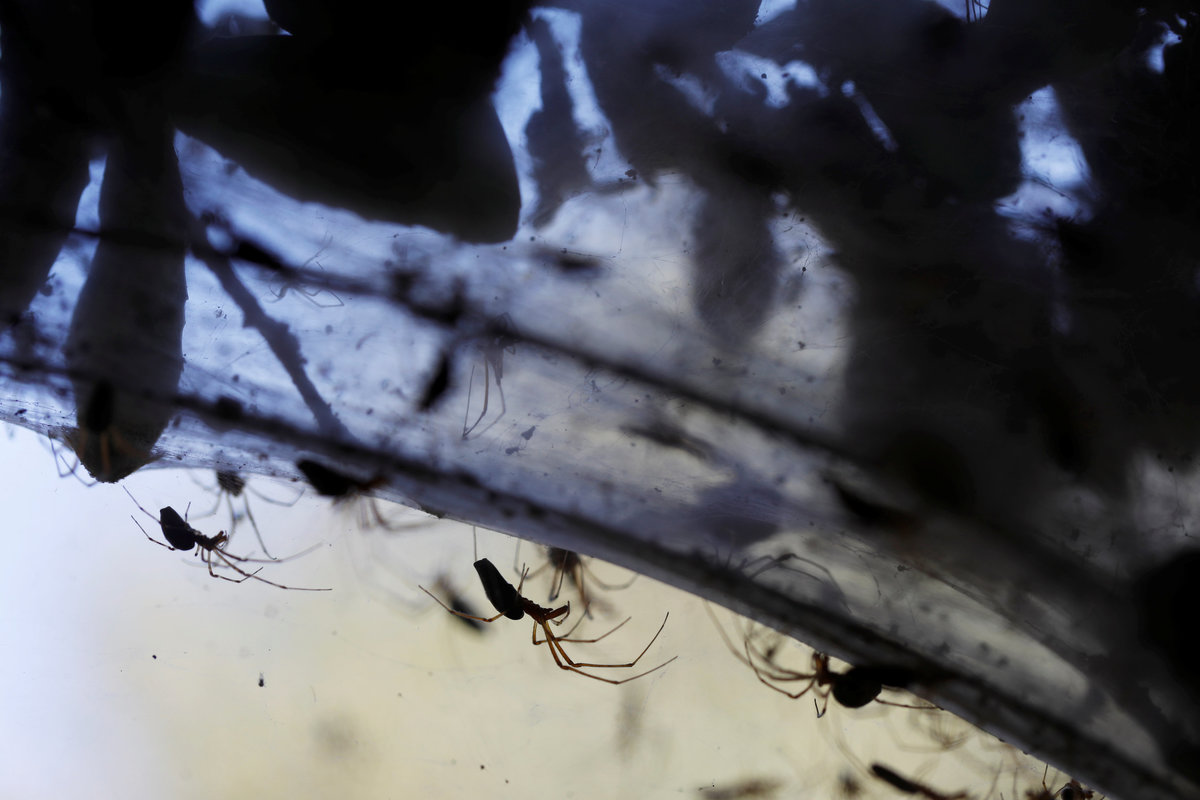
He said millions of long-jawed spiders created the webbing that envelops the forest, a phenomenon rarely seen in the Middle East.
But while spider egg sacs and spiderlings are everywhere along the banks of the creek, the future is bleak. Colder temperatures will soon cause a drastic drop in the mosquito population that sustains the web-weavers.
Long-jawed spiders (Tetragnatha) weave giant spider webs over sections of the vegetation along the Soreq creek bank, near Jerusalem November 7, 2017. REUTERS/Ronen Zvulun
(Reporting by Elana Ringler; Writing by Jeffrey Heller; Editing by Gareth Jones)
Igor Armicach, a doctoral student at Hebrew University's Archnid Collection, looks onto Giant spider webs, spun by long-jawed spiders (Tetragnatha), covering sections of the vegetation along the Soreq creek bank, near Jerusalem November 7, 2017. REUTERS/Ronen ZvulunIgor Armicach, a doctoral student at Hebrew University's Archnid Collection looks onto giant spider webs, spun by long-jawed spiders (Tetragnatha), covering sections of the vegetation along the Soreq creek bank, near Jerusalem November 7, 2017. REUTERS/Ronen ZvulunGiant spider webs, spun by long-jawed spiders (Tetragnatha), cover sections of the vegetation along the Soreq creek bank, near Jerusalem November 7, 2017. REUTERS/Ronen ZvulunGiant spider webs, spun by long-jawed spiders (Tetragnatha), cover sections of the vegetation along the Soreq creek bank, near Jerusalem November 7, 2017. REUTERS/Ronen ZvulunIgor Armicach, a doctoral student at Hebrew University's Archnid Collection, looks onto giant spider webs, spun by long-jawed spiders (Tetragnatha), covering sections of the vegetation along the Soreq creek bank, near Jerusalem November 7, 2017. REUTERS/Ronen ZvulunGiant spider webs, spun by long-jawed spiders (Tetragnatha), cover sections of the vegetation along the Soreq creek bank, near Jerusalem November 7, 2017. REUTERS/Ronen ZvulunGiant spider webs, spun by long-jawed spiders (Tetragnatha), cover sections of the vegetation along the Soreq creek bank, near Jerusalem November 7, 2017. REUTERS/Ronen ZvulunGiant spider webs, spun by long-jawed spiders (Tetragnatha), cover sections of the vegetation along the Soreq creek bank, near Jerusalem November 7, 2017. REUTERS/Ronen Zvulun
Sign up to read this article
Read news from 100’s of titles, curated specifically for you.