October 2006
Just over a year after London wins the right to host the 2012 Olympics, the organising committee selects a consortium to design and deliver the stadium in Stratford.
February 2007
The Olympic board meets. Former sports minister Richard Caborn pushes for a “dual use” solution for athletics and football, but claims he is voted down by the 2012 chairman, Lord Coe, the Olympics minister, Tessa Jowell, the London mayor, Ken Livingstone, and the BOA’s Lord Moynihan. Mindful of another Wembley-style embarrassment, they stick with the original legacy vision: retaining a running track post-Games with a reduced 25,000 capacity, which does not allow for easy conversion to a football stadium.
May 2008
As work begins, the new mayor Boris Johnson starts to talk up the idea of retaining the venue at a higher capacity and getting a major football club involved.
July 2009
The now former prime minister Blair and his Olympics minister Jowell are forced to defend the legacy plans after a London Assembly Committee claims the stadium is in danger of becoming a “white elephant” with no tenant.
March 2010
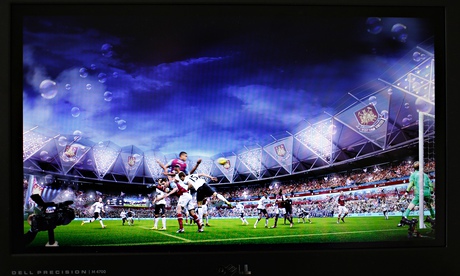
The Guardian reveals that West Ham are working on a joint bid with Newham Council to combine football and athletics post-2012.
October 2010
Encouraged by Johnson, Tottenham Hotspur announce their own plan for the stadium: knock it down and build a football arena. They promise to refurbish the Crystal Palace Sports Centre as an alternative national athletics venue.
November 2010
Spurs and West Ham are shortlisted as the only two bidders.
February 2011
Following a brutal contest, in which Coe warns Britain’s sporting reputation will be “trashed” if the stadium doesn’t include a future for athletics, the OPLC awards the lease to West Ham.
April 2011
Spurs launch a judicial review and Leyton Orient a high court challenge.
July 2011
The judicial review is initially rejected by a high court judge. An OPLC consultant is suspended following allegations she also worked for West Ham. A later investigation finds the process was not compromised.
August 2011
Spurs agree to drop appeal and negotiate with mayor over a new stadium on the site of White Hart Lane.
September 2011
Architect Steve Lawrence submits a State Aid complaint to European Commission.
October 2011
West Ham’s deal collapses amid “legal paralysis”. Johnson immediately says a new tender process will be launched, with West Ham the likely winners.
July 2012
The deadline is extended. Four bidders are ultimately shortlisted. Stadium hosts successful Olympic opening ceremony and Games.
December 2012
After the success of the London Games, the LLDC names West Ham as the preferred candidate.
March 2013
West Ham confirmed as future tenants from 2016-17, alongside athletics in the summer and a range of other events. The deal is understood to involve West Ham paying £15m towards £160m conversion costs, plus £2.5m a year in rent and a share of catering income. The rest of the £160m is to come via Newham council borrowing £40m, the Department for Culture, Media and Sport supplying £38.7m, £25m from the Department for Communities and Local Government, and the rest borrowed by the LLDC.
May 2013
The stadium is confirmed as host of five 2015 Rugby World Cup games.
October 2014
It emerges that the roof conversion will cost an extra £35.9m, taking the total cost of the building of the stadium and the conversion to £619m.
February 2015
The French company Vinci is named as the stadium operator.
June 2015
The LLDC confirms the total cost of the project has now risen to £701m.