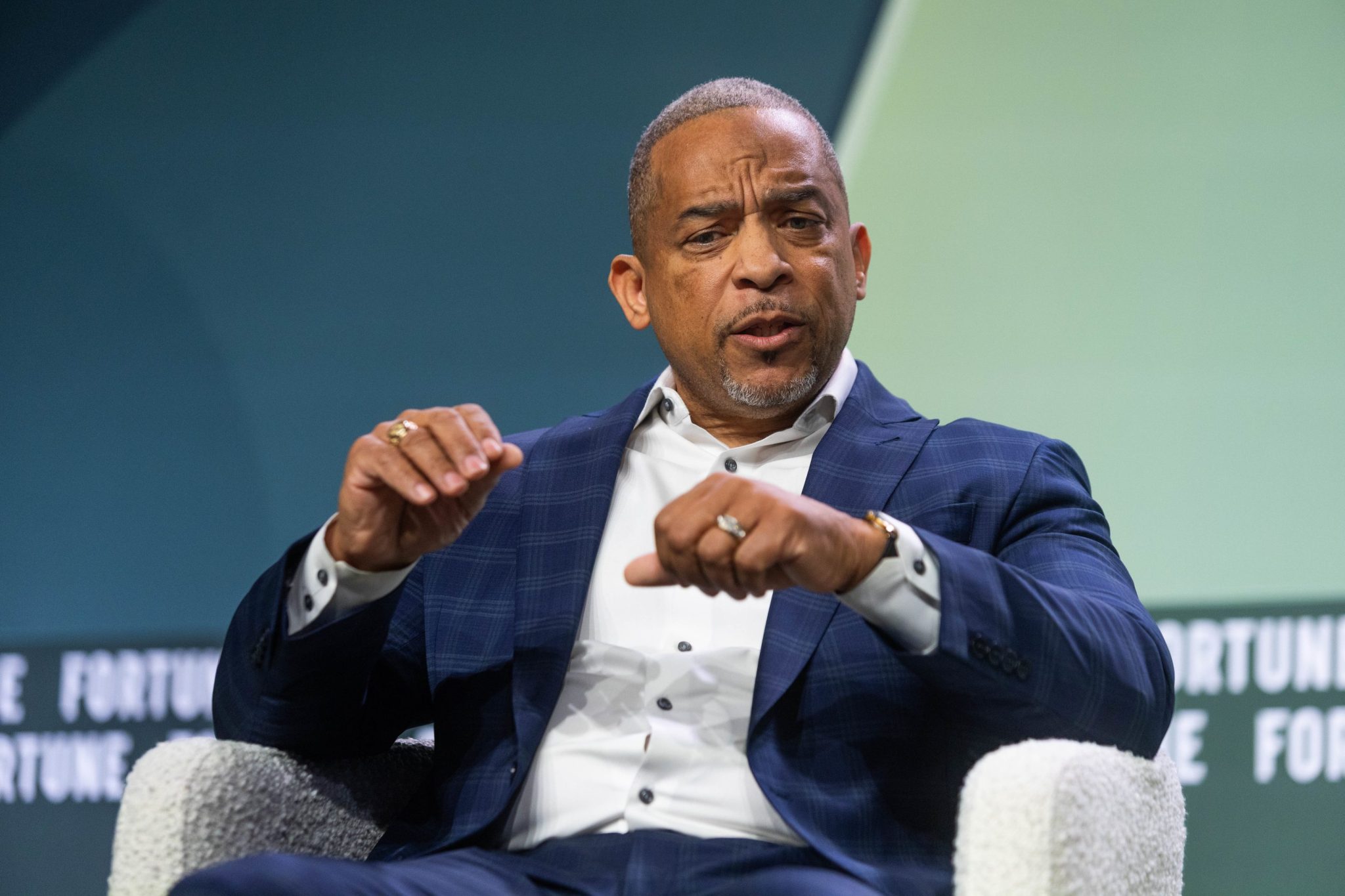
When Robin Bailey Jr. arrived at the Centers for Disease Control and Prevention in 2021, a colleague warned him he was jumping out of the frying pan into the fire. He knew she was right the moment he walked through the door.
“They were very stressed, fatigued, and giving everything that they had,” Bailey told Fortune‘s Kristen Stoller at the Fortune COO Summit in Scottsdale, Arizona. “But the public scrutiny was such that everything you have isn’t good enough.”
Three years later, Bailey had led a sweeping operational overhaul of the agency — more than 160 action items, 90% complete by October 2024. Then he left. And then the DOGE cuts began.
Since January 2025, the CDC has lost nearly a quarter of its workforce — close to 3,000 employees gone through layoffs, forced retirements, and resignations. Bailey, now at federal consulting firm GovStrive, was diplomatic and measured on stage. But his concern was unmistakable.
“We lost a lot of talent,” he said. “Many of the things that we put in place — I’m not sure that they’re operating in the same way.”
The ‘mecca’ of public health
Bailey was quick to defend what remains. The CDC, he said, is still “the mecca” — the place the best and brightest in public health aspire to work. His confidence in the rank and file was genuine. What worried him was everything around them: the systems, the institutional memory, the organizational scaffolding he spent years constructing.
“Operational excellence without the right systems doesn’t scale,” he said — a line that carried particular weight given the context. At any given moment, the CDC monitors disease surveillance across 196 countries, manages billions in public health grants, and coordinates with state and local agencies nationwide. None of that runs on goodwill alone.
The problem, Bailey suggested, wasn’t just the number of people who left. It was who left. When Bailey departed in late February 2025, he was one of nearly a third of the CDC’s top management to exit within weeks. The heads of the Office of Science, the Office of Health Equity, the National Center on Birth Defects, and the Public Health Infrastructure Center — which coordinates CDC funding to all 50 states — all left around the same time. Nine former CDC directors later published a joint condemnation of the changes.
“Having that kind of expertise walk out the door, having that understanding, is difficult,” Bailey said.
A reform agenda, interrupted
To be sure, Bailey said, when he arrived post-COVID, the CDC was siloed, slow, and battered. He and then-Director Dr. Rochelle Walensky launched an aggressive internal reform program, restructuring the agency’s 10 fragmented centers into a more unified operating model.
“We had 10 different centers who operated like they were individual centers, as opposed to as an organization,” Bailey said. “And when you’re talking about a time like the stress that we had during COVID, it doesn’t work.”
The irony is acute: the CDC had just completed nearly all of that reform work when the Trump administration began dismantling the workforce that built it.
HHS Secretary RFK Jr. has argued the cuts return the CDC to its “core mission” of tracking disease and investigating outbreaks. Bailey declined to engage with that framing directly. But the cuts tell a different story — layoffs targeted HIV researchers, chronic disease scientists, Morbidity and Mortality Weekly Report staff, and the Epidemic Intelligence Service, the agency’s elite corps of disease detectives.
“When you’re talking about the protection of health in our lives, that’s not something you take lightly,” Bailey said. “It’s not like you just want to change your mission and go in a different direction.”
Trust is the foundation
As Bailey spoke, the CDC was simultaneously responding to a multi-country hantavirus cluster traced to a cruise ship and a new Ebola outbreak — exactly the kind of simultaneous, high-stakes crises the agency’s reformed infrastructure was designed to handle.
Speaking to an audience of corporate executives who manage sprawling organizations under political pressure, Bailey drew a direct line to the boardroom. Trust, he argued, is the foundation everything else rests on. Without it, no transformation sticks — not operational reform, not AI adoption, not cultural change.
“People first, mission always,” he said. “If you don’t have the trust in your organization, the buy-in to make those things happen, I just don’t think it’s going to be as successful as it otherwise could be.”
He was asked, at the end of the conversation, what he would tell himself on Day 1 at the CDC if he could go back.
“Listen more, talk less,” he said. “I think many times the solutions are in the room.”
For this story, Fortune journalists used generative AI as a research tool. An editor verified the accuracy of the information before publishing.