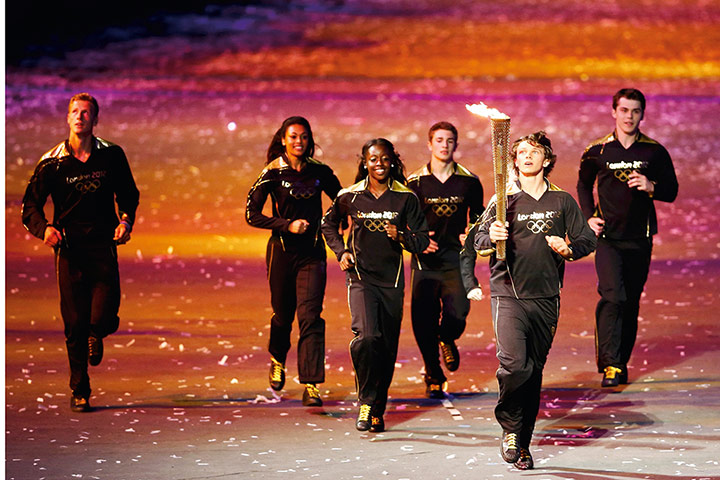
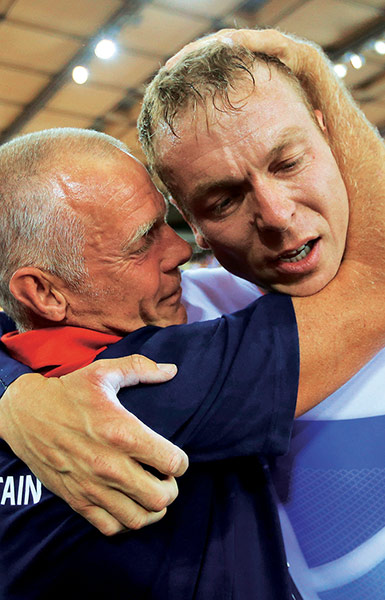
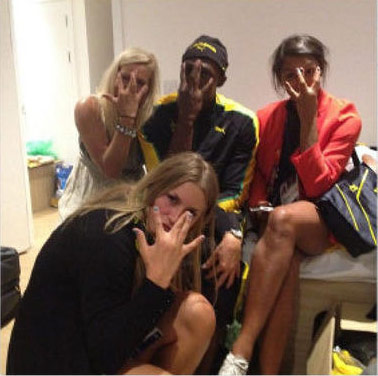
The final torch bearers carry the Olympic flame prior to the lighting of the cauldron during the opening ceremony. Eyewitness, Adelle Tracey, 19, athlete (second from left): ‘Someone from Locog called to say they’d like me to take part in the opening ceremony. I’d been a part of Dame Kelly Holmes’s mentoring programme. I didn’t know she’d put me forward until I got to London. Arriving at the Olympic Stadium was very exciting. I met the other athletes and we were all a bit confused until Danny Boyle explained the part we’d play. I was gobsmacked. When the moment came, it didn’t feel like there were over a billion people watching; I focused on what I had to do. My family is so proud of me. The whole concept of “inspiring a generation” really worked. It’s important to me that I top this experience and win an Olympic medal of my own - hopefully at Rio in 2016'Photograph: Mike Blake/ReutersSir Chris Hoy of Great Britain celebrates with coach Shane Sutton after setting a new world record and winning gold in the men's team sprint track cycling final on Day 6. Kevin McKenna: He has just completed his gold medal ride in the men’s team sprint, and now Sir Chris Hoy is caught in that twilight zone that only an athlete can know. He is utterly spent, having left his heart and soul and guts on the track. In a second or two understanding and euphoria will dawn and that slightly bashful smile will re-appear. For now though, he must be held tightly by his coach Shane Sutton and loved. He has fought the good fight; he has finished the racePhotograph: Bryn Lennon/Getty Images EuropeTom Lamont: They were called the austerity Olympics (mark II), the women’s Olympics, the who-knew-Brits-were-any-good Olympics, but clearly, they were the Twitter Olympics, with an unceasing flow of tweeted commentary from spectators and athletes alike. (The difference? Athletes use more exclamation marks than anyone else alive.) Tweeted photographs gave a ground-level perspective, especially this 3am photograph of Usain Bolt partying with the Swedish handball teamPhotograph: Twitter
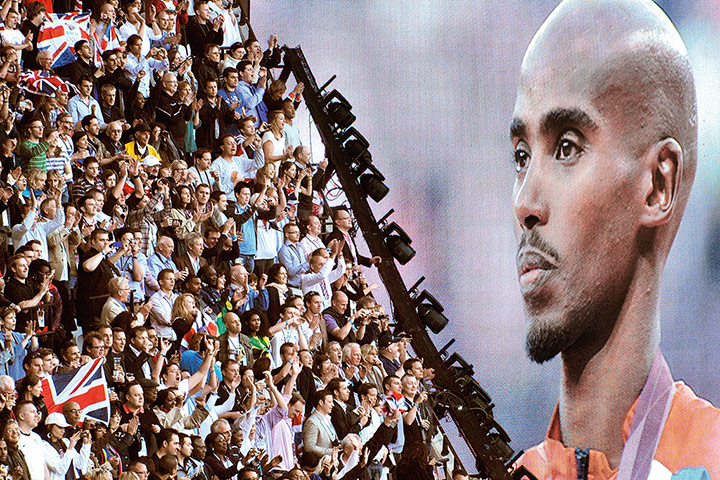
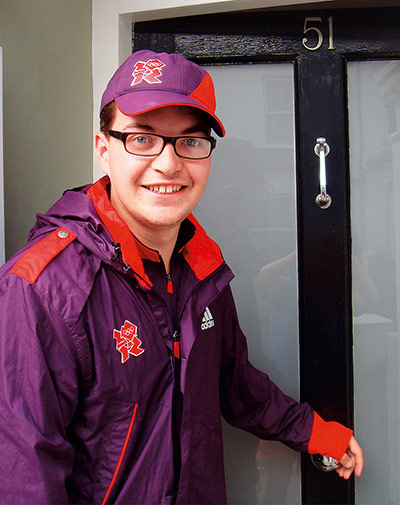
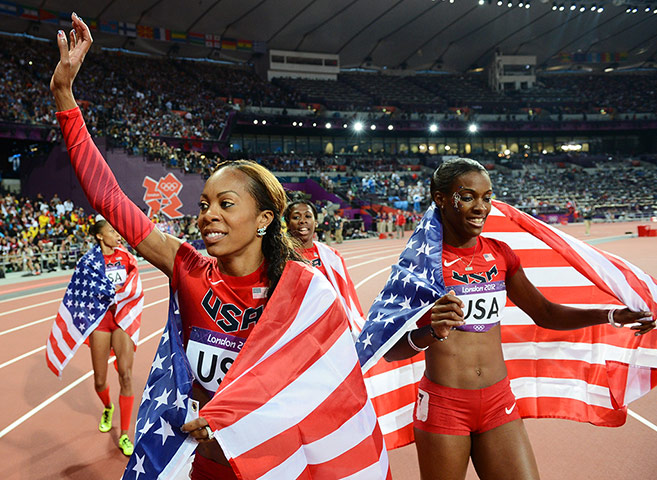
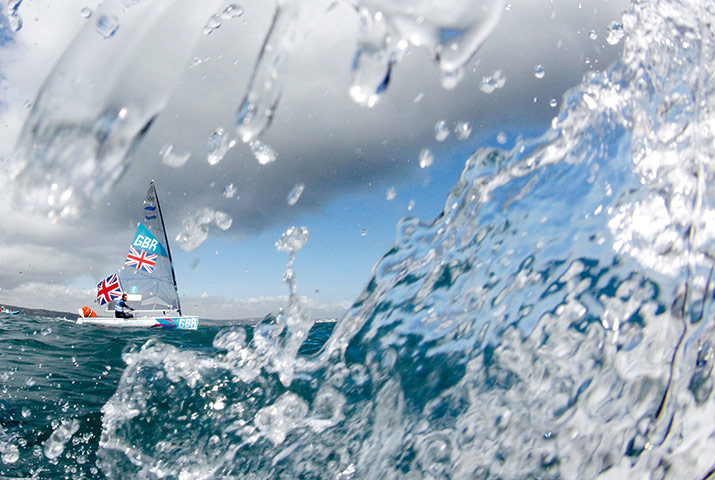
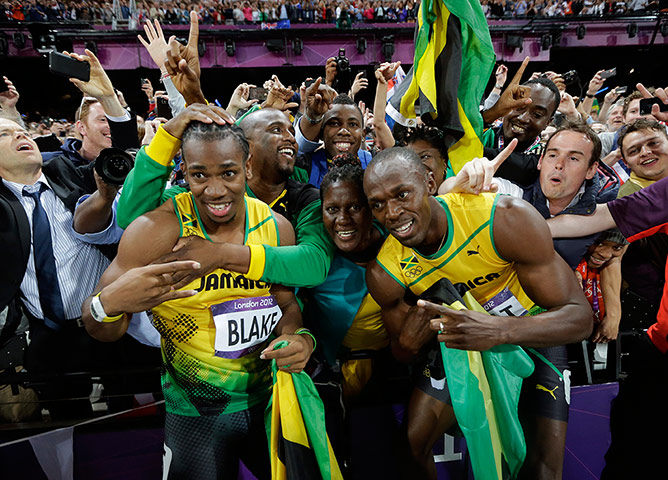
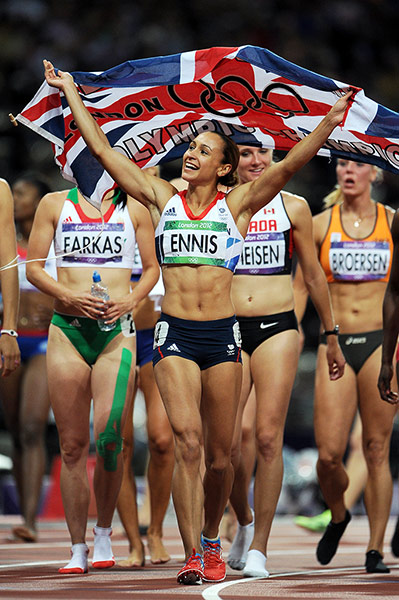
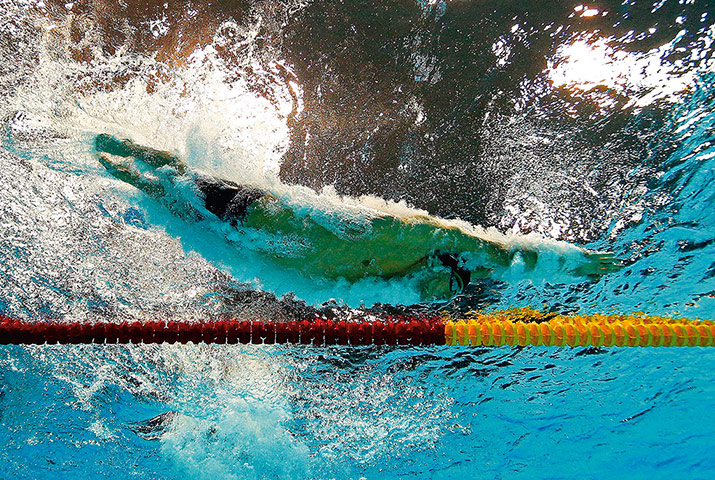
Mo Farah of Great Britain is shown on a giant screen as he receives his gold medal for the 10,000m on Day 9. Eyewitness, Emma John, journalist: ‘It was 9.03pm when Jessica Ennis sprinted to heptathlon gold. We were so busy hugging each other we barely noticed long-jumper Greg Rutherford leaping into the lead. But we roared when his rival’s final jump, 20 minutes later, was a foul, and we had another champion. Then came Mo. We who knew nothing of 10,000m tactics suspected his place near the back of the pack was bad news. Mexican waves of support engulfed the stadium 24 times as we rose to chant his name, trying to propel him forward with sound energy alone. By the time he reached the final bend, now in front, we had no words: we simply screamed. Farah crossed the line at 9.47pm – Britain’s third gold in an hour. And if you could speak the morning after, you hadn’t been there’Photograph: GettyEyewitness, Thomas Etheridge, volunteer and student, 21: ‘I am a big fan of swimming and cycling, and as a teenager I’d wanted to compete at a home Olympics, however, I had decided too late in life. But I still wanted to do my part, so it was fantastic to to be a Games maker. I worked in the athletes’ village, and got to meet my heroes – Usain Bolt and Michael Phelps. They were quite reserved and very focused. I also got to watch Jessica Ennis break the world heptathlon hurdling record. It was the experience of a lifetime. My souvenirs include Olympic wristbands and thank you badges given to volunteers by Olympic teams – USA, Colombia, Angola and a rhinocerous one from Kenya’ Photograph: Caroline McGivernEva Wiseman on Olympic style: It was all in the details. The finely flagged union flag nails of archer Alison Williamson. The carefully curated flashes of jewellery that acted, presumably, as a good luck charm. The ever-so-carefully tied mane of Pastor, the horse competing in dressage. The headphones that Michael Phelps wore when arriving for the 100m butterfly semi-final. The hair that told spectators that, even when he was zooming for gold in a time trial, Wiggo still had space to care about something off-track. Sanya Richards-Ross, USA gold medallist in the 400m and 4x400m relay's ponytail may not be streamlined or the best length for the 400m but flops just so to remind an athlete that she is at least half-human. When competing, when there’s very little an athlete can be sure of, could it be the hair, the Chanel earrings – the details – that make them feel more in control? Photograph: Franck Fife/AFP/Getty ImagesBritain's Ben Ainslie celebrates winning the men's finn, his fourth consecutive Olympic gold medal. Eyewitness, Ainslie's his coach, David Howlett: ‘I guess the overriding feeling of seeing Ben do so well is relief. There are so many obstacles and the fact that he managed to overcome them and achieve four gold medals is a joy. He’s been such a favourite for so long and what people don’t realise is that in sport there is always someone trying to knock you off your perch. Sailing is a hard sport to conquer. As his coach, and as part of a team that has worked with him since he was 19, it’s immensely satisfying. It’s been a brilliant Olympics, but one of the biggest issues was dealing with the demands on Ben’s time. There were times where he was absolutely fragile after a race, but there isn’t any respite. I couldn’t have been his coach when I was younger. I’m 60 now, with a head full of the grey hairs of experience to deal with it all’Photograph: Pascal Lauener/ReutersUsain Bolt celebrates winning gold in the men's 100m final with his mother Jennifer, centre, and silver medallist Yohan Blake. Elizabeth Day: For a glorious fortnight, no one encapsulated the emotion we all felt better than the athletes’ parents: the nerves, the anticipation and the immense, throat-lumpening pride. There was Usain Bolt, throwing those muscular arms around his mother. Remember Victoria Pendleton kissing her father; Michael Phelps throwing flowers to his mum; Sir Chris Hoy’s mother, barely able to watch as her son scooped his sixth gold; Peter Wilson’s mother hugging him close; Bert le Clos beaming when his ‘beautiful boy’ won the 200m butterfly; and Princess Anne presenting silver to her daughter. The joy of Tom Daley’s diving bronze was tinged with sadness that his father was not alive to see it. After her judo semi-final, silver medallist Gemma Gibbons, who lost her mother to leukaemia in 2004, looked up and mouthed, ‘I love you, Mum.’Photograph: David J. Phillip/APJessica Ennis celebrates after winning gold in the heptathlon on Day 8. Megan Conner: Nobody went into the Games with more expectation stacked on their shoulders than Jessica Ennis. Great Britain had already decided she was going to be 2012’s Kelly Holmes or Rebecca Adlington – the poster girl-next-door just had to deliver. She is the first female athlete to make £1m in sponsorship before the Games even started. The pressure could have become an obstacle, but instead Ennis embraced it. Her own comment that ‘everything happens for a reason’ loomed like a threat, with everyone all too aware that injury had prevented her from competing in Beijing. It had to be London and it had to be Ennis: the girl who could do things the rest of the world couldn’t, but somehow seemed like us. As she celebrated on the track with her competitors – all the six-pack of an athlete but none of the aggression – there was no gold medallist more relieved, or elegant Photograph: Pascal Le Segretain/Getty ImagesMichael Phelps at the men's 200m medley final. Eyewitness, GB swimmer James Goddard: ‘I’d already raced Phelps in Beijing but this felt different. There was so much hype surrounding Phelps v Lochte – the two greatest all-round swimmers on the planet. Even though you try not to think that, it felt special. It had been tough deciding whether to compete in this race at all. My other event is the 200m backstroke. I could either choose that – and not race Olympian with the most ever gold medals – or choose my strongest event. Before the race, Phelps was in the zone, listening to music. Lochte, more laid back, was joking around. I tried to tune everything out, but when I got to the block, the home crowd was impossible to ignore. The race didn’t pan out the way I wanted, but if you’re going to beat Phelps, you need a world or Olympic record. This final was tighter than it has ever been. But that’s Phelps for you: he does what he does best, and that’s win’ Photograph: Al Bello/Getty
Sign up to read this article
Read news from 100’s of titles, curated specifically for you.