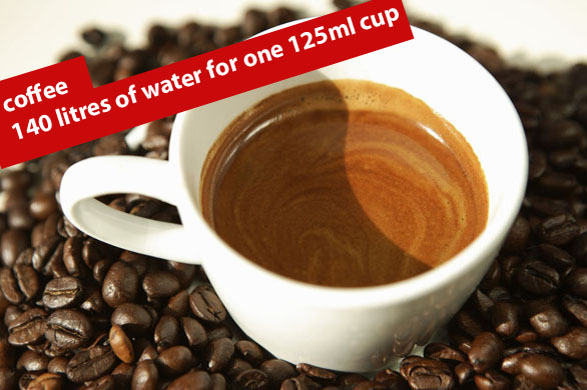
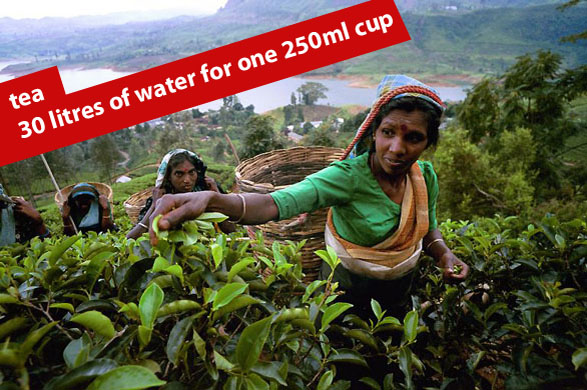
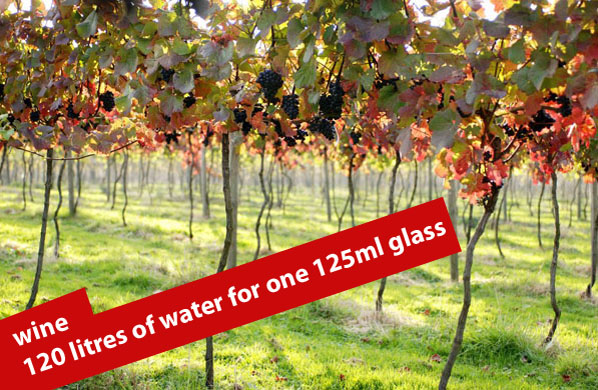
In total, the world’s population requires about 120bn cubic metres of water per year in order to be able to drink coffee Photograph: Vegar Abelsnes Photography/GettyTea needs about one-sixth of the volume of water used in the production of coffee, but that still amounts to 30bn cubic metres of water each year globallyPhotograph: Sean Smith/GuardianMost of the water used in producing the wine is needed to grow the grapes Photograph: David Levene/freelance
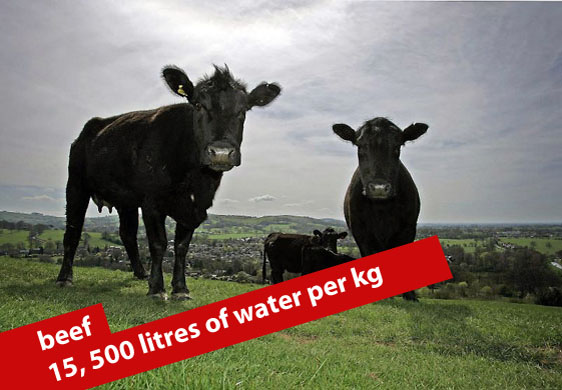
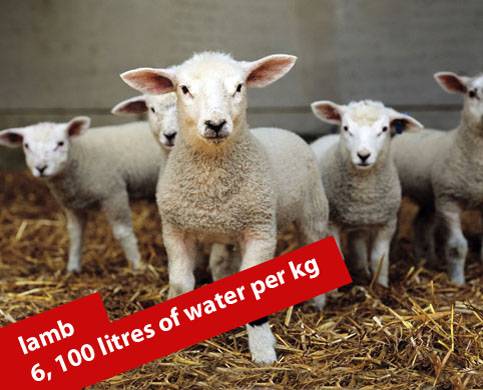
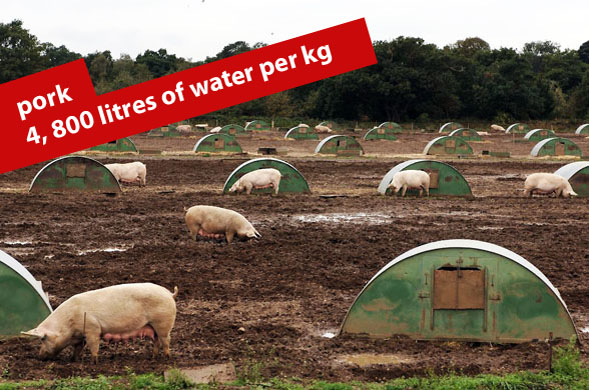
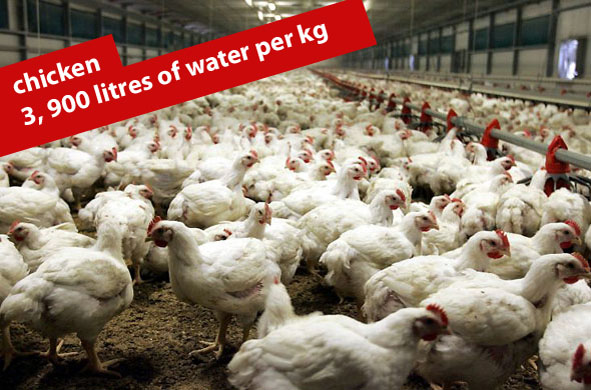
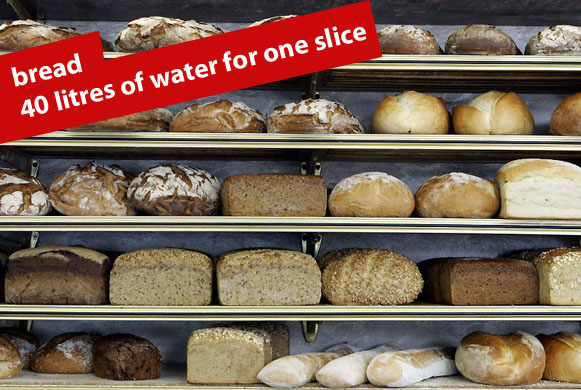
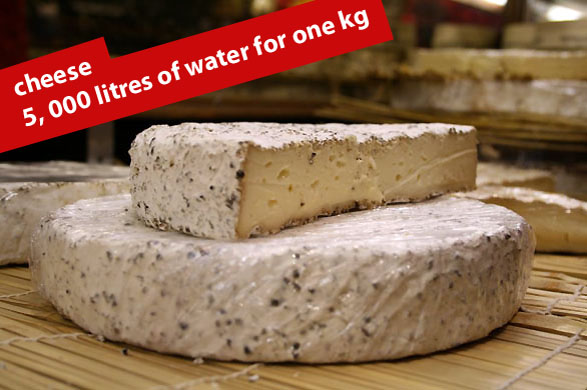
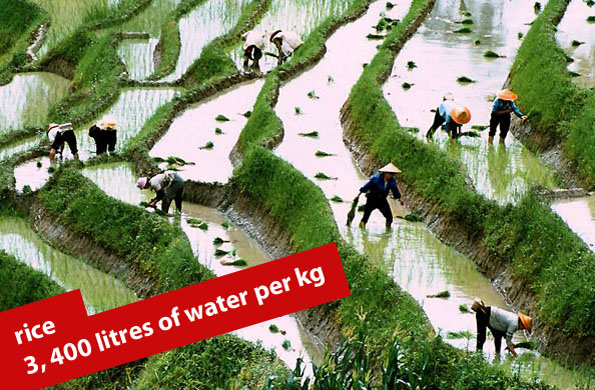
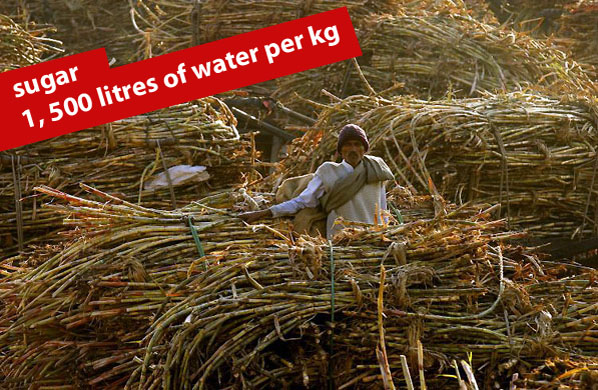
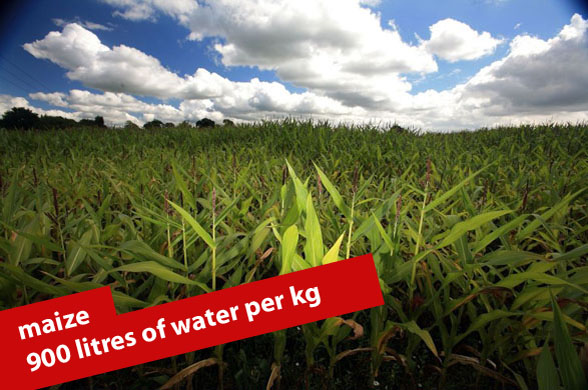
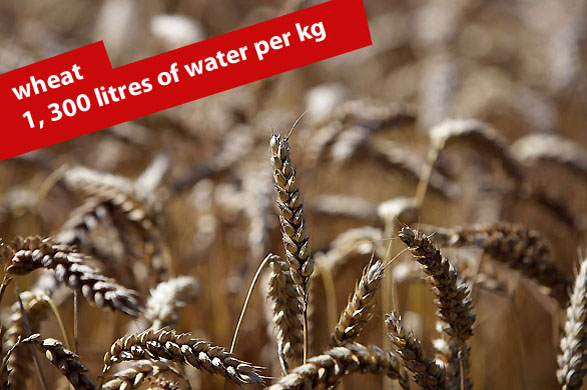
In an industrial production system, the animal is usually slaughtered after three years to produce about 200kg of boneless beef. Most of the water needed is used to grow the grains and roughage the cattle eatPhotograph: Christopher Furlong/GettyThe average sheep produces 28kg of fresh carcass, 4kg of edible offal and 4kg of skin and woolPhotograph: Adrian Burke/CorbisMost of the water is used in producing grain feed, plus some for drinking and servicing the farm and for slaughtering and cleaningPhotograph: David Levene/freelanceOne 60g chicken's egg requires 200 litres of waterPhotograph: Antonio Calanni/APProducing wheat costs 1,300 litres of water per kilo, as a global average. One 30g slice of bread therefore has a water footprint of 40 litresPhotograph: Ina Fassbender/ReutersMaking cheese from milk also produces whey of the same market value, so the water footprint of the milk is divided between the twoPhotograph: Rebecca Lovell/GuardianThe world’s rice fields consume about 1,350bn cubic metres of water annually, which is 21% of the water used in global crop production. The water is a mix rainwater and irrigation waterPhotograph: Geng Yunsheng/Greenpeace/ReutersSugar cane consumes about 220bn cubic metres of water annually, representing 3.4% of global water use for crop productionPhotograph: Amit Bhargava/CorbisMaize consumes about 550bn cubic metres of water annually, which is 8% of the water used in global crop productionPhotograph: Christopher Furlong/GettyWheat consumes about 790bn cubic metres of water annually, which constitutes 12% of the global water use for crop productionPhotograph: Christopher Furlong/Getty
Sign up to read this article
Read news from 100’s of titles, curated specifically for you.