

Rocket Lab launched a new type of satellite for the U.S. Space Force early Thursday morning (Dec. 18).
An Electron rocket carrying four "DiskSats" lifted off from Rocket Lab's pad on Wallops Island, Virginia on Thursday at 12:03 a.m. EST (0503 GMT).
The launch, which Rocket Lab called "Don't Be Such a Square," kicked off the Space Test Program (STP)-S30 mission for the U.S. Space Force's Space Systems Command.
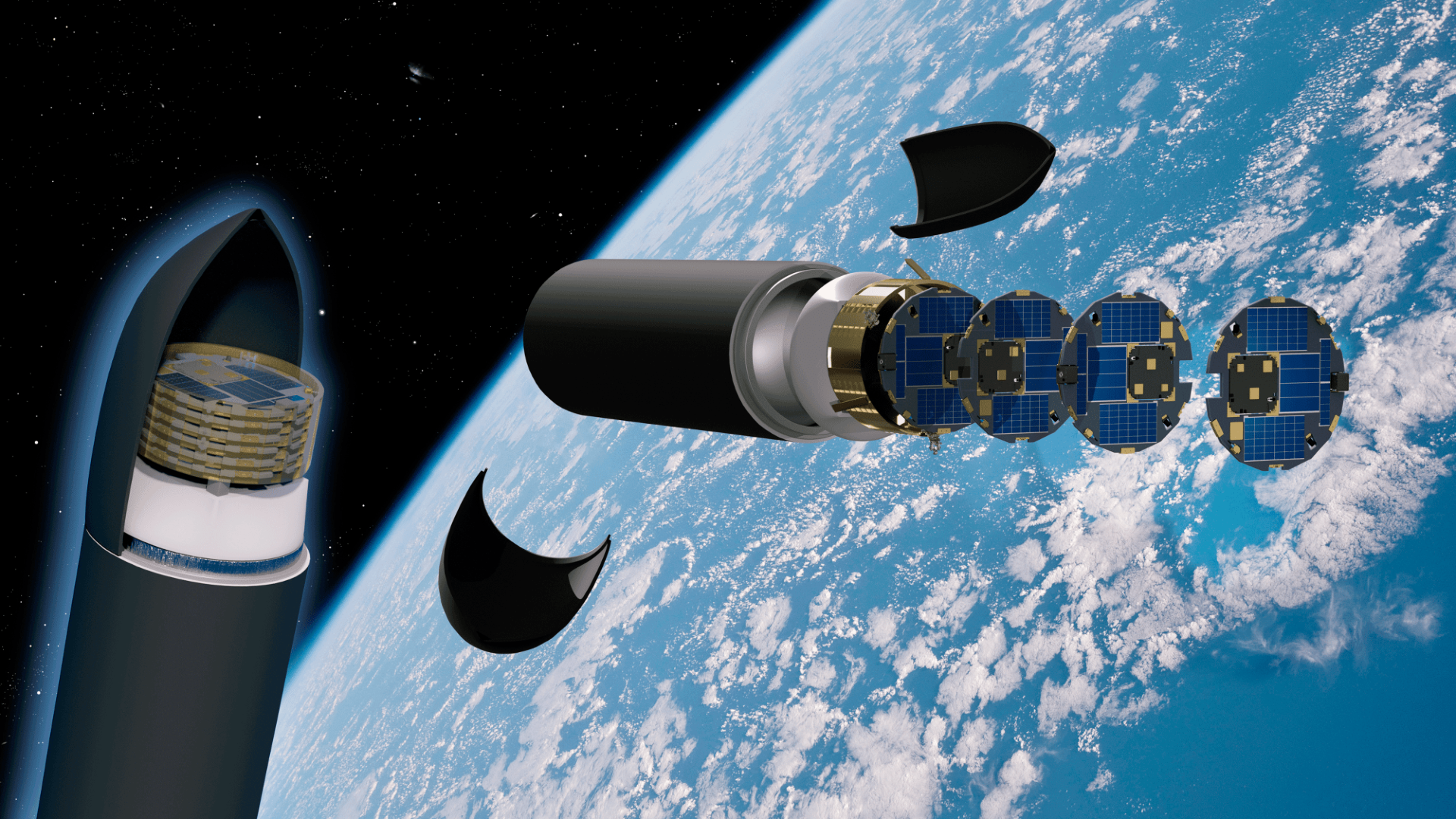
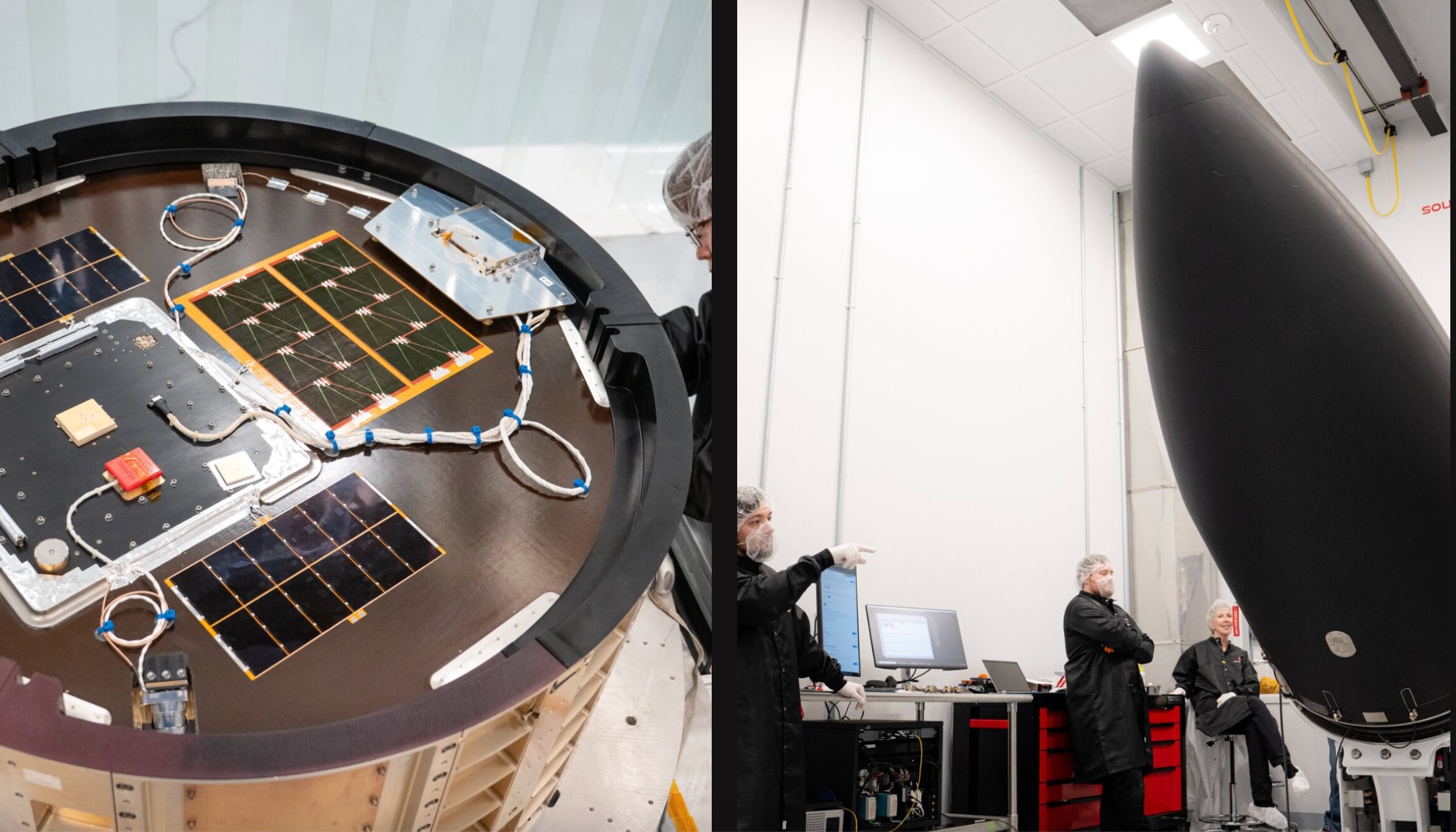
STP-30 will operate the first-ever DiskSats, a new type of spacecraft developed by The Aerospace Corporation with funding help from NASA. At 40 inches wide by just 1 inch thick (102 by 2.5 centimeters), each DiskSat has the approximate dimensions of a manhole cover.
That odd shape could lead to greater performance in the final frontier for small satellites, which have traditionally employed the boxy "cubesat" form factor.
DiskSats "could offer more power and surface area for instruments, providing more opportunities for NASA to expand upon target mission objectives for small spacecraft," agency officials wrote in a description of the new tech.
"With its ability to fly continuously with one face pointing at the Earth, the DiskSat can also have a very low drag, making them capable of very-low-altitude missions (less than 300 kilometers or 185 miles) such as those necessary for some Earth-observation missions," NASA added.
The DiskSats won't be flying so low on their inaugural mission, however. The Electron deployed the quartet at an altitude of 342 miles (550 km) about 55.5 minutes after launch as planned, according to Rocket Lab.
Rocket Lab initially planned to launch "Don't Be Such a Square" in April 2026 but expedited it at the Space Force's request, the company said in an emailed statement.
The mission was Rocket Lab's 20th of 2025, extending the company's single-year launch record. The previous high was 16, set in 2024. Most of these have been orbital flights of the 59-foot-tall (18 meters) Electron, which gives small satellites dedicated rides to Earth orbit. But three were suborbital missions conducted by HASTE, a modified version of Electron that lets customers test hypersonic technologies in the space environment.
Editor's note: This story was updated at 2:18 a.m. ET on Dec. 18 with news of successful launch and satellite deployment.