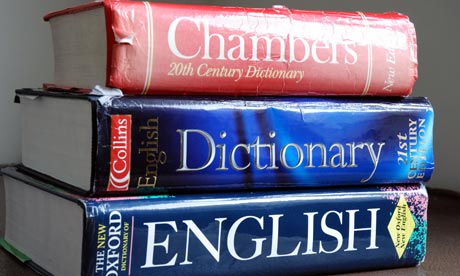
Considering the rage a split infinitive can incite among language pedants, they are really asking for trouble. But – in an attempt to make the creation of dictionaries more "democratic" – the editors at Collins have decided to open up their word selection process.
Collins is currently considering submissions from the public for words they would like to see included in the online version of the dictionary. Suggestions from avid language-watchers have begun in earnest, with topical, useful, obscure and just plain ugly words among them. SabihaS suggested "howlerious", defined as "something so funny, silly, or amusing that it makes you howl with laughter", while LostTheRemote put forward "crapalicious", used ironically "to suggest something is not as attractive or tasty as it at first seems".
European leaders will be hoping that Michael R Stannard's suggestion will be rejected for lack of staying power. "Euronate" he suggests as a "modern equivalent of 'spend a penny'".
Editors have already submitted a selection of words, including "omnishambles", originally used in Armando Ianucci's The Thick Of It and recently used by Ed Miliband; "tash-on", a word for kissing popularised by reality TV show Geordie Shore, and "twitlit".
With the reservations of a man about to enter a particularly well-packed minefield, Alex Brown, head of digital at Collins, said the company was acknowledging the passion the English language inspires.
"We know people are passionate about the preservation and evolution of the English language, and we want to tap into that as new words continue to capture the public imagination. For Collins online dictionary, it was essential that we keep our ear close to the ground listening out for new words emerging from pop culture, science and technology," he said.
"Most dictionaries are static. By allowing the public to truly participate, we're ensuring that we stay on top of the evolving English language."
Words submitted for inclusion in the online dictionary will be reviewed by the Collins dictionary editors, who monitor frequency of use, number of sources and staying power, in sources including papers, social media and radio. Hopefuls will find out if their favourite word has been accepted in around three weeks, and those rejected will be monitored and reviewed over the following year – just in case they proved ahead of their time.
Is there a word you use regularly and think should be adopted? Are you a budding Shakespeare, bursting at the seams with neologisms? Let us know which words you would like to include and why … and, of course, those that definitely should not, under any circumstance whatsoever, make it into the final list.