

Walmart’s (NYSE: WMT) near-term hurdle is weaker-than-expected Q2 sales in North America. The issue, foreshadowed by weak July retail sales, led to a 5% price drop, taking the stock to near its 52-week low.
That is the opportunity: the 52-week low and potential for long-term gains. While the near-term hurdle exists, it is offset by sustained growth and improved profitability, which is the critical factor. Walmart is a big business; more than moderate growth is unlikely given its size and scale, and its cash flow is the key. Cash flow enables healthy capital returns, which drive the stock price higher over time.
Walmart’s capital return is incredibly reliable, backed up by healthy insider ownership centered on the founding family. They run Walmart in their own interests: to produce healthy cash flow and pay themselves to own it.
As it stands, Walmart is a Dividend King with more than 50 years of consecutive annual increases on its record, a signal that it can withstand economic changes and sustain its capital return over time.
The yield isn’t impressive at under 1%, even with the Q3 price pullback, but it is as safe as they come, amounting to less than 35% of the current-year earnings forecast and compounded by share buybacks. Walmart’s share buybacks drive most returns, accounting for 56% of Q2 activity. They reduce the share count incrementally each quarter, providing shareholders with leverage as the company grows and builds equity.
Walmart Outperforms in Q2, Raises Guidance
Walmart’s near-term headwind isn’t as big a problem as it may seem, given its Q2 strengths. The company’s push into international markets and its advertising business helped offset domestic weakness, resulting in $187.94 billion in net sales, up nearly 6% year over year and $1.12 billion above expectations. Segmentally, U.S. comp sales increased 2.6% on traffic and tickets, International grew 12.8%, and Sam’s Club grew 8.8%.
Internally, ecommerce continues to drive sales, up approximately 23%, while the ad business is growing rapidly. It advanced by 38%, with 38% growth in the United States, and is expected to remain strong and drive margin long into the future. Membership is another strength, up 17% year over year (YOY), driven by gains in Sam’s Club and Walmart+. Walmart+ is a premium tier enabling enhanced shopping experiences, free delivery, shipping, and streaming services.
Margin was the better part of the Q2 report. While IEEPA tariff refunds affected the GAAP results, even the adjusted figures revealed improvement. The company widened gross and operating margins, driving a nearly 29% increase in operating income, 17.9% adjusted, and sufficient cash flow to sustain the capital return outlook.
Guidance is another hurdle, as it came in slightly below MarketBeat’s consensus for Q3 and full year results. However, the company improved its previous forecast, expecting mid-single-digit top-line growth and modestly accelerated earnings growth.
Walmart Analysts See 30% Upside Despite Near-Term Pressure
Walmart’s analysts are bullish on the stock, having issued numerous affirmations and price targets in the weeks leading up to the release. The trend includes steady coverage by 36 analysts, a firm Moderate Buy consensus rating with 86% Buy-side bias, and a $138.50 consensus price target.
The good news is that consensus forecasts about a 30% upside relative to the critical support target; the bad news is that July/August activity created a top in the price-target trend, which may turn into a retreat. In this environment, WMT’s stock price has upside but is unlikely to advance until analysts revert to a more optimistic posture. Looking ahead, WMT’s rebound may be sharp and sweet when it triggers, as the stock trades below the low-end analyst target as of mid-August.
Institutional Buying Could Put a Floor Under Walmart Stock
Meanwhile, institutional activity suggests the downside risk is limited. The group owns 25% of the stock, a seemingly small amount, but it's offset by high insider holdings above 50%.
MarketBeat data shows that institutional buyers outpaced sellers $3-to-$1 over the trailing 12 months, with buying activity spiking in early Q3. With this in play, the group will likely buy on price dips and may provide solid support near $105.
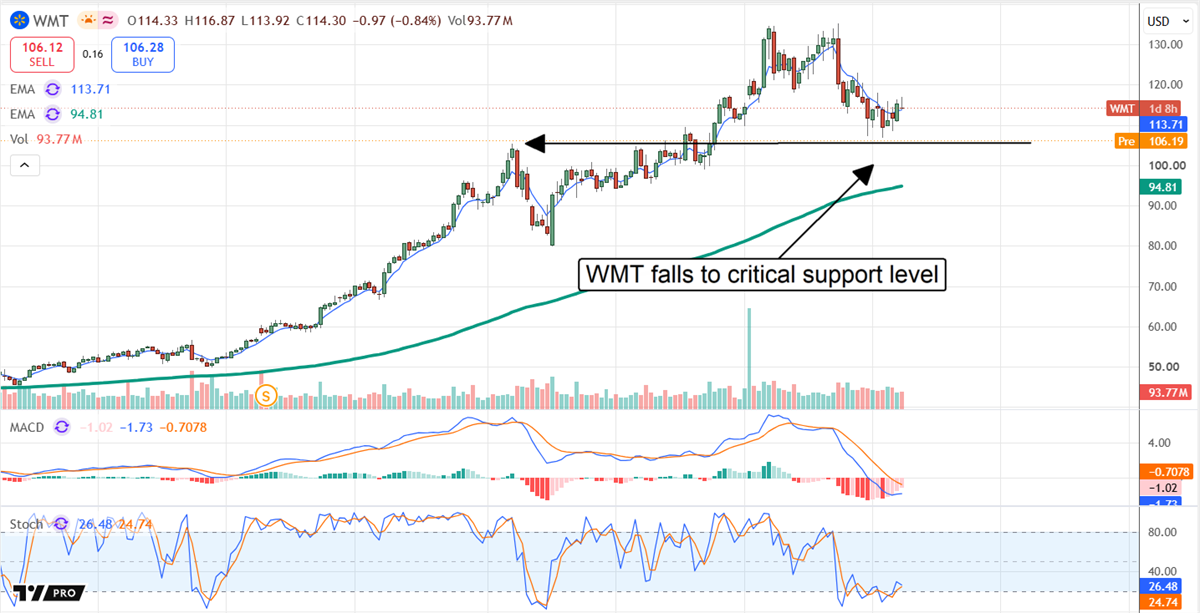
Early price action wasn't favorable following the Q2 release, with the stock down more than 5% in premarket trading. The question is whether Walmart confirms support in the subsequent sessions or moves lower, presenting its buying signal sooner rather than later.
The article "Walmart's Post-Earnings Drop Could Be a Buying Opportunity" first appeared on MarketBeat.