It is funny how much can be forgotten in the turn of the World Cup cycle. It should be remembered more knowingly that the very phrase “Rugby World Cup” seems to be the hair-trigger for some alarming behaviour among athletes who scoff in their normal working lives at old-school antics of excess.
The start of the tournament is 10 months away, but tickets have been sold and everything, but everything, has relevance. And so it is, as an answer to the question that foolishly we did not think to ask – “What could possibly beat dwarf-throwing?” – we have had the Mysterious Business of Kurtley Beale.
The inquiry – into offensive texts sent by Beale to Di Patston, the former team business manager – was an invitation to Australians in particular to employ a new kind of language, one perhaps less candid and colourful than their traditional vernacular of locker-room resolution. Some rose to the challenge. Michael Hooper, the stand-in captain, resisted the call for Beale, sender of what looked like some pretty damning text messages, to be sacked. There was more to this than met the eye, he suggested, and the player’s version of events should be heard.
The skipper was spot on. The hand – or rather the finger – of a third party was suspected, an infiltrator into the wonders of the ether, a manipulator of message. Text hacking. Corruption by an unknown conspirator. Goodness, the thud of a dwarf’s head against a dartboard seems so tame.
Some were brought down by the business, most notably Ewen McKenzie, the Wallabies coach and the champion of Patston, who also resigned. In his rather coded statement, McKenzie mentioned other strains in the Wallaby camp, and that perhaps this was merely the final straw.
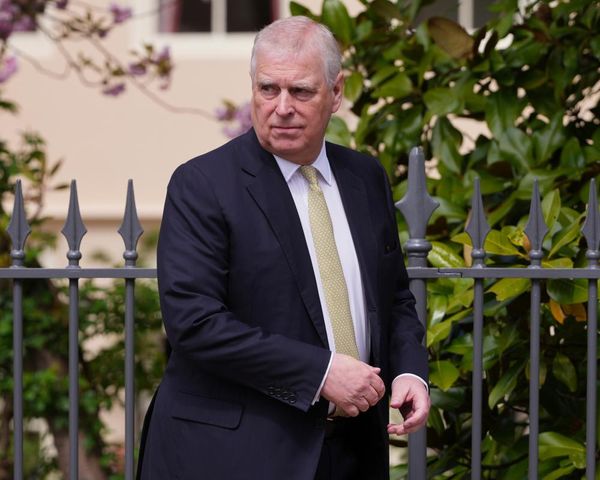
Sympathy was extended, especially in the light of the picture showing him cutting a forlorn figure and walking away from the Australian camp. On the other hand, it turned out he proffered his resignation on the morning of the game last Saturday against the All Blacks. That is, his team knew before the dead-rubber leg of the Bledisloe Cup – already retained by New Zealand – that the coach was gone, and yet still played very decently to lose by a single point, 29-28.
It is the perceived wisdom that players are lost without their coach. That heads on the field cannot think without instruction from wherever the coach chooses to position himself. Yet here were the Australian players, supposedly rudderless, playing with real purpose and direction, beaten only with the last play of the game in Brisbane.
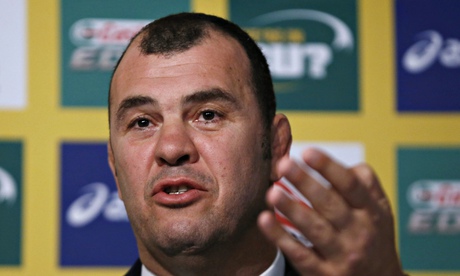
In theory, it should take McKenzie’s successor, Michael Cheika – until last week the coach of the Waratahs, Super Rugby champions of 2014 – some time to bed himself in with the national team. He will need to bring in his own people, and they will all have to absorb the implications of his elevation and the requirements of all who serve him. Cheika will need to persuade the members of his squad not from his Waratahs’ New South Wales catchment to embrace new strategies and methods. It will take time to work out how to operate without it – the World Cup is approaching fast.
It is not beyond the bounds of possibility, however, that such suppositions are plain wrong. Australia, far from being cowed and apprehensive, might be about to embark on a very profitable voyage of self-rediscovery, starting with the Barbarians at Twickenham and finishing, that light-hearted romp and four rather more demanding Tests later, against England at the same stadium.
Beale, guilty of sending the offensive first text, is now lighter in the pocket by £25,000. But thanks to the intervention of the Unknown Digit, was not fingered for the subsequent – and more abusive – messages. He is free, subject to selection, to return after the European tour. Imagine how determined he would be to make an impression, as an expression of gratitude to his team-mates for standing by him, as a sign that he wishes to start afresh. Beale reborn.
It may be in Cheika’s interests, far from overloading his new charges with concentrated doses of a brand new World Cup programme, to sit back and let the team be navigated by their own resolution. You can’t buy or coach that type of togetherness; it can only be inspired. Australia may have stumbled upon it by misadventure, but if it’s there, feel its empowerment.
Along the way in his coaching career, Cheika has run into problems. After tasting European triumph in charge of Leinster, he didn’t exactly do the same with Stade Français, whose mood is notoriously … well, French. It just so happens that Ewen McKenzie also tried his hand at coaching that same Parisian club – without making much of an impact either. What a strange coincidence in their careers: two globe-trotting Aussies, both winning titles for their Australian sides – McKenzie with the Queensland Reds in Super Rugby in 2011 – and both underwhelming in France.
Now comes an opportunity to do something different. It would take a rare coach, no doubt very conscious that he’s on a good salary to do something, to do the complete opposite: do nothing. Just pull out a deckchair in November (brave enough in its own right) and tell the Wallabies to go in whatever direction the finger of destiny points them. As long as that finger doesn’t start texting.