Wall Street fell sharply overnight, following reports corporate tax cuts in the United States may not happen as quickly as investors were hoping.
Tax cut delay spooks investors
US stocks retreated from record highs after Bill Cassidy, a member of the Senate Finance Committee, told reporters the Senate's version of the tax bill will delay tax cuts by an entire year — until 2019.
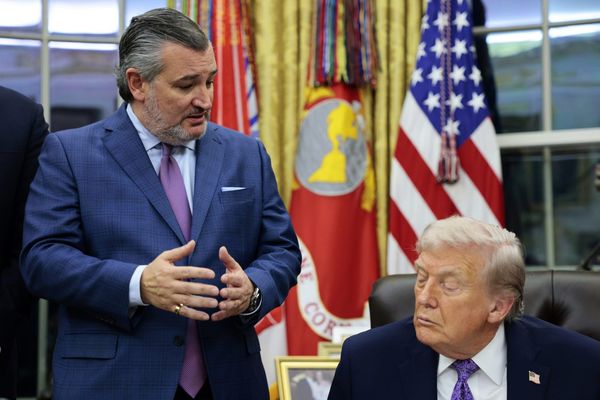
This timeline is at odds with President Donald Trump's desire to pass the tax legislation by the end of this year.
The market's expectations of Republicans slashing the corporate tax rate from 35 to 20 per cent, among other measures, is a key reason why Wall Street valuations have skyrocketed this year.
All three major three indexes have gained at least 15 per cent each in the year to date.
Industrials (-1.1pc) and technology (-0.8pc) were the S&P sectors which suffered the most losses this morning.
Nevertheless, technology has been the best performer this year, having surged by 37 per cent due to strong earnings from companies in that space.
The Nasdaq has fallen by the most (-0.6pc), followed by the Dow Jones (-0.4pc) and S&P 500 (-0.4pc).
RBA's statement in focus
Australian shares are likely to open lower today — given the overnight weakness from Wall Street, and ASX futures falling by 0.5 per cent.
In economic news, the Reserve Bank will release its quarterly statement of monetary policy [SoMP], which will give some insight into the bank's view of Australian economic conditions and inflation.
"The Australian market is likely to sit pat ahead of the RBA's SoMP today but risks underperforming," said ANZ Bank's Daniel Been.
He also warned investors to "expect a little more volatility" with the Australian dollar with the release of the central bank's statement.
Deutsche Bank economists are expecting the RBA's GDP growth "forecast for the fourth quarter of 2017 to be around 2.5 per cent, rising to 3.25 percent by the end of 2018".
As for underlying inflation, their prediction for the final quarter of this year to be 1.75 per cent, rising to 2 per cent by the end of next year.
The Australian dollar is steady at 76.8 US cents, but has fallen against the British pound (-0.2pc), euro (-0.3pc) and Japanese yen (-0.4pc).






.jpg?w=600)