ARIDA, Wakayama -- A mosquito bite is more than just irritating. The mosquito is a carrier of infectious diseases such as malaria, Zika fever and Dengue fever. More than 1 million people worldwide annually die of these diseases. As such, the mosquito is quite the tiny enemy of humanity.
A mosquito coil, which repels mosquitoes with smoke that drifts from the edge of the coil after setting it alight, was produced for the first time about 120 years ago in the city of Arida, Wakayama Prefecture, famous for mikan, or mandarin oranges.
What twists of fate brought together mikan and mosquitoes?
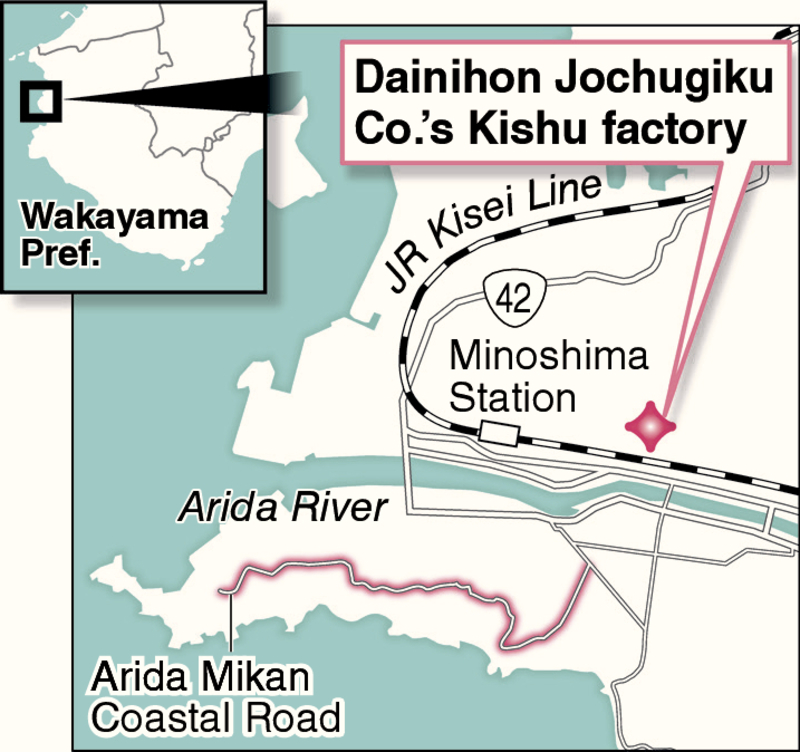
The Arida River runs through the northern central part of Wakayama Prefecture, and the hills lining both sides of the river are covered with mikan orchards. As I moved away from the townscape along a road, I happened upon the Kishu factory of Dainihon Jochugiku Co. standing at the foot of a mountain. Its exterior is covered in old and new corrugated galvanized iron sheets with the familiar corporate logo of a chicken visible.
"Since its founding in 1885, the factory has been expanded gradually," said factory manager Seiichi Kashima. As I entered the factory, guided by Kashima, I was greeted by a fresh scent in the air.
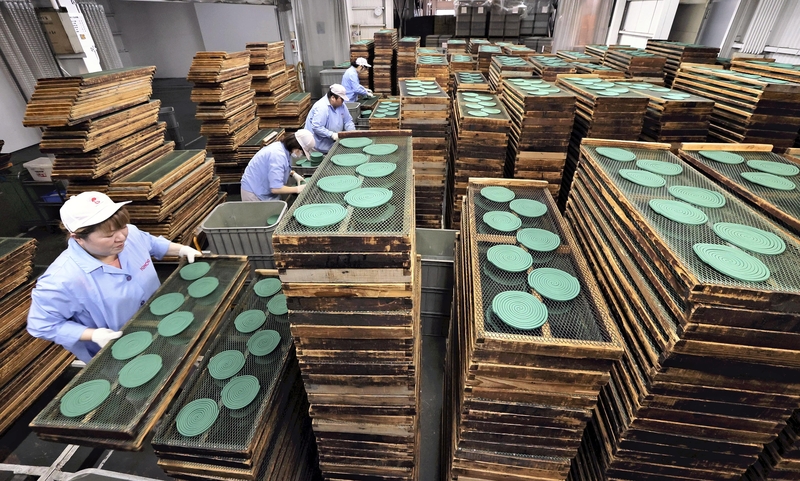
The production of spiral-shaped mosquito coils begins with kneading about 10 kinds of raw materials, including the insecticidal component called pyrethroid, with water and rolling it out. The processed materials are then placed in a mold before being pulled out.
"With nature as your partner in all this, you have to rely on intuition gained through years of experience to get the job done," said Nobuyuki Shoji, 42, a veteran worker with 24 years of service.
The semi-finished mosquito coils are dried after being placed on a net, and the finishing touches must be made according to the season and weather conditions. It is a refined production process that retains the charming fashion of the time when the factory was established.
Why were the first mosquito coils made in the home of mikan production?
Company founder and mosquito coil inventor Eiichiro Ueyama (1862-1943) was the fourth son of a family engaged in mikan production for generations. After studying under his mentor Yukichi Fukuzawa at Keio University, Ueyama hit upon the idea of exporting mikan and received pyrethrum seeds from the president of a U.S. plant cultivation company, whom Fukuzawa had introduced.
Indigenous to Serbia in East Europe, pyrethrums had been used to repel insects from livestock. Insects are bothersome for humans, too. As he pondered ways to make the effects of pyrethrums last a while, he came across an incense stick. The incense stick, which he had invented and sold for the first time, burned out in less than 40 minutes. After much trial and error, however, he invented the spiral-type mosquito coil we still use today.
Ueyama extended the time that one could use the repellent as the stick had been modified into a spiral, with its strength boosted thanks to the coil being double layered. The coils were also packed compactly in a box, making them easy to carry.
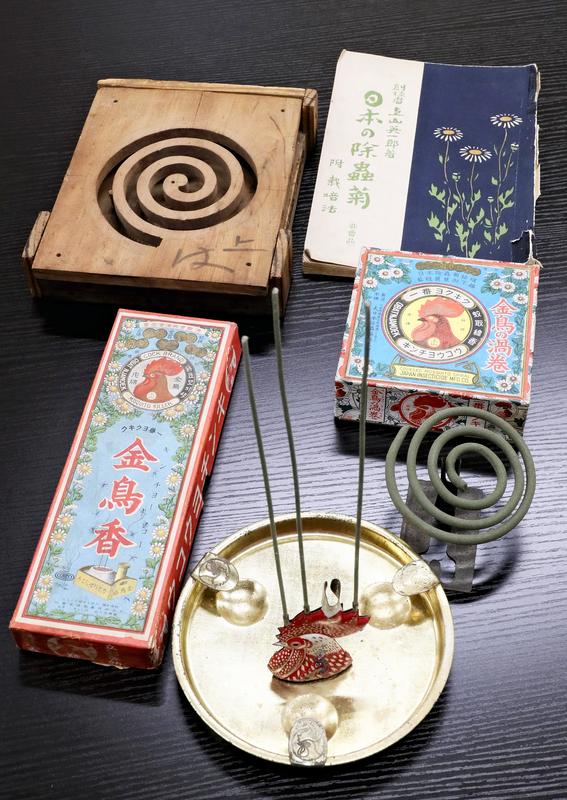
His wife Yuki is said to have come up with these innovative modifications when she saw a snake coil itself up. After seven years of modifications, the company began selling mosquito coils in 1902. Their efficacy and convenience has been maintained since then, making them a global treasure.
In the founder's birthplace museum located adjacent to the factory, you can view items such as a prototype wooden mold for the spiral-shaped coil and a book for cultivating pyrethrums written for farmers, all helping to tell the history of mosquito coil invention.
Manufacturing mosquito coils has long sustained the area where the factory is located. There are many companies in Wakayama Prefecture still involved in the production of good-old-fashioned incense sticks and insecticides as their business models change.
Yu Hanada, 74, who operates a ryokan inn near the Kishu factory, said in his childhood, farmers were busy picking pyrethrums in the fields and making mosquito coil boxes as part-time jobs.
"I got a reward for helping with the pasting work," he said nostalgically, adding, "The figure of smoke rising elegantly from a mosquito coil has not changed."
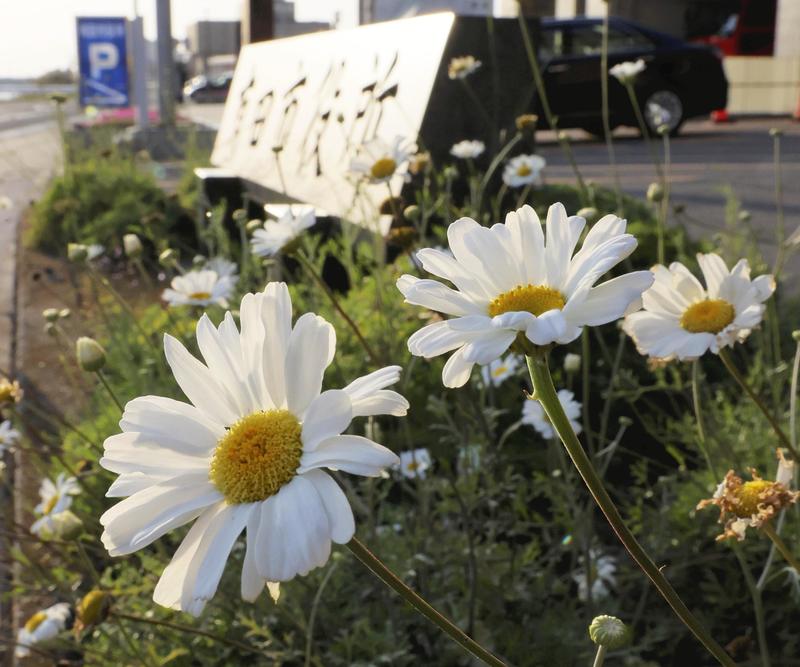
At the peak of mosquito coil production, pyrethrum fields were expanded from Wakayama Prefecture to coastal areas and islands in the Seto Inland Sea. Today, however, pyrethrums are no longer produced in these areas except for aesthetic reasons, as in the postwar period it is possible to produce a lot of mosquito coil materials through chemical synthesis. Pyrethrums bloom beautiful white flowers in flowerbeds and elsewhere in Arida. They bloom in early summer much like mikan trees, reminding residents of bygone days.
This year, they flowered in early April; The flowers were seen trembling in the cold breeze. At a time when the world is threatened by the new coronavirus pandemic, I thought about the struggle of our forerunners as if my thoughts were guided by the flowers.
-- How to get there
It takes about 20 minutes on foot from Minoshima Station of the JR Kisei Line to Dainihon Jochugiku Co.'s Kishu factory. It takes about 15 minutes by car if you get off the Hanwa Expressway at the Arida Interchange and take National Highway Route 42. No public viewing of the factory is accepted. The statue of the company founder Eiichiro Ueyama stands near the Susa Jinja shrine, which takes about 30 minutes on foot southward from the factory and about six minutes by car.
--Extend your trip!
Arida Mikan Coastal Road
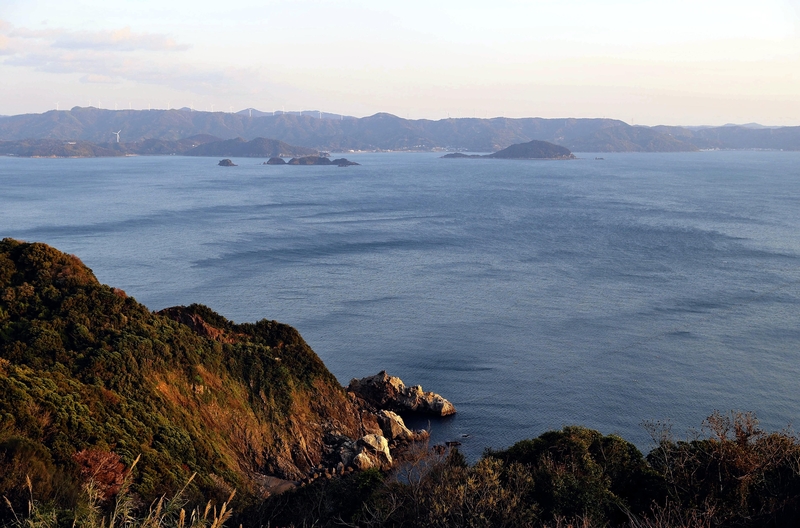
It stretches about 5.6 kilometers and runs through a mountain range where there are mikan orchards in the southwestern part of Arida -- provides visitors with opportunities to enjoy both driving and hiking. The Yuasa Bay extends below the road. From an observation platform near a halfway point on the road, it is possible, in nice weather, to witness a panoramic view of the sea with sight lines that stretch as far as Tokushima Prefecture, a part of Shikoku.
The Arida Minoshima fishery cooperative is scheduled to shortly open a facility at nearby Minoshima Fishing Port to handle locally hauled fresh fishery products.
Read more from The Japan News at https://japannews.yomiuri.co.jp/