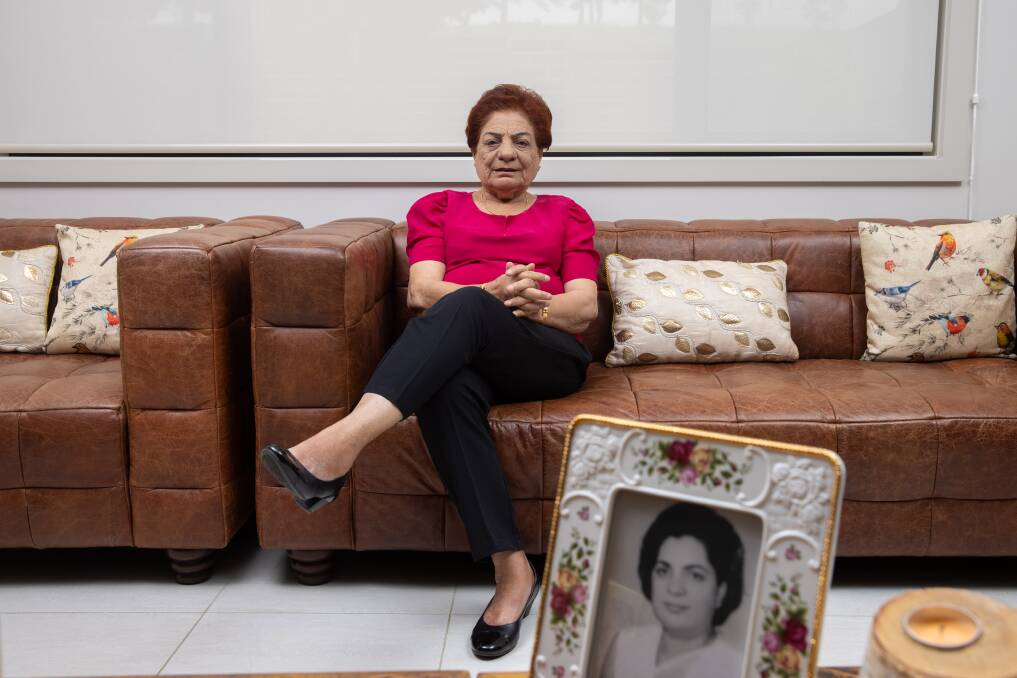
Last week Kanwal Bawa was feeling apprehensive about getting the COVID-19 vaccine.
Reports of issues with vaccines in other countries and images of anti-vaccine protesters chanting "my body, my choice" had the 84-year-old questioning whether signing up for the jab was the right thing to do.
She wasn't the only one to have doubts. Research from the Australian National University showed that women, Aboriginal people, people who spoke a language other than English at home and those who hadn't completed Year 12 had become less willing to get the vaccine.
On Sunday, Mrs Bawal attended a meeting of people from various cultural backgrounds who had their concerns addressed by Canberra-base GP Dr Paresh Dawda.
"That made up my mind that I should have it," she said.
"I had a number of questions, they were all very well answered."
Mrs Bawa, who migrated from India, said it was important for people to have access to information in their own language.
"Face-to-face is the only way to educate people and it should be in their own language," she said.
The federal government launched its $31 million vaccination public information campaign on January 27 with an extra $1.3 million provided to peak multicultural organisations.
Materials have been translated in up to 32 languages and adapted for Aboriginal and Torres Strait Islander audiences.
The department of health has held a series of round table discussions with community representatives to determine the best ways to communicate with culturally and linguistically diverse groups.
Information on the COVID-19 vaccine has been translated into 63 languages.
In the ACT, the government has been using a fortnightly bulletin to communicate with organisations and service providers and getting advice and feedback from a group of "critical friends" pulled from across the community.
Dr Dawda said while there was plenty of good-quality multi-lingual information on the COVID-19 vaccines, patients needed more guidance around the decision-making process to combat misinformation.
"There is this kind of mis-perception, mis-education maybe and I think that probably stems from the complexity and secondly, the sort of mixed messages and miscommunication that's going out on social media," he said.
Dr Dawda said questions that came up from migrant groups were the same as the general population but they needed to have their decision validated.
"They're wanting verification and validation from a trusted clinician. And I think for people from multicultural [backgrounds] I think it's verification and validation from somebody who they trust and if that person happens to be from their own community as well, then I think that's just extra reinforcement to support it."
The main questions patients asked referred to the process and practicalities of getting the vaccine, clinical questions on effectiveness and side effects of the shot and question related to their individual circumstances.
Dr Dawda said most people in residential aged care were lining up to receive the vaccine as part of the first phase of the rollout but a small minority of complex cases had decided against receiving it.
This was mainly in cases where patients had a very limited life expectancy of about two or three months and their decision-maker had wanted to ensure they were physically comfortable in that time.
"That's a completely understandable decision but I think the majority who are uncertain are moving to the 'yes' side of having the vaccination but through supported discussion."
Our journalists work hard to provide local, up-to-date news to the community. This is how you can continue to access our trusted content:
- Bookmark canberratimes.com.au
- Download our app
- Make sure you are signed up for our breaking and regular headlines newsletters
- Follow us on Twitter
- Follow us on Instagram