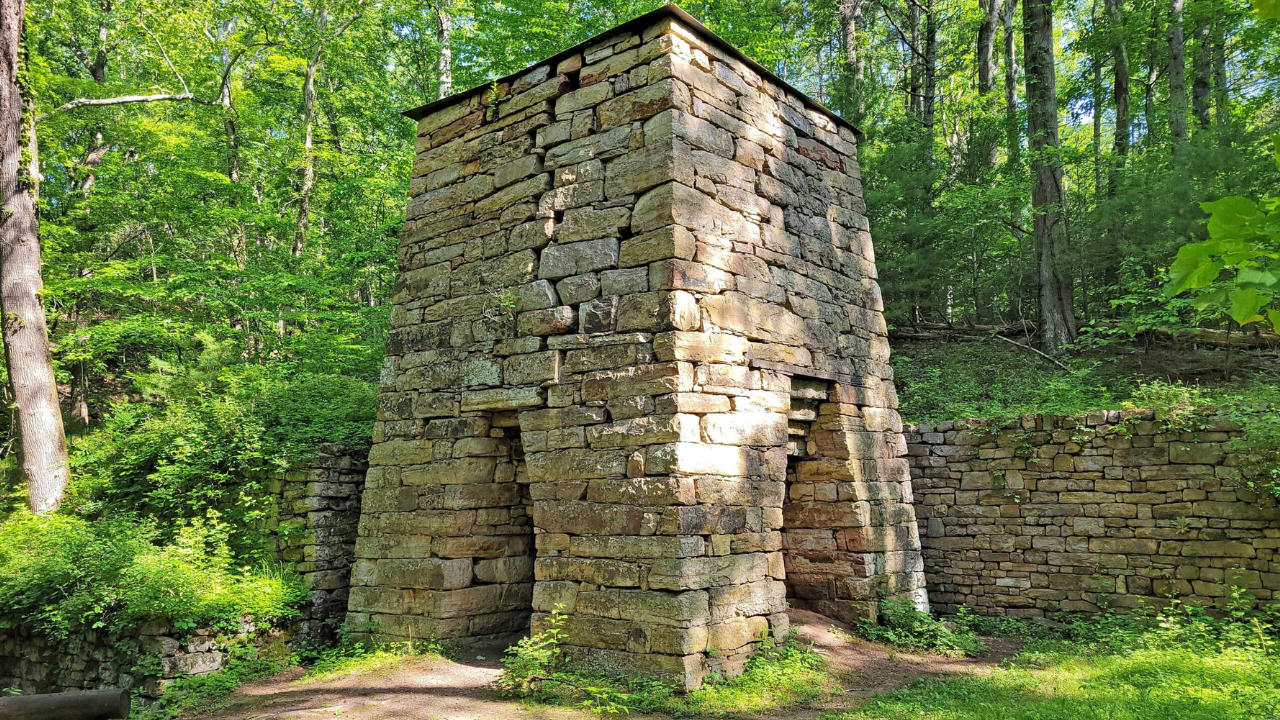
If you've ever hiked a quiet trail in a US national forest and stumbled on a strange stone pyramid buried in the trees, you've probably found an old iron furnace. The 2008 study, ‘Legacy of Charcoaling in a Western Highland Rim Forest in Tennessee,’ published in The American Midland Naturalist, led by Justin L. Hart, then at the University of Alabama, and colleagues at the University of Tennessee, found that a typical charcoal furnace in the eastern US burned through roughly an acre of forest for every single day it ran. That is the strange, quiet history hiding inside the George Washington and Jefferson National Forest in Virginia, one of the largest blocks of public land in the eastern United States.
Get breaking news anytime, anywhere. Download the TOI app now!
How Virginia became an iron state
America's iron story starts here. Jamestown colonists first mined iron ore in 1609, and between 1619 and 1622, settlers built the first iron furnace in the American colonies at Falling Creek, near the James River south of present-day Richmond. The Falling Creek furnace did not last long. It was destroyed during the Powhatan uprising of 1622, and iron production was not reestablished until 1714, with a new furnace near the Rappahannock River. The industry then spread west, crossing the Blue Ridge Mountains by the late 1700s and taking hold in the Ridge and Valley region, where Virginia eventually built 75 iron furnaces.
One acre a day, for just five tons of metal
Ironmaking at the time relied almost entirely on charcoal. A furnace could consume around 750 bushels of charcoal, 12 tons of iron ore and several tons of limestone in a single 24-hour period, producing about five tons of iron. Making that much charcoal took roughly 19 cords of wood, which works out to nearly an acre of forest cleared per day the furnace was lit. Many furnaces ran for nine to ten months a year, so the toll added up fast.
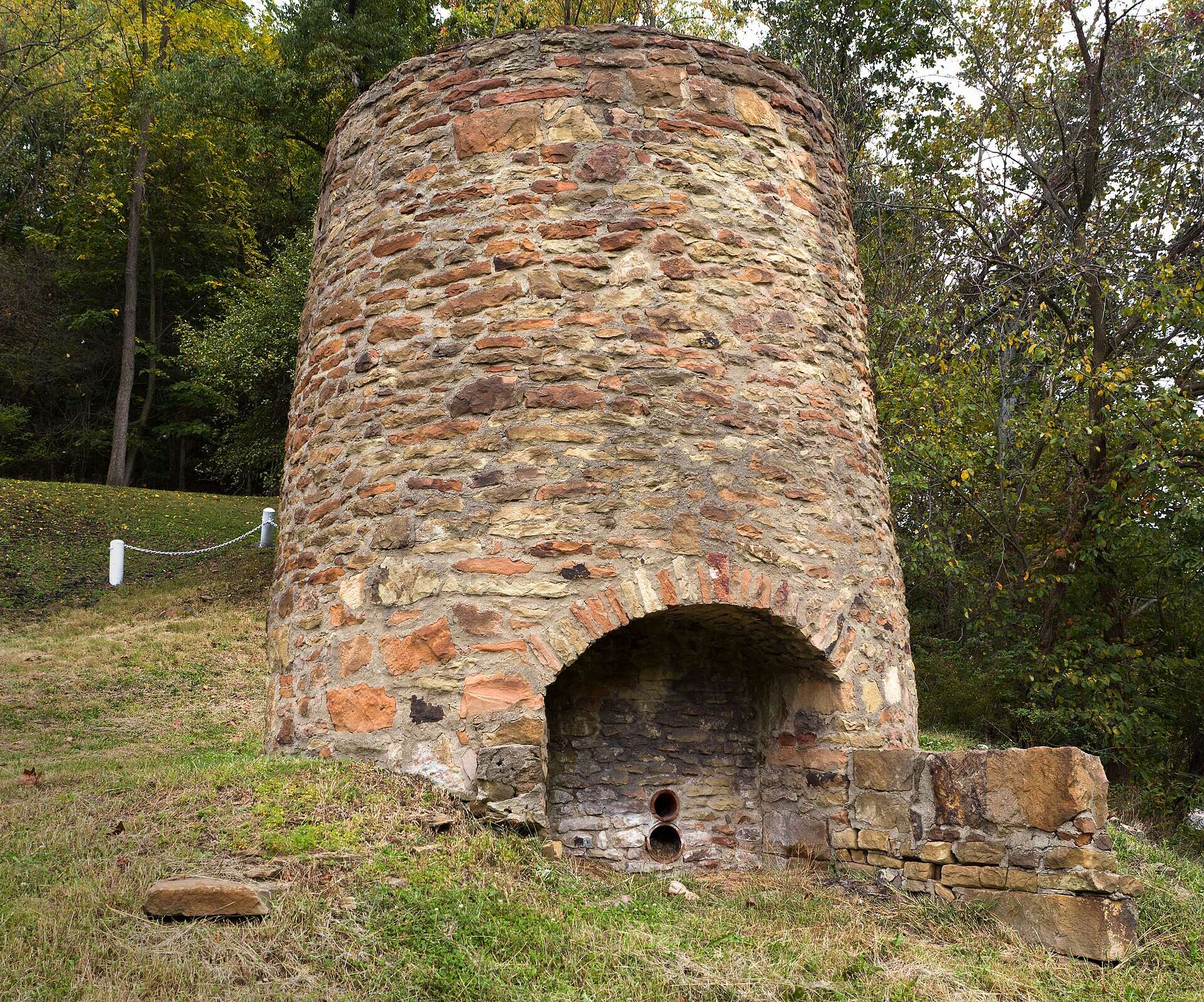
The Hart et al. study backs this up, confirming that eastern US iron furnaces typically consumed close to an acre of forest a day while active. The study’s measurements make that land-use story concrete: the authors sampled charcoal-hearth and non-hearth soils and found significant differences in several soil traits, but those chemical changes did not translate into major shifts in forest development. In other words, the charcoal industry altered the ground itself far more than the overstory now visible to hikers.
A USDA Forest Service history of the region adds that furnaces were sometimes abandoned altogether once nearby forests ran out, only reopening decades later once the trees had grown back.
Why the forest never stood a chance
Iron was essential. It went into cooking pots, barrel hoops, horseshoes, nails, tools, ploughs, rifles and cannonballs. Most Virginia furnaces shut down in the 1840s, once richer ore was discovered further north and west. They fired up again during the Civil War, when the South lost access to northern iron, then closed for good afterwards, though a handful limped on into the early 1900s.
A furnace was more than just a stone stack. Built on a hillside, it used a wooden bridge house to carry charcoal, limestone and ore to the top, while a stream-powered waterwheel drove the bellows that raised the internal temperature to between 2,300°F and 2,500°F. As layers melted, the limestone cleaned impurities from the ore, forming slag that floated free of the molten iron below. The furnace was tapped twice daily, and the metal flowed into sand casting beds nicknamed the "sow" and "pigs," hence "pig iron." Running a single furnace took up to 100 workers, roughly half of them enslaved people in the years before and during the Civil War, along with about 100 animals housed in surrounding barracks, kitchens and barns.
According to author Chris Bolgiano's book The Appalachian Forest, furnaces routinely shut down once every tree within hauling distance had been cut, and by the early 1800s, tens of thousands of acres had already been stripped, crisscrossed with hauling roads and pocked with charcoal hearths.
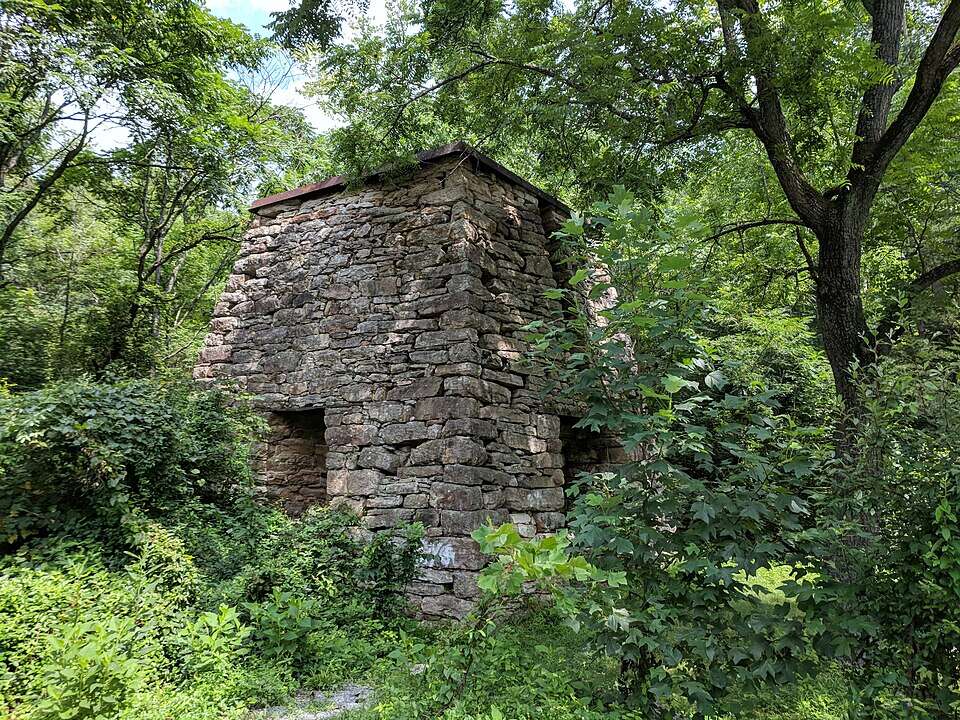
What's left today: 10 stone ghosts in 1.8 million acres
By 1900, the forests around Virginia's ironworks were gone, cut, split and turned into charcoal. Some areas were logged again later to feed a chip mill and paper mill in nearby Covington. Today, 10 stone furnace ruins survive inside the 1.8-million-acre George Washington and Jefferson National Forests. They include Roaring Run Furnace, built in 1838, and Callie Furnace, built in 1873 near Rich Patch Mountain, close to Glen Wilton, where it is recognisable by its rust-coloured smokestack and stone-lined cistern. Others, including Catawba (Botetourt County), Catherine (Page County), Elizabeth (Rockbridge County) and Raven Cliff (Wythe County) furnaces are scattered across the region. All are listed on the Virginia Landmarks Register.
Why this actually matters now
It is easy to file this under ancient history. But the Southern Appalachians took over a century to recover, and the forest you would hike through today is almost entirely regrown, not original old growth. That is worth remembering the next time you choose a trail: forests do not recover overnight, and one generation's resource choices can shape a landscape for a century or more.