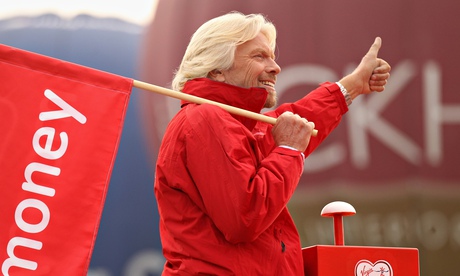
The flotation of Virgin Money, part-owned by Sir Richard Branson, is back on after being delayed from last month.
A stabilisation in the stock market and clarity from the Bank of England about how much capital the bank should hold, has allowed the management team, led by Jayne-Anne Gadhia, to restart the sale process.
Gadhia, who is in line for a share award as a result of the initial public offering (IPO), said: “Given this [clarity from the Bank of England] and given more stable market conditions, we now plan to move forward with our IPO with the aim of being admitted by the end of November.”
The bank has 75 branches as result of the acquisition of the “good” part of Northern Rock in 2011. As a result of the stock market flotation, taxpayers are line for £50m and the bank’s 2,800 staff on track for a free share handout of £1,000 each.
Virgin Money’s leverage ratio – a measure of how much capital a bank should hold – is 3.8%, higher than the 3% minimum set by the Bank of England’s financial policy committee on Friday.
“We welcome the clarity provided by the financial policy committee on the leverage ratio, and are pleased to note that we operate in excess of the recommended requirements. Given this and given more stable market conditions, we now plan to move forward with our IPO with the aim of being admitted by the end of November,” Gadhia said.
Virgin Money is 47% owned by Branson with the US investor Wilbur Ross owning about 45% and the rest by other investors.
The sale is being kickstarted at a time when National Australia Bank has also said it would consider the flotation of its UK banks, Clydesdale and Yorkshire.