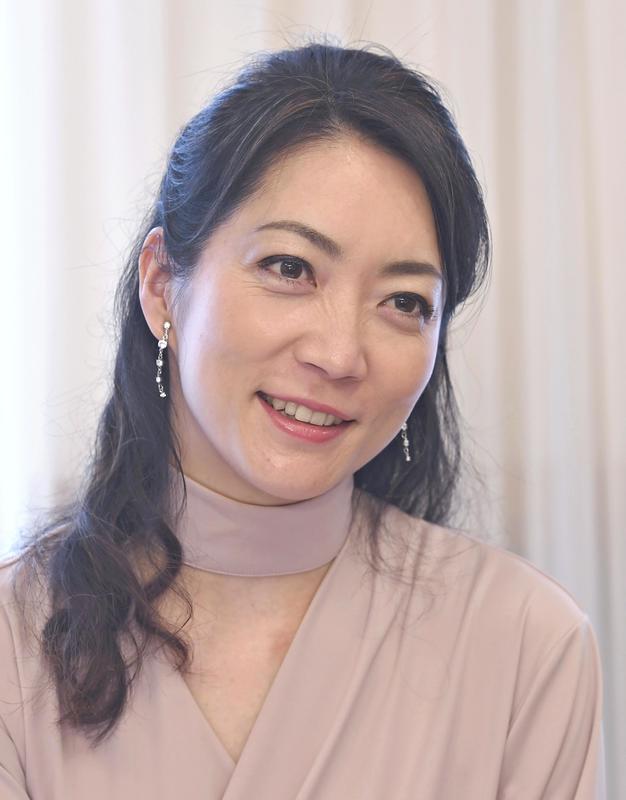
The International Music Festival Nippon will be held in Tokyo, Nagoya and Iwate Prefecture from February to March, with violinist Akiko Suwanai serving as artistic director of the event.
Suwanai, who won the International Tchaikovsky Competition 30 years ago, has become more involved in artistic activities as well as performing in recent years.
She launched the festival after the Great East Japan Earthquake in 2011 and has invited artists from all over the world to perform at the event. This year is the sixth time the festival has been held.
The program includes a free concert in Kamaishi, Iwate Prefecture, on March 12 and open master classes in Tokyo on March 14 and 15.
"In the early days [of the festival], I just played as a soloist, and that was it. Now I can get involved in more comprehensive activities. In that sense, it has become a completely different experience for me," Suwanai said.
"Planning an event like this requires collaboration with various people. I feel much more fulfilled and rewarded as a performer."
Suwanai collaborated with three music critics to create this year's festival program.
The fruit of their efforts can be seen, for example, in the "Beethoven Chamber Music Marathon Concert" at Tokyo Opera City Concert Hall in Shinjuku Ward, Tokyo, on March 8. The three-part concert will begin at 1 p.m. and will include various instrumentalists performing only chamber music pieces by Beethoven through to the evening.
"You can't express the beauty of Beethoven's works unless you have an overall understanding of music," Suwanai said.
In addition to well-known Beethoven works, such as sonatas, the program will showcase some of his early work, such as Piano Trio No. 1 and a rare gem, Duo for Viola and Cello "With Two Eyeglasses Obbligato." These works serve as a reminder that the pieces we frequently hear are only a fraction of a composer's whole output.
The festival also puts an emphasis on contemporary music. A two-day chamber music series at Kioi Hall in Chiyoda Ward, Tokyo, on March 11 and 13 will feature contrasting programs: classical on Day 1 and modern on Day 2. The lineup of the second day is very up-to-date and includes Steve Reich's "Violin Phase," in which performers play alongside their own prerecorded performance, and excerpts from Suite "Carapace" by up-and-coming Japanese composer Osamu Kawakami.
According to Suwanai, the selection is a challenge for the performers to see "how close they can get to the composer's thinking and convey their message in a time where both the performer's job and composer's job have become completely specialized, unlike in the past," she said. "It's fun. Reading the scores is tough, though."
Suwanai was 18 when she won the Tchaikovsky competition in 1990. Last year, she served as a judge for the competition's violin category. She has transformed herself in that span of time.
"One thing that is different from 30 years ago is that now I spend more time on maintenance than making improvements. In professional sports, maybe you get better and better, and eventually there comes a point when you can no longer improve. But in arts, it's all about how to give your performance more depth from that point on. To do so, you need technique, and it takes time to maintain it. That can't be done unless you are very disciplined," Suwanai said, referring to the weight she feels in continuing with her career.
Her performances in the upcoming festival include a duo recital with pianist Nicholas Angelich at Tokyo Opera City Concert Hall in Tokyo on Feb. 14 and at MS&AD Shirakawa Hall in Nagoya on Feb. 15, and one with the National Symphony Orchestra of Washington conducted by Gianandrea Noseda at Suntory Hall in Minato Ward, Tokyo, on March 10.
Read more from The Japan News at https://japannews.yomiuri.co.jp/