Banarasi Silk Sarees (Pre-1980s)
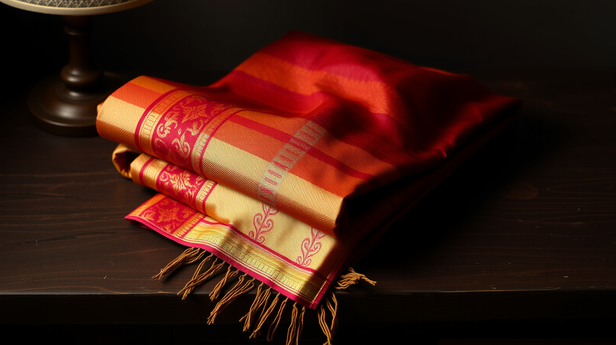
The benchmark for vintage Indian textile value is a pre-1980s Banarasi silk saree woven with real zari, the kind that contains actual silver or gold wire, not the polyester metallic thread that replaced it in mass production after the 1980s handloom decline. Auction houses in Mumbai and Delhi have recorded six-figure sums for authenticated pieces from established weavers in Varanasi's Madanpura and Peeli Kothi neighbourhoods. The tell is weight: real zari is heavy, and old Banarasi silk has a particular drape that contemporary reproductions cannot replicate. Collectors look for the traditional motifs, kalga, bel, jhallar borders, and for the uncut selvedge that proves the saree was never altered.
Parsi Gara Embroidery
Parsi gara pieces are among the rarest items in the Indian vintage clothing market, and their scarcity is only growing. The embroidery tradition, brought to India by Parsi merchants trading with China, involves dense chain-stitch work depicting Chinese phoenixes, fish, and flowering trees, executed on fine silk. Skilled gara embroiderers are now fewer than a few dozen in the country, concentrated in Surat and Mumbai's Parsi colonies. A full gara saree from the early 20th century in good condition regularly sells for two to four lakh rupees. Even fragments and borders have found buyers among collectors who frame them. The value is not purely aesthetic, it is the documented near-extinction of the craft that drives the price.
Zardozi-Worked Dupattas and Sherwanis
Zardozi, the heavy metal embroidery that once dressed Mughal court clothing, went through a long period of being considered old-fashioned. That perception has reversed sharply. Vintage zardozi dupattas and sherwanis from Lucknow and Hyderabad, particularly pieces from the mid-20th century when the craft was still practised by hereditary karigar families with generations of technique behind them, are now actively sought by collectors and costume departments of film productions. The difference between vintage and contemporary zardozi is visible under magnification: old work uses individually hammered metal components; modern versions use machine-stamped pieces. Resale prices for documented pieces have climbed steadily as the original karigar families have dispersed.
Pochampally Ikat Sarees
Pochampally ikat from Telangana earned a Geographical Indication tag, but the pieces that collectors want predate that institutional recognition by decades. Vintage Pochampally sarees, particularly double-ikat pieces where both warp and weft threads are resist-dyed before weaving, require a level of technical precision that takes a weaver years to develop. The older pieces show a slightly imprecise, organic quality to the pattern edges that is actually the mark of handwoven authenticity. Contemporary power-loom ikat is too sharp, too regular. Serious buyers know this distinction and pay accordingly. A handwoven double-ikat saree from the 1960s or 1970s in good condition is a different object from anything being produced at scale today.
Kantha Quilts from Bengal and Bihar
Old kantha quilts, made by women in Bengal and Bihar from layered worn saris stitched together with running stitch in geometric and narrative patterns, have crossed from folk textile into museum-grade collectible. The Victoria and Albert Museum in London holds examples. In the Indian market, 19th and early 20th century kantha pieces with figurative embroidery depicting village scenes, gods, or animals fetch serious money at specialist textile auctions. The irony is that kantha was always a recycling tradition, made from discarded cloth. What makes an old piece valuable is precisely the evidence of that use, the faded dyes, the repaired sections, the accumulated domestic life visible in the stitching.
Chikankari Pieces from Lucknow's Pre-Partition Workshops
Chikankari embroidery from Lucknow is still produced in large quantities, but the vintage market is specifically interested in pieces from workshops operating before Partition, when the craft was supported by nawabi patronage and the finest work went to court dress. These pieces, often on fine mul-mul or georgette, show a density and variety of stitches that current commercial production rarely matches. Collectors look for the shadow work stitches (bakhiya) done with such precision that the pattern is visible from both sides of the cloth. Documented provenance, where it exists, adds significantly to resale value. Several families in Lucknow's old city still hold pieces passed down from the workshops their ancestors ran, and most have not had them appraised.
The thing these six categories share is not age alone. A synthetic saree from the 1970s is old but not collectible. What drives value in vintage Indian clothing is the convergence of a dying technique, a specific geography, and the kind of material integrity that industrial production structurally cannot replicate. The families who hold these pieces inherited them as sentiment. The market has quietly reclassified them as evidence.
.png?w=600)