The Liberal Party reminds one of that cumbersome machine, nicknamed Florence, that became stuck (twice) in a tunnel in the Snowy 2.0 project.
One time Florence bogged, opening up a sink hole. The second time she was wedged in rock.
Both problems beset the Liberals as two more polls published at the weekend document their strife.
While the main attention has been on a drop in One Nation’s support (and Labor’s rise), the equally important message is what’s happening to the Coalition vote. In Newspoll it’s down a point to 17%. In Redbridge it’s fallen two points to 18%.
Read more: Two new polls show drop in support for One Nation and the Coalition
The Liberals are headed to being a minor party – the vote of the Coalition (including the Nationals) is only 4 points ahead of the Greens – and there is no obvious way for them to break out of this malaise.
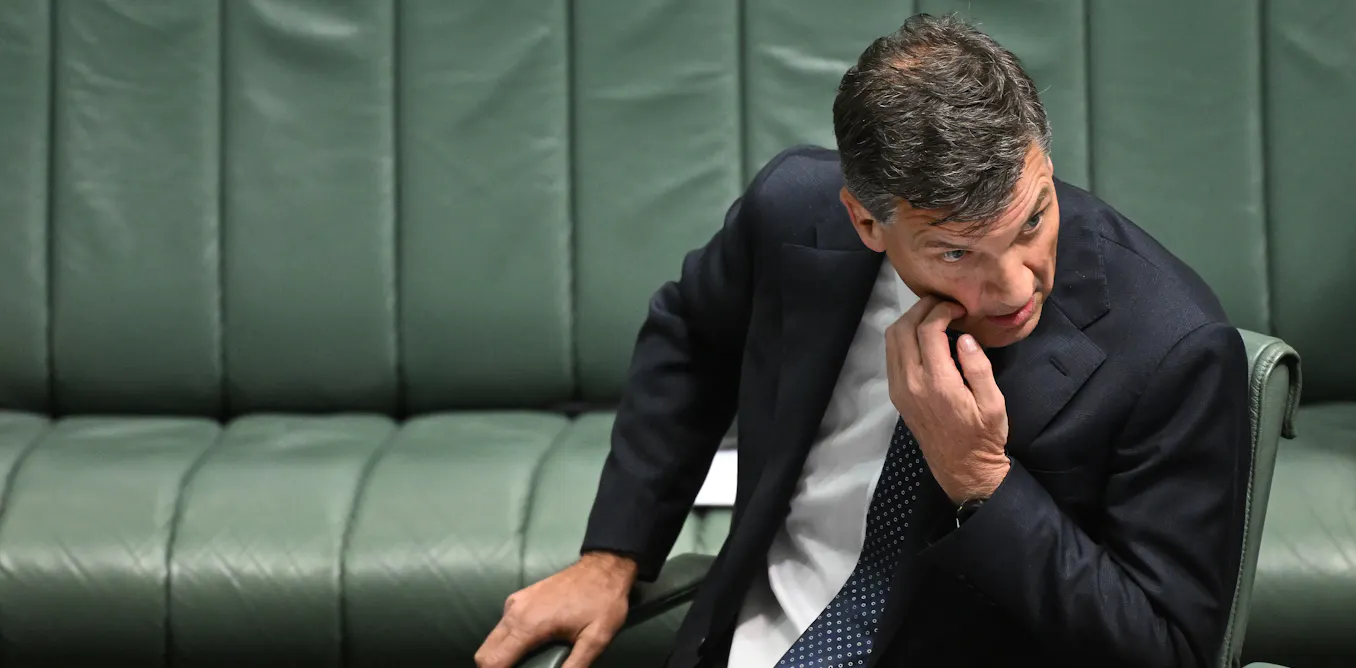
They’ve tried the leadership switch, and that hasn’t worked. Angus Taylor gets into muddles (as he did last week over multiculturalism). He looks as though he’d rather be back on his farm than having to be out and about every day, everywhere, which is the brief for an opposition leader. He is not cutting through.
But another quick change of leader, to Andrew Hastie, wouldn’t necessarily help. Hastie came into parliament (at a 2015 byelection) only a couple of years after Taylor (2013) but he is less experienced in senior frontline positions.
When well prepared, Hastie can be a strong political performer, but he has been knocked around by the vicious attacks on him over giving evidence against Ben Roberts-Smith, the VC winner accused of five counts of the war crime of murder. Hastie’s political resilience – an incredibly important quality in politics – has yet to be tested.
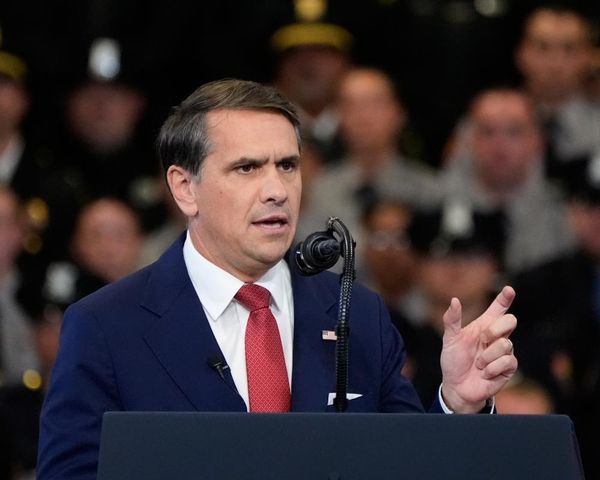
Anyway, if the Liberals changed leaders again soon and it didn’t work, what then? No obvious candidates would remain, although shadow treasurer Tim Wilson would see himself as an option.
As they agonise about their situation, Taylor is putting forward what is more or less a classic Liberal economic agenda. Economics is traditionally the Liberals’ strong ground but their current messages are not suiting the mood of a disgruntled electorate. Not that voters listen to a leader many of them have written off.
Various desperate suggestions are being put forward. Frontbencher Melissa McIntosh, interviewed on Monday on Sky, which is having to change its name for licence reasons, suggested the Liberals should rebrand too.
“I’m putting myself out on a limb a little bit,” McIntosh said. “I think it’s time for the Liberal party to rebrand itself. Some people think that we’re stuck in the past and our policies need to resonate with the Australia of today and the future. So I think it’d be a really good time for us to revisit our values. What we stand for and the way we project ourselves to Australians.
"That takes a lot of work inside the party to go back to our roots, and then to look at our messaging and our communications to the Australian public, because you can’t keep getting poll after poll saying that it’s diabolical out there and just ignore it.”
Liberals are tossing overboard their past, like a sinking ship discarding ballast.
Peter Dutton has of course been thoroughly trashed. Taylor is criticising the Liberals’ record in COVID. He said on Monday, “I think during COVID we allowed big government to become accepted […] we needed to come out of COVID with a strong plan to pare back on both spending and the role of government in people’s lives”.
This overlooks an important point. While the federal spending during COVID, judged in retrospect, was obviously more than needed, it kept a lot of people and businesses going. The Liberals might rightly want to distance themselves from Scott Morrison, but that government’s COVID record was far from as bad as now portrayed.
Then there is the “wedge”, or wedges, the Liberals face.
The Liberals don’t know how to respond to One Nation. Hastie is adamant be won’t “bend the knee” to the insurgents. Some Liberals want accommodation. Taylor’s language varies, as he seeks to avoid offending One Nation supporters. “I never attacked One Nation voters, and I never would. I never will,” he said on Monday.
More generally, the Liberals are wedged between needing to attract back voters who have fled to One Nation but also small-l former Liberal voters who have backed the teals. That surely is an ideological and policy needle that defies threading.
The success of the teals in taking Liberal seats has been a major factor in the Liberals’ parlous position.
The teals defeated a number of Liberal moderates. In Kooyong Monique Ryan took out a potential future leader, Josh Frydenberg. If Frydenberg had held Kooyong he would have likely become leader either after the 2022 election or the 2025 one.
For any revival, the Liberals need to win back urban seats, but the teals are now substantially dug in.
The teal wave has been hailed as a welcome feature of our democracy. How refreshing to have a bevy of free-thinking, free-speaking independents (even if a couple are now forming a new party). But it has also contributed to the decline of a major “party of government” and, some would say, by extension and indirectly to the rise of One Nation. And that is bringing its costs.
For Liberals determined to look on the bright side, however, Florence eventually did get out of her predicament. A recent Snowy Hydro video “Catching up with Florence!” shows her moving. Taylor can only hope.
This article was originally published on The Conversation. Read the original article.