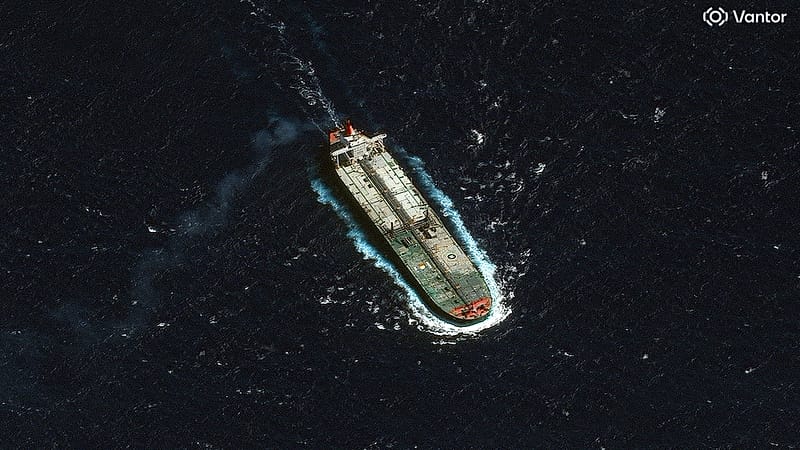
Venezuela's National Assembly on Tuesday approved a law criminalising activities that disrupt navigation and commerce, including the seizure of oil tankers, as tensions escalate with the United States over ship interdictions.
The bill was introduced, debated, and approved by the unicameral assembly within two days, which is controlled by Venezuela's ruling party. The legislation now awaits the signature of Venezuelan President Nicolás Maduro.
The law calls for fines and prison sentences of up to 20 years for anyone who promotes, requests, supports, finances or participates in "acts of piracy, blockades or other international illegal acts" against commercial entities operating with Venezuela, according to the bill as read on the floor.
It also instructs the executive branch to create "incentives and mechanisms for economic, commercial and other protections" for national or foreign entities doing business with Venezuela in the event of piracy activities, maritime blockades or other unlawful acts.
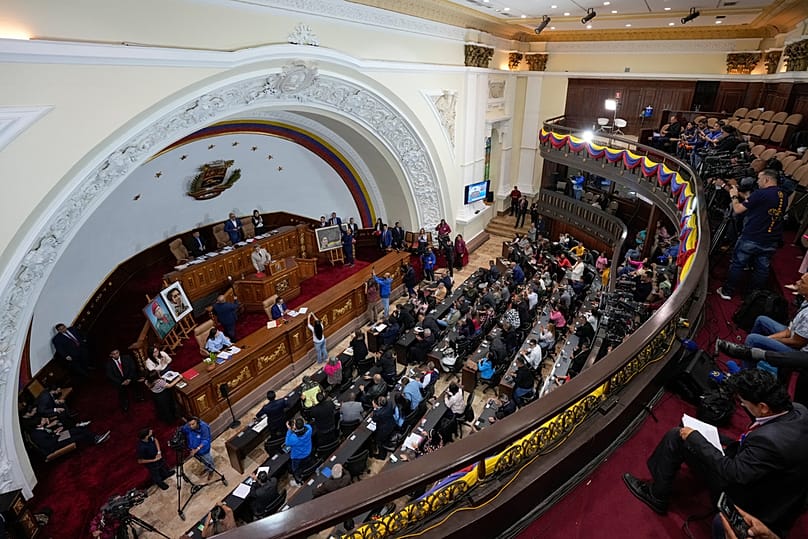
The assembly did not publish drafts or the final version of the measure on Tuesday.
"This law seeks to protect the national economy and avoid the erosion of living standards for the population," lawmaker Giuseppe Alessandrello said whilst presenting the law before the National Assembly.
National Assembly President Jorge Rodríguez said the bill would be sent to Maduro for approval and would take effect upon publication in the Official Gazette.
Pursuing new targets
The move comes as the United States has intensified pressure on Venezuela's government, with the seizure of oil tankers as its latest strategy.
On 10 December, US forces seized the oil tanker Skipper in international waters off the coast of Venezuela. The 332-metre vessel had been sanctioned by the US Treasury Department in 2022 for allegedly being part of an oil trafficking shadow fleet involving Iran's Revolutionary Guard Corps and Hezbollah.
Last Saturday, the US Coast Guard seized a second vessel, the Panama-flagged tanker Centuries, which was carrying approximately 1.8 million barrels of Venezuelan crude oil. Unlike the Skipper, the Centuries was not on the US sanctions lists at the time of seizure.
US officials have said they are pursuing a third vessel, the Bella 1, which was sanctioned by the Treasury Department in 2024 for allegedly transporting cargo that enriched Hezbollah and Iran's Revolutionary Guard Corps-Qods Force.
The Trump administration says the vessels are part of Venezuela's shadow fleet, used to evade US economic sanctions.
On 17 December, US President Donald Trump announced a "blockade" of all sanctioned oil tankers departing from or bound for Venezuela, demanding the return of assets seized from US oil companies years ago.
"Venezuela is completely surrounded by the largest armada ever assembled in the history of South America," Trump wrote on his social media platform. "It will only get bigger, and the shock to them will be like nothing they have ever seen before."
'Primary economic lifeline for Maduro and his illegitimate regime'
At an emergency meeting of the UN Security Council called by Venezuela on Tuesday, US Ambassador Mike Waltz said the sanctioned oil tankers "operate as the primary economic lifeline for Maduro and his illegitimate regime" and fund "the narco-terrorist group Cartel de Los Soles".
"Maduro's ability to sell Venezuela's oil enables his fraudulent claim to power and his narco-terrorist activities," Waltz said.
"The United States will impose and enforce sanctions to the maximum extent to deprive Maduro of the resources he uses to fund Cartel de los Soles," he added, referring to the loosely connected group of top Venezuelan officials accused of controlling the drug trade in the country.
A few countries including Panama and Argentina supported Washington's actions.
Maduro has condemned the seizures as "blatant theft" and "acts of international piracy".
The Venezuelan government said on Tuesday it would continue to trade oil and vowed to protect Venezuela and its exports.