Oilfield service companies operating in Venezuela have started removing drilling rigs and specialized equipment from long-term storage for repair and redeployment as the interim government pushes ahead with a broad overhaul of oil and gas contracts.
The renewed activity comes after years of stagnation in one of the world's most resource-rich but operationally constrained oil sectors, where production collapsed under sanctions, investment shortages, and payment disputes under the Maduro regime.
At least nine land drilling rigs with capacities between 500 and 1,500 horsepower have been taken out of storage in recent weeks and are being prepared for onshore deployment, according to industry sources cited by Reuters.
Five additional rigs are currently under technical assessment before potential reactivation. Much of the equipment had been idle since U.S. sanctions in 2019 restricted operations by international oilfield service providers and limited access to financing and spare parts.
The contract overhaul underway in Caracas follows a sweeping reform of Venezuela's oil legislation earlier this year following the capture of Maduro and his replacement by Delcy Rodriguez, who has engaged closely with the Trump administration.
The regulatory environment, however, remains heavily influenced by U.S. sanctions policy, which has shaped the scale and structure of foreign participation in Venezuela's oil sector. The Associated Press has reported that Washington has issued limited and conditional licenses allowing select operators such as Chevron to continue restricted production activities, often tied to political and financial compliance conditions involving debt repayment and export controls.
Chevron's presence has become central to Venezuela's cautious reopening strategy, as it operates under specific exemptions that allow joint ventures with PDVSA to continue limited output while broader sanctions remain in place.
European energy companies have also been closely linked to Venezuela's gradual production recovery plans. The Financial Times has reported that firms such as Repsol and Shell have maintained selective exposure to Venezuelan assets, balancing long-term resource interests with regulatory and reputational risks tied to sanctions compliance.
These companies have generally focused on incremental field development and maintenance projects rather than large-scale expansion, reflecting a cautious approach to re-entry in a politically sensitive operating environment.
Venezuela's oil ministry has outlined an ambition to increase national crude production to around 1.37 million barrels per day by the end of the year, up from roughly 1.1 million barrels per day currently, according to internal projections referenced by Reuters.
That target comes at a time of heightened global energy volatility. The ongoing Russia-Ukraine war has reshaped global crude flows, tightened sanctions on Russian exports and forced refiners in Europe and Asia to seek alternative supply sources. Bloomberg has reported that these shifts have increased attention on underutilized producers with large reserves, including Venezuela, even as investors remain cautious about operational risk and policy uncertainty.
One of the central dynamics shaping the current revival is whether companies reactivate equipment already inside Venezuela or attempt to import new rigs and machinery. Industry participants told Reuters that firms with stored equipment inside the country hold a logistical advantage, as cross-border licensing requirements involving both Venezuelan authorities and U.S. Treasury approvals can significantly delay imports.
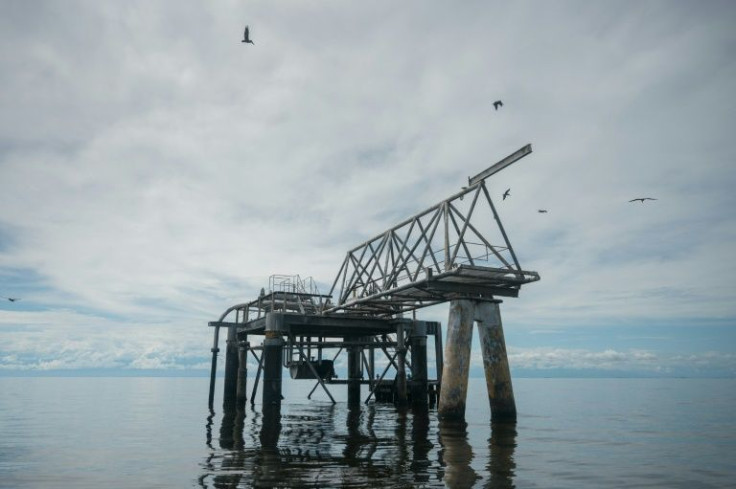
This is especially important for heavy oil operations in the Orinoco Belt and mature fields around Lake Maracaibo, where restarting production requires extensive drilling, pumping and infrastructure rehabilitation.
However, many of the stored rigs require substantial refurbishment after years of inactivity. Repairs can exceed $1 million per unit in some cases, and operators typically require medium-term contracts of around 12 months to justify reactivation costs, according to oil executives cited by Reuters.
Global oilfield service firms remain cautiously engaged. Halliburton said during a recent earnings call that it has been in discussions with customers about potential Venezuela operations after conducting site assessments. Similarly, SLB has described the country as an "exciting growth opportunity," signaling interest in re-engagement despite ongoing risks.
Companies including Baker Hughes and Weatherford International previously reduced or paused operations following sanctions tightening, a shift that led to equipment storage, write-downs, and suspended drilling campaigns across Venezuela's main producing regions. The BBC has documented how these sanctions contributed to a steep decline in output, as investment and technical capacity exited the country over several years.
Despite renewed activity, structural constraints continue to weigh on recovery. Bureaucratic delays, payment reliability concerns and sanctions compliance requirements remain key barriers to large-scale reinvestment. Industry participants cited by Reuters have noted that many service firms remain wary after earlier arrears from PDVSA resulted in financial losses and unresolved debts.
Even as rigs are reactivated, Venezuela's operational base remains extremely limited. Baker Hughes rig data referenced by Reuters shows only two active drilling rigs in the country as of late March, underscoring how far activity levels have fallen from historical peaks.