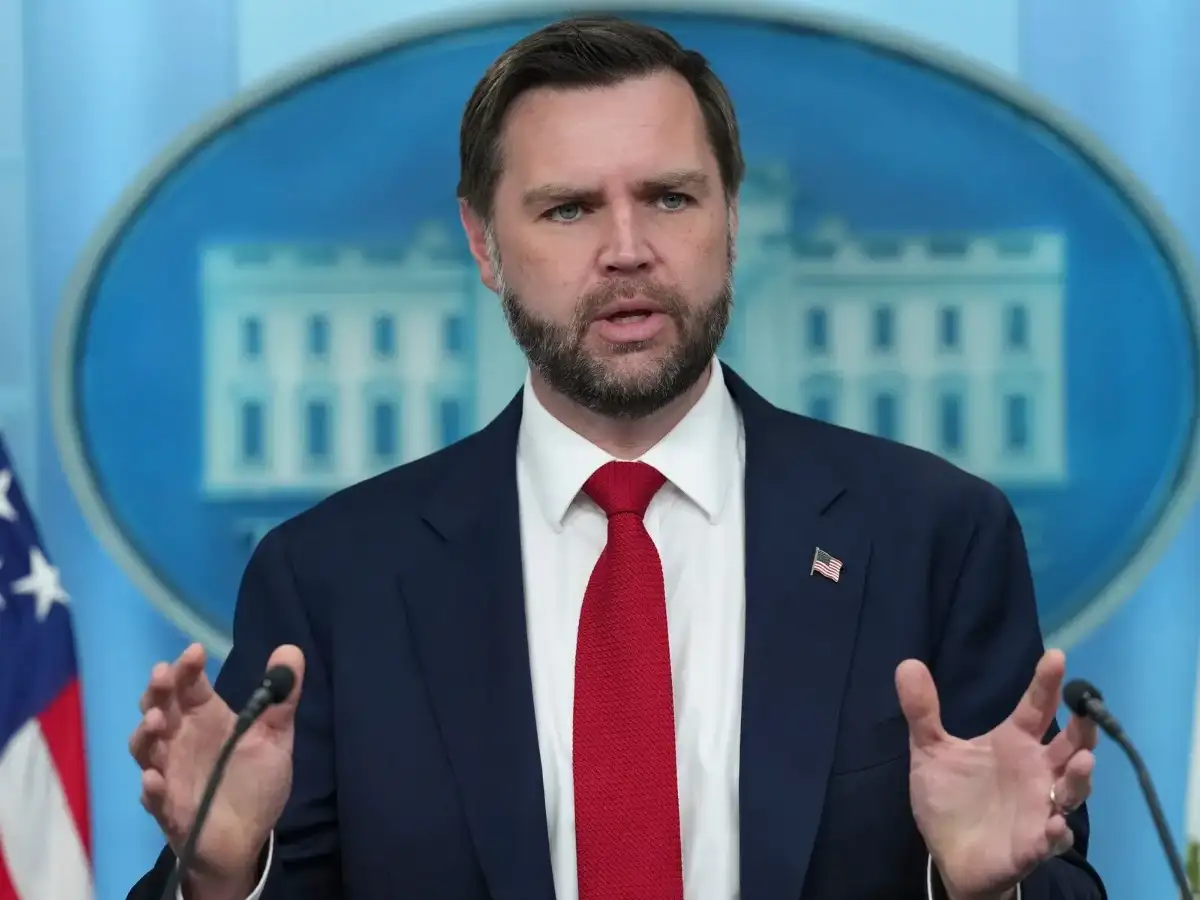
U.S. Vice President JD Vance said on Thursday that more than 12.5 million barrels of oil moved through the Strait of Hormuz overnight, the highest level since the conflict began in late February, as a U.S.-Iran agreement entered a 60-day implementation period.
Speaking at a White House briefing, Vance said the U.S. Navy had allowed more than a dozen ships to access Iranian ports, lifting a blockade as part of an agreement aimed at ending the conflict. He said the increase in oil flows showed that Washington was honouring its commitments under the initial phase of the deal.
Vance said the 60-day period begins on Thursday, with final negotiations expected to determine the terms that will apply after the implementation window ends.
Also Read: Pakistan PM's visit to Switzerland postponed due to electronic signing of US-Iran deal: Spokesman
He added that Iran did not fire on any ships overnight, a sign of stability for maritime traffic through the Strait of Hormuz, a key global oil transit route.
Outlining U.S. expectations for a final agreement, Vance said Iran would retain the right to self-defence but would not be allowed to possess missiles capable of "broadly threatening the entire world."
On sanctions relief, Vance said Washington would be able to monitor how Iran sends and receives money, suggesting that any easing of restrictions would be accompanied by oversight mechanisms.
Vance also said Iran would require significant financial resources to rebuild any nuclear weapons programme and reiterated that the administration plans to brief Congress on the agreement soon.
Addressing the regional dimension of the accord, Vance said Israel must respect the peace process and described attacks on civilians in Beirut as unacceptable. He said the U.S. expects both sides to honour the Lebanon-related components of the agreement and ultimately wants the Lebanese government to police southern Lebanon.
The vice president said future flare-ups would need to be managed through diplomacy, adding that the agreement provides a framework for reducing tensions while broader negotiations continue.