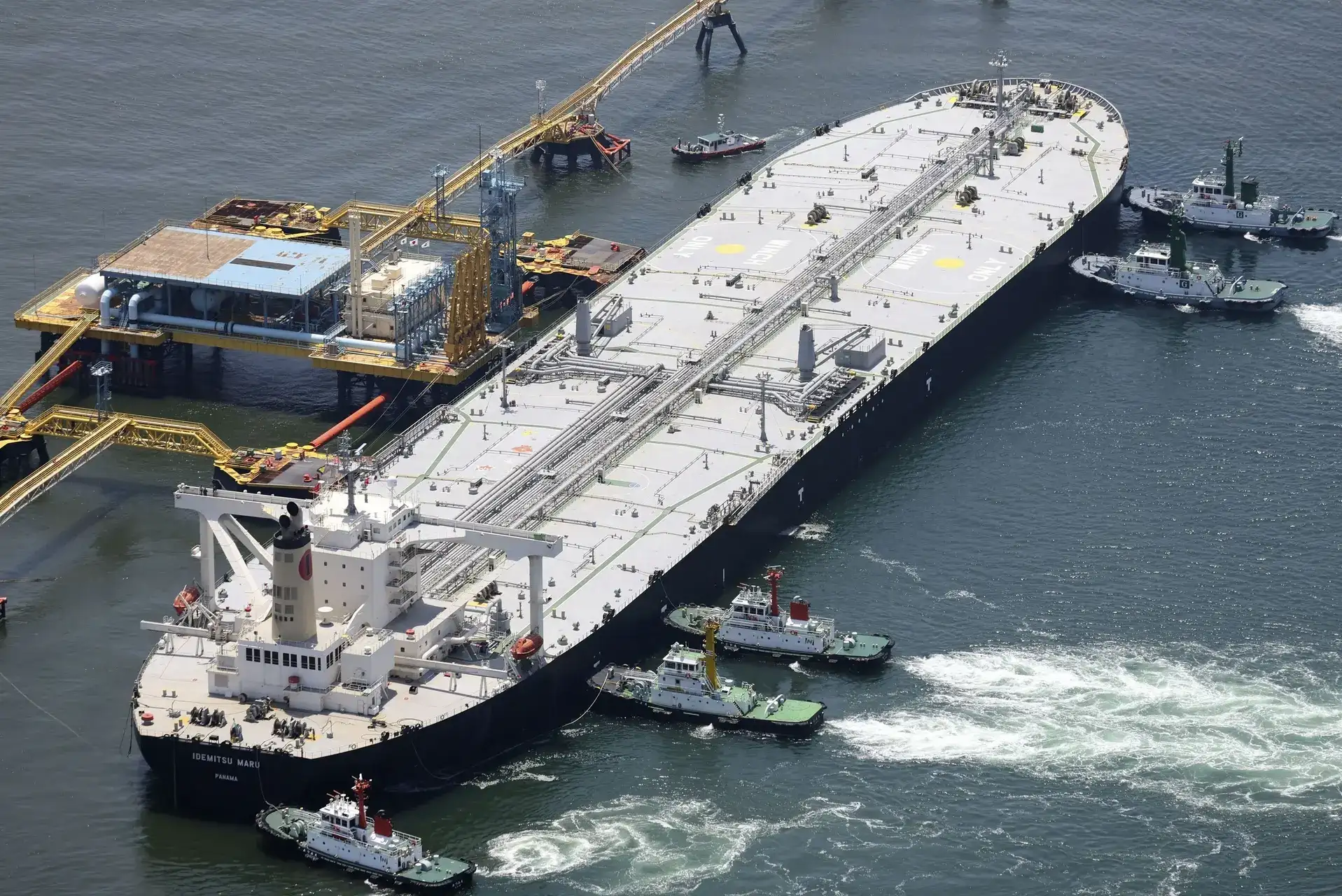
The United States on Monday issued a 60-day general licence waiving sanctions on Iranian oil, authorising the production, delivery and sale of Iranian crude, petroleum and petrochemical products through August 21 as part of an interim agreement aimed at ending the Iran war.
The temporary sanctions relief marks a significant easing of pressure on Tehran's energy sector and could pave the way for increased Iranian oil exports, potentially easing concerns over global supply disruptions and energy prices. The licence also permits associated services, including banking transactions, insurance and transportation, and allows payments to Iran in US dollar-denominated funds.
You may follow our live coverage of the West Asia war here
The sanctions waiver emerged as US Vice President JD Vance said lengthy talks with senior Iranian officials in Switzerland had created a "good foundation for a successful final deal."
The sanctions relief, announced by the US Treasury Department, forms part of Washington's push towards a final peace agreement with Tehran in exchange for commitments on nuclear inspections and free transit through the Strait of Hormuz. Treasury Secretary Scott Bessent said on X that, "In line with the ongoing productive talks in Switzerland, Iran has committed to free and open transit in the Strait of Hormuz and to permit International Atomic Energy Agency (IAEA) inspectors into their country."
"As part of the framework, Treasury has issued a temporary 60-day general license authorizing the production, delivery and sale of Iranian oil," Bessent added.
Under a memorandum of understanding signed last week between Washington and Tehran, the United States agreed to issue waivers for the export of Iranian crude oil, petroleum products and derivatives, and all associated services. The licence says Iranian oil may also be imported into the United States when necessary to complete its sale, delivery or offloading, marking a remarkable shift given that Washington has not meaningfully imported Iranian crude since sanctions were first imposed after the 1979 Iranian Revolution. Transactions involving Cuba, North Korea and Crimea remain excluded from the licence.
Negotiators are now working toward a permanent agreement to end the war that the United States and Israel launched in late February, with the temporary sanctions relief seen as a confidence-building measure to sustain momentum in the negotiations.
Talks gain traction despite Trump interruptions
The first round of negotiations in Switzerland ended on Monday with mediators reporting "encouraging progress" towards a final peace deal. The talks are taking place under the memorandum of understanding reached last week, which extended a fragile ceasefire in place since April for another 60 days and opened a diplomatic window to negotiate a permanent settlement to the conflict.
Also read: Oil export curbs waived, blockade lifted: Iran says 'major progress' in US talks
"The final deal is the house. We set the foundation. We haven't built the house, but we've laid a successful foundation to get to a good place for the American people," Vance said, according to AP, after initial discussions with Iranian parliamentary speaker Mohammad Bagher Qalibaf.
The mediation effort, dubbed the "Lake Lucerne Summit", began on Sunday and stretched into the early hours of Monday. Although negotiations were marked by tense moments and brief pauses, mediators said the two sides made progress on several fronts and agreed to continue technical discussions this week.
US President Donald Trump was not present in Switzerland, but his remarks from Washington repeatedly reverberated through the negotiations. Iranian state media reported that talks were briefly halted after the publication of what it described as an "insulting message" by Trump. Negotiations later resumed.
Vance, however, dismissed suggestions that Trump's comments had derailed the process. According to AP, he said Iranian officials had threatened to walk away from the talks, but negotiations continued "well past one in the morning", indicating that both sides remained committed to finding a path forward.
Nuclear talks, Hormuz security on agenda
The interim agreement signed last week by the leaders of the United States and Iran has opened a 60-day diplomatic window to negotiate a permanent settlement, with discussions focusing on the future of Tehran's nuclear programme and broader regional security concerns.
Vance said negotiators had made progress on creating mechanisms to ensure that the Strait of Hormuz — a vital route for global energy shipments — remains open and that a ceasefire between Israel and Iran-backed Hezbollah militants in southern Lebanon holds. The vice president stressed that technical talks would now be critical in translating broad political understandings into concrete arrangements.
Under the interim framework, Tehran has agreed to permit IAEA inspectors into the country and ensure free navigation through the Strait of Hormuz in exchange for temporary sanctions relief. According to AP, Vance also floated the possibility of unfreezing Iranian assets to allow Tehran to purchase American agricultural products, including soy, corn and wheat. The proposal, reportedly developed with the involvement of Qatar, would channel Iranian funds toward imports intended "for the benefit of the Iranian people". Iran, which has long demanded access to billions of dollars in frozen assets, has not publicly commented on the idea.
Iranian Foreign Minister Abbas Araghchi separately described the discussions as having achieved "major progress" toward ending the fighting in Lebanon and said the success of efforts to halt hostilities between Israel and Hezbollah would be the first real test of the negotiations.
Oil prices, which had risen sharply after Tehran blockaded the Strait of Hormuz and the United States responded with a blockade of Iranian ports, fell to their lowest levels since before the war began on February 28 with US-Israeli attacks on Iran. Investors appeared cautiously optimistic that diplomatic momentum could reduce risks to global energy supplies and restore stability to global energy markets.
Washington first sanctioned Iran in 1979 when revolutionary students seized the US Embassy in Tehran and held American diplomats hostage. Numerous additional sanctions were imposed over subsequent decades over Tehran's nuclear programme and its support for groups that Washington designates as terrorist organisations.
Independent Chinese refiners have been the principal buyers of sanctioned Iranian crude, taking advantage of steep discounts as other importers stayed away. Before the reimposition of US sanctions in 2018, India, South Korea, Japan, Italy, Greece, Taiwan and Turkey were also among the major buyers of Iranian oil.