The US military struck two vessels in the eastern Pacific on Thursday, killing five people, as Washington escalated its months-long campaign against alleged drug trafficking operations.
US Southern Command said four "male narco-terrorists" were killed in the first vessel and one in the second. No US military personnel were harmed in the operations, which Defence Secretary Pete Hegseth ordered as part of Operation Southern Spear.
The strikes brought the total death toll to 104 across 28 operations since September, when the Trump administration began targeting vessels it claims are operated by designated terrorist organisations.
The Pentagon says the boats transit known drug trafficking routes, but has provided no public evidence to support individual strike decisions.
The campaign has drawn scrutiny from lawmakers and legal experts who question whether the operations comply with US and international law.
Some critics argue that the use of lethal force in international waters without due process amounts to extrajudicial killing.
'Largest armada ever'
The latest strikes coincided with Trump's announcement on Tuesday of a "total and complete blockade" of all sanctioned oil tankers entering or leaving Venezuela, dramatically escalating economic pressure on President Nicolás Maduro's government.
Trump claimed Venezuela was "completely surrounded by the largest armada ever assembled in the history of South America" and demanded the country return "all of the oil, land, and other assets that they previously stole from us."
The blockade follows last week's seizure of the Skipper, an oil tanker carrying Venezuelan crude that Washington accused of repeatedly making illegal shipments.
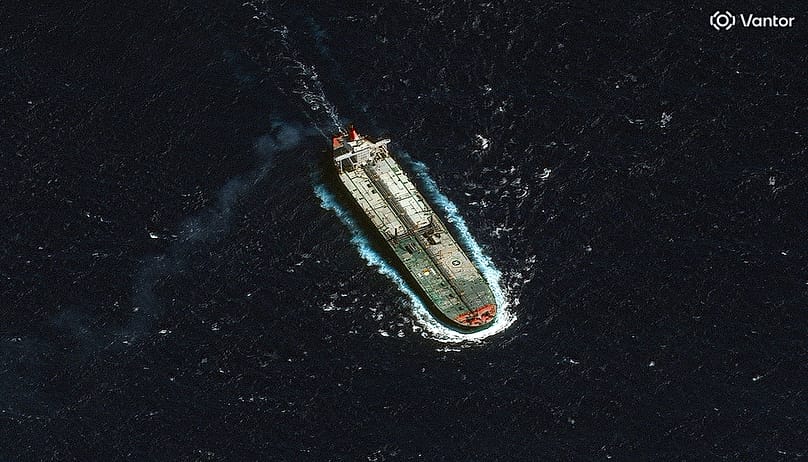
US forces brought the vessel to Texas, with Trump saying the administration would keep the oil.
On Thursday, the Treasury Department sanctioned 29 vessels and their management firms for allegedly helping Iran export petroleum through deceptive shipping practices.
The action targeted what Washington calls Iran's "shadow fleet" of ageing tankers that evade international sanctions, similar to what Russia — an ally of Tehran — is using to circumvent embargoes following its full-scale invasion of Ukraine in early 2022.
Maduro complains of 'diplomacy of barbarism'
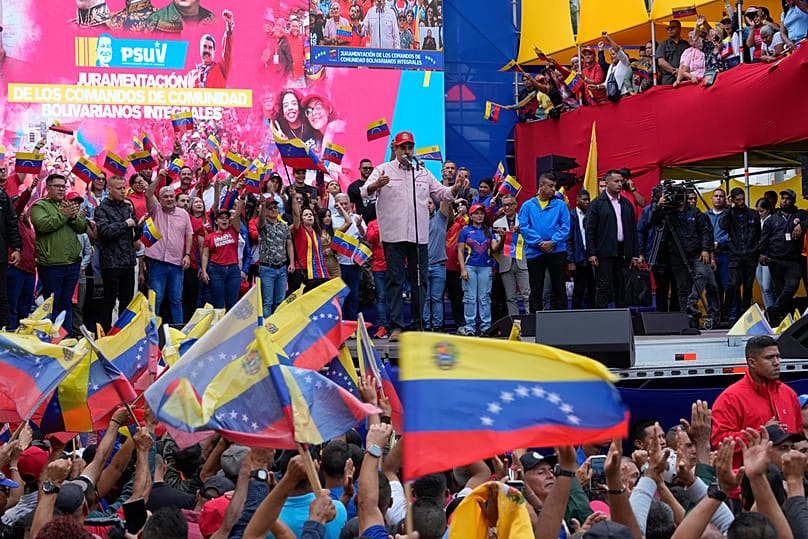
Maduro spoke with UN Secretary-General António Guterres to warn of the "escalation of threats" against Venezuela and their implications for regional peace, according to the Venezuelan government.
During the call, Maduro denounced Trump's recent statements claiming Venezuelan oil, natural resources and territory belonged to him, calling them "openly colonial" in nature.
He described US actions, including the tanker seizure, as "modern piracy" and part of a "diplomacy of barbarism."
Guterres reaffirmed his commitment to international law and the UN Charter, expressed solidarity with the Venezuelan people, and stressed the need to prevent escalation.
He said an armed conflict in the region would be unjustifiable and could have serious consequences for Latin American stability.
Venezuela's state oil company PDVSA insisted operations continued normally despite the US pressure, saying "oil tankers linked to PDVSA operations continue to sail with full security."
The US military buildup in the Caribbean includes the aircraft carrier USS Gerald R Ford and multiple naval vessels conducting what the administration describes as counter-narcotics operations.
Trump has designated Venezuela's government a "foreign terrorist organisation" and accused Maduro of using oil revenues to finance drug trafficking, human trafficking and terrorism. Maduro denies the allegations and accuses Washington of seeking regime change.
Venezuela has been under US oil sanctions since 2019, forcing it to sell crude at discounted prices primarily to Asian buyers. The country produces around one million barrels per day, down from more than three million in the early 2000s.
What is Operation Southern Spear?
The vessel strike campaign began on 1 September when US forces attacked a boat in the Caribbean, killing 11 people. Trump announced the operation the following day, claiming the vessel was carrying drugs bound for the United States.
The administration formally notified Congress on 1 October that the US was engaged in a "non-international armed conflict" with drug cartels, designating those killed as "unlawful combatants".
The notification cited a classified Justice Department determination authorising lethal strikes without judicial review.
Critics including Democratic lawmakers and legal experts have questioned the campaign's legal basis, particularly after reports emerged that the first strike involved a follow-up attack that killed two survivors clinging to wreckage.
The strikes expanded to the eastern Pacific in October and were formally named Operation Southern Spear in November.
Hegseth has defended the operations as necessary to protect Americans from drug trafficking, though experts on drug policy say the strikes will have minimal impact on US overdose deaths.