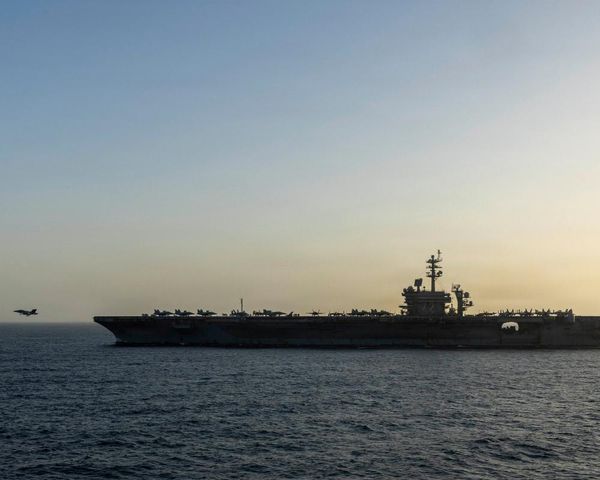
In a recent drone attack on a small U.S. outpost in Jordan near the Syrian border, three American soldiers lost their lives and at least 34 more were injured. The attack has prompted intelligence agencies in Washington to determine which Iran-backed militia is responsible for the assault. The number of casualties is expected to rise as soldiers report possible symptoms of traumatic brain injury.
President Biden has expressed his commitment to holding those responsible for the attack accountable, stating that the United States 'will hold all those responsible to account at a time and in a manner of our choosing.' Despite Iran's denial of involvement in the drone attack, an Iran-backed militia group had already claimed responsibility for attacking nearby targets.
Intelligence agencies have long tracked weapons, materiel, and training provided by Iran to these militia groups, leading to the identification of their Iranian backing. However, determining which specific group carried out the attack and who ordered it can be a complex process requiring time and evidence.
There have been calls, particularly by Congressional Republicans, for the Biden administration to take decisive action, including conducting strikes inside Iran. However, the Biden administration faces the challenge of carefully weighing its options and potential consequences. A strike on Iranian soil or targeting Iranian forces would likely escalate tensions and could lead to a wider conflict, an outcome the administration aims to avoid.
The Biden administration is expected to review a range of options presented by the Pentagon and the national security community. Possible actions may include targeting Iranian proxy groups inside Syria, intercepting munitions shipments, hitting command and control centers, and potentially conducting strikes against troops. However, the administration seeks to maintain a continuum of pressure without escalating the situation into a full-scale war.
The ongoing conflict between Israel and Hamas further complicates the situation, serving as a catalyst for attacks carried out by various militia groups. As long as the Gaza conflict continues, these groups, including Iranian proxies, have an incentive to strike. Additionally, this unrest can be seen as part of the broader competition for influence between Iran and its allies, such as Russia and China, against the United States.
Unfortunately, the cycle of violence appears self-perpetuating, with no end in sight. As Iran and its proxies seek to undermine the United States and rally support from the global South, the potential for further attacks remains a concern. The Biden administration recognizes the need to address the root causes of this violence and work towards a resolution that reduces tensions and protects American interests.