Iran’s rejection of a plan to return to the 2015 international nuclear accord, even as it continues to raise “extraneous demands,” indicates it’s not serious about negotiations, the U.S. State Department’s spokesman said Tuesday.
“We are at a point where the lack of forward momentum, the lack of progress, is tantamount to backtracking,” Ned Price told reporters, saying that terms of a proposal have been largely complete for months.
Efforts to restore the nuclear agreement, which limited Iran’s atomic work in return for sanctions relief, are hanging by a thread. The contours of a deal were drawn at multiparty talks in Vienna but progress stalled in March as the U.S. and Iran disagreed on whether and when to ease penalties not directly linked to the nuclear pact, which then-President Donald Trump exited in 2018.
The disputed issues include Iran’s demand that the U.S. remove the Islamic Revolutionary Guard Corps, a powerful military organization, from its list of terrorist groups. Congressional opposition to that move has weighed on President Joe Biden with the approach of midterm elections approach November.
Robert Malley, the U.S. Special Envoy for Iran, told National Public Radio that recent negotiations in Doha amounted to “more than a little bit of a wasted occasion.”
Biden’s administration has sought for more than a year to revive the deal. During that time, the U.S. has maintained Trump-era sanctions on the country and Iran has rapidly expanded its nuclear work while steadily dialing down international oversight, making it increasingly difficult to persuade American lawmakers and regional allies to support an agreement.
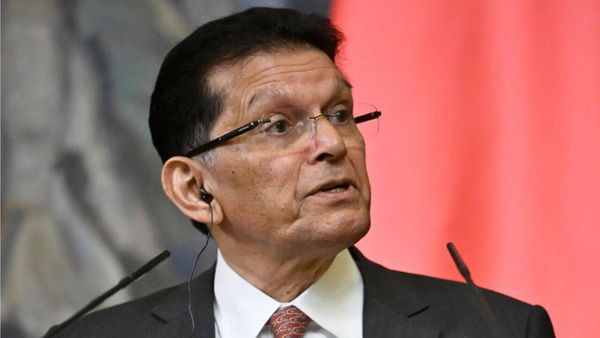
Rafael Mariano Grossi, director of the International Atomic Energy Agency, warned on Tuesday that the lack of progress in verifying Iran’s nuclear program may have an impact on the broader region.