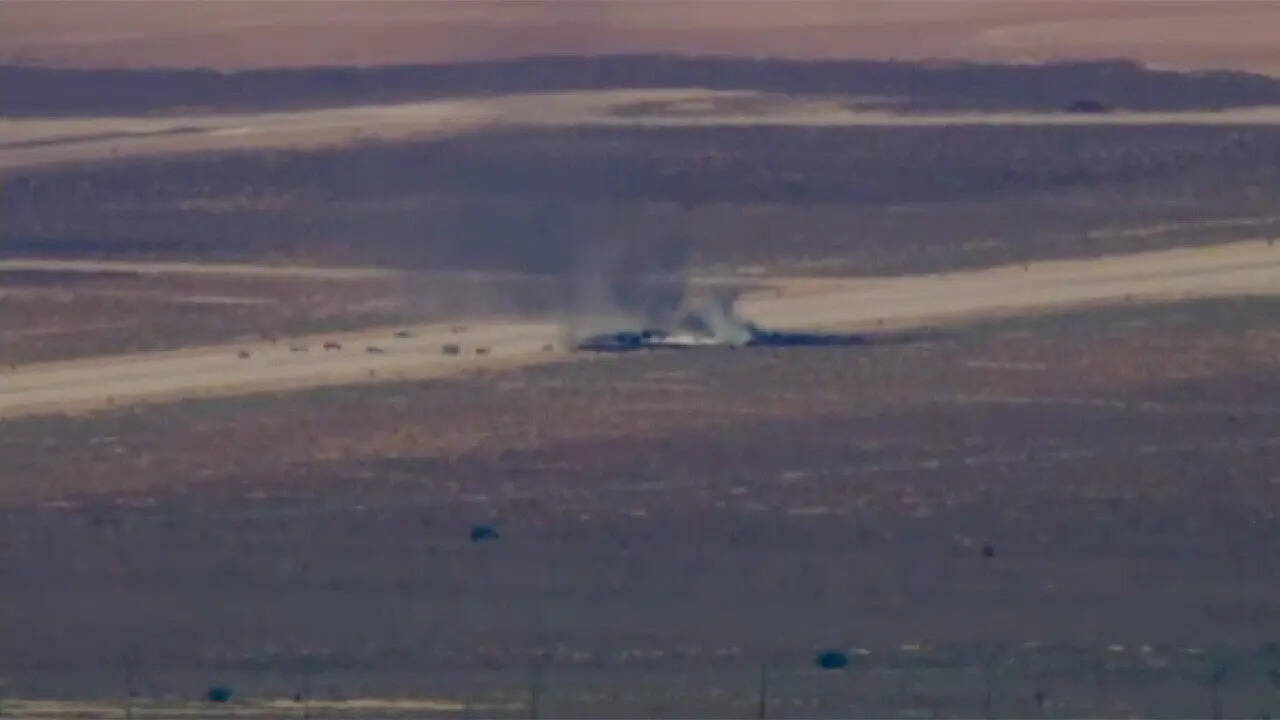
Eight people were killed after a US Air Force B-52 bomber crashed shortly after take-off from Edwards Air Force Base in California's Mojave Desert on Monday.
Get breaking news anytime, anywhere. Download the TOI app now!
“We lost eight great Americans," James Hayes, the deputy commander at Edwards Air Force Base, said as per news agency AP.
Earlier, the US Air Force said there was little hope of survivors. “Initial indications are that the crash was not survivable,” Edwards Air Force Base had said in a social media post.
Soon after the crash, the authorities launched an investigation into the cause of the accident.
Officials have not yet released details about the crew. However, aerial images from the scene showed extensive damage, with almost no visible remains of the aircraft.
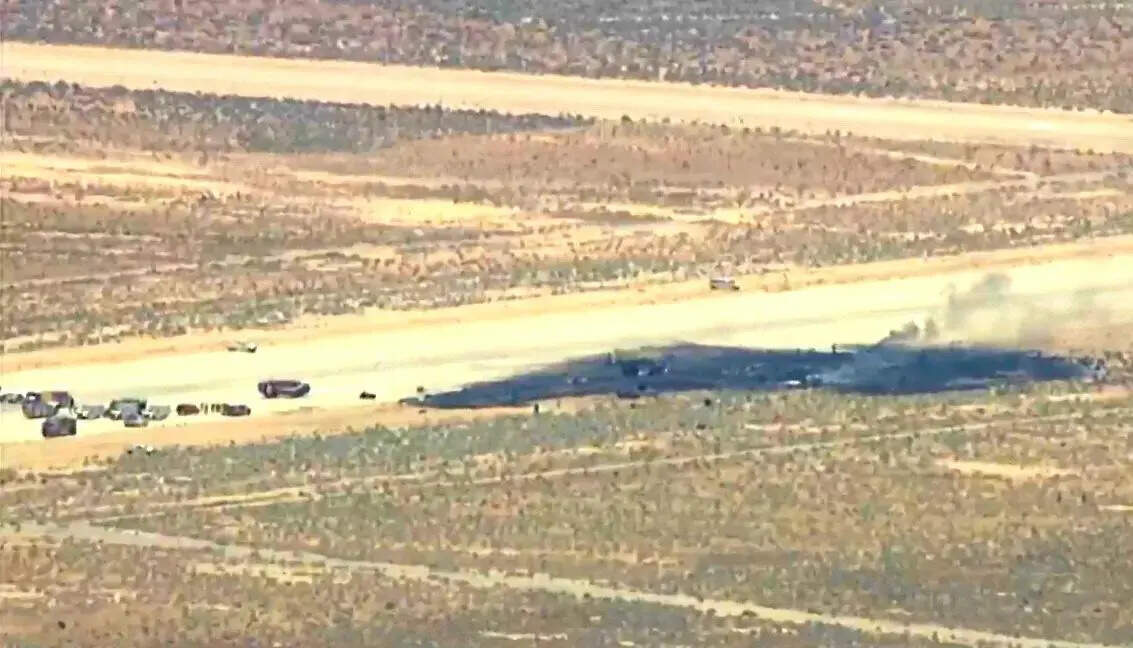
Emergency teams were dispatched after the bomber came down at around 11.20am. Footage from the area showed thick black smoke billowing from a large scorched section of desert close to what appeared to be a runway, while emergency vehicles were deployed around the site. The military has not confirmed whether the aircraft was carrying any weapons.
The Boeing B-52 Stratofortress entered service in 1955 and remains one of the US Air Force's principal long-range bombers. Capable of carrying both conventional and nuclear weapons, it has been used in multiple conflicts involving the United States, from Vietnam to the recent confrontation with Iran.
Operations at the airfield were halted following the crash, with all incoming aircraft redirected elsewhere. Base authorities also suspended non-commercial visitor access to prioritise emergency response efforts.
Located about 161 kilometres north of Los Angeles, Edwards Air Force Base serves as a major centre for aircraft testing and development. The installation is home to the 412th Test Wing, which oversees the evaluation of Air Force aircraft, weapons systems, software and components throughout their service life.
The base is also known for its role in aviation history. In 1947, test pilot Chuck Yeager broke the sound barrier there, reaching a speed of Mach 1.05.
Aviation safety expert Jeff Guzzetti said the circumstances of the crash suggested a possible flight-control problem, given how quickly the aircraft came down after take-off.
“I think it was definitely a controllability issue. Now, whether that was tied to an engine failure, a flight control failure, or some new testing device failure, I'm not sure,” said Guzzetti, who previously investigated air accidents for both the Federal Aviation Administration and the National Transportation Safety Board.
He said a number of factors could have contributed to such a failure, including maintenance issues, a major engine malfunction or a fault involving equipment undergoing testing.
Although the B-52 has been in service for more than seven decades, Guzzetti noted that testing new systems on aircraft can introduce additional risks.
“A flight test is always riskier than normal operations, so that's why you have specially trained test pilots, and you should have other safety protocols,” Guzzetti said.