About 70,000 of the 160,000 pleasure boats around the country are moored at ports and riverbanks without permission, according to a survey by the Land, Infrastructure, Transport and Tourism Ministry.
In addition, authorities cannot even identify the owners of about 20% of the illegally moored vessels.
Unauthorized mooring not only spoils the scenery of the surrounding area, but also can present a hazard in times of disaster.
The government aims to eliminate unlicensed mooring by fiscal 2022, but faces a number of hurdles, such as the financial burden that local governments would have to bear the costs of removing boats with unknown owners.
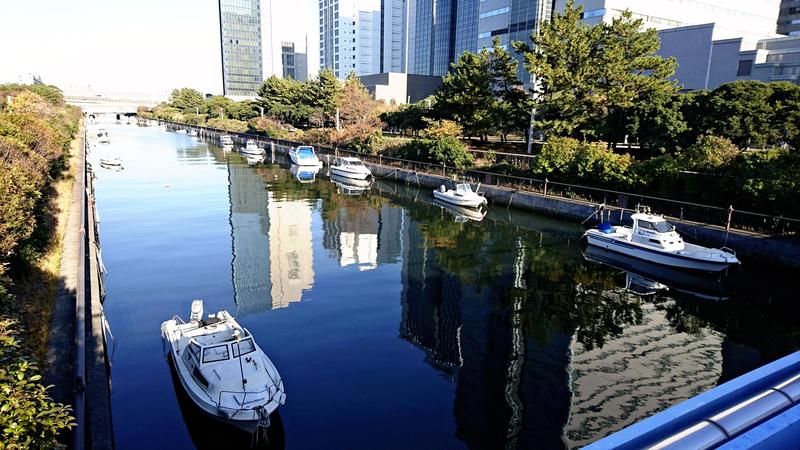
Along an approximately 500 meter-long bank of the Hamada River near Makuhari Messe in Mihama Ward, Chiba, the venue for wrestling and other sports for this summer's Tokyo Olympics and Paralympics, about 100 pleasure boats are moored by ropes. But such mooring on the riverbank is not permitted.
The Chiba Prefectural government, which has administrative control of the river, receives many complaints from local residents who say the boats are an eyesore. However, the owners of a number of the boats will likely never be identified.
"We'd like to get rid of them before the Olympics, but ..." said a prefectural government official in charge.
The River Law and the Port and Harbor Law prohibit ships from staying in rivers and ports without the permission of the authorities.
According to the ministry, 70,191 pleasure boats were moored without permission in 47 prefectures in fiscal 2018.
Hiroshima Prefecture had the most with 10,687, followed by Okayama Prefecture with 5,217 and Ehime Prefecture with 5,151.
Unauthorized mooring is particularly noticeable in prefectures that have long coastlines and many remote islands.
In addition, about 20% of unlicensed moored vessels are either not registered under the small vessel registration system, or their owners are unknown because the hull identification number is too worn out to read.
While unauthorized mooring is largely due to a lack of morals on the part of the owners, a shortage of marinas and other mooring facilities is also to blame. There were about 160,000 pleasure boats in fiscal 2018, but such mooring facilities had a capacity for only about 90,000.
Pleasure boats can pose a risk at the time of floods, tsunamis and other natural disasters, as the boats may be washed away and cause secondary damage such as smashing into buildings and blocking roads. If the ship sinks, engine fuel may leak and contaminate the water.
In the Great East Japan Earthquake of 2011, many illegally moored boats were washed ashore by the tsunami, and the long time it took to identify owners greatly hindered restoration efforts.
Under the River Law and other regulations, ships whose owners are unidentifiable are to be removed by local governments by proxy. In Hiroshima Prefecture, the removal of one boat costs about 650,000 yen. It has now been two years since the Hiroshima prefectural government last carried out the removal of a ship by proxy.
Read more from The Japan News at https://japannews.yomiuri.co.jp/