The United States on Monday unveiled a €1.7 billion pledge for United Nations humanitarian aid, even as President Donald Trump’s administration continues to scale back foreign assistance and warns UN agencies to “adapt, shrink or die” in line with new financial realities.
The sum represents a fraction of previous US contributions but is presented as a generous commitment designed to preserve America’s position as the world’s largest humanitarian donor.
The money will be placed in a central fund and distributed to UN agencies under a new system of stricter oversight, a key condition of Washington’s push for sweeping reform that has alarmed aid groups and forced deep cuts to services.
In recent years, total US humanitarian funding for UN-backed programmes has reached as much as €14.4 billion annually, according to UN data, of which €7– 9 billion came as voluntary contributions. Critics argue the drastic cut risks worsening hunger, displacement and disease and undermines US soft power overseas.
“We are watching the lifeline for millions of people disintegrate before our eyes,” according to Cindy McCain, executive director of the World Food Program.
Turbulent year
The announcement caps a turbulent year for UN bodies such as the WFP, the refugee agency UNHCR and the International Organisation for Migration, all of which have faced severe budget strain following massive US aid reductions.
Other western donors, including Britain and Germany, have also reduced contributions.
The new pledge forms part of a preliminary agreement with the UN Office for the Coordination of Humanitarian Affairs (OCHA), headed by former British diplomat Tom Fletcher.
UN to assess refugee strategy, funding at global forum
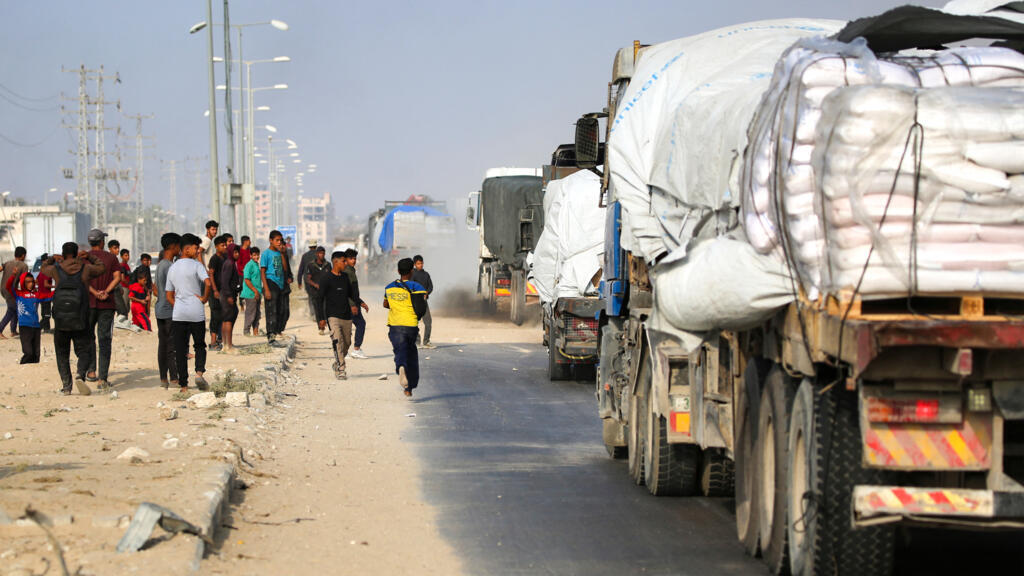
Despite global needs soaring – with famine declared in parts of Sudan and Gaza and extreme weather disasters displacing thousands – OCHA has been forced to lower its fundraising targets.
The US seeks what officials describe as “more consolidated leadership authority” in how aid is delivered.
Under the plan, OCHA will act as a central conduit for funding rather than separate US allocations to individual agencies.
“This humanitarian reset should deliver more aid with fewer tax dollars,” said US ambassador to the UN, Michael Waltz.
Reduce bureaucratic overhead
According to the State Department, “the agreement requires the UN to consolidate humanitarian functions to reduce bureaucratic overhead, unnecessary duplication, and ideological creep”.
“Individual UN agencies will need to adapt, shrink, or die,” the statement said.
It called the arrangement “a critical step” in reforming how humanitarian operations are funded and monitored.
UN food agency warns aid cuts risk pushing 13.7 million people into extreme hunger
Initially, the funds will focus on 17 countries, including Bangladesh, the Democratic Republic of Congo, Haiti, Syria and Ukraine. Afghanistan and the Palestinian territories are not on the list, with US officials saying they will be addressed under Trump’s proposed Gaza peace plan.
The United Nations estimates that some 240 million people – in conflict zones, suffering from epidemics, or victims of natural disasters and climate change – are in need of emergency aid.
In 2025, the UN's appeal for more than €38 billion was only funded to the €10 billion mark, the lowest in a decade.
That only allowed it to help 98 million people, 25 million fewer than the year before.
(With newswires)