

The eyes of insects have long inspired camera research, but a group of researchers from the Korea Advanced Institute of Science and Engineering (KAIST) have used inspiration from the eyes of a parasite to create an ultra-wide lens that’s thinner than a penny.
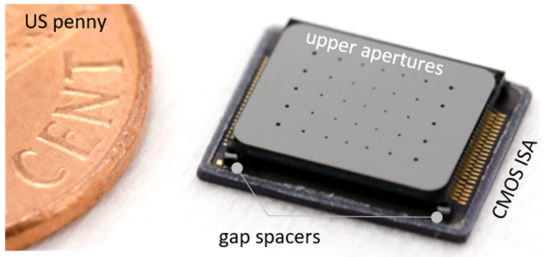
Ultra-wide lenses are often rather large, which creates a challenge in applications like smartphone cameras and healthcare devices. Researchers from KAIST have built a “spatially offset ellipsoidal microlens array camera,” or a small camera that uses an array of tiny lenses to capture a 140-degree field of view.
The research, which was recently shared in the journal Nature but has not yet been peer reviewed, creates a tiny camera where the total track length (the distance from the top of the lens to the sensor) is just .94mm. To put that in perspective, an American penny is 1.52mm, and a UK 1p coin is between 1.52mm and 1.65mm.
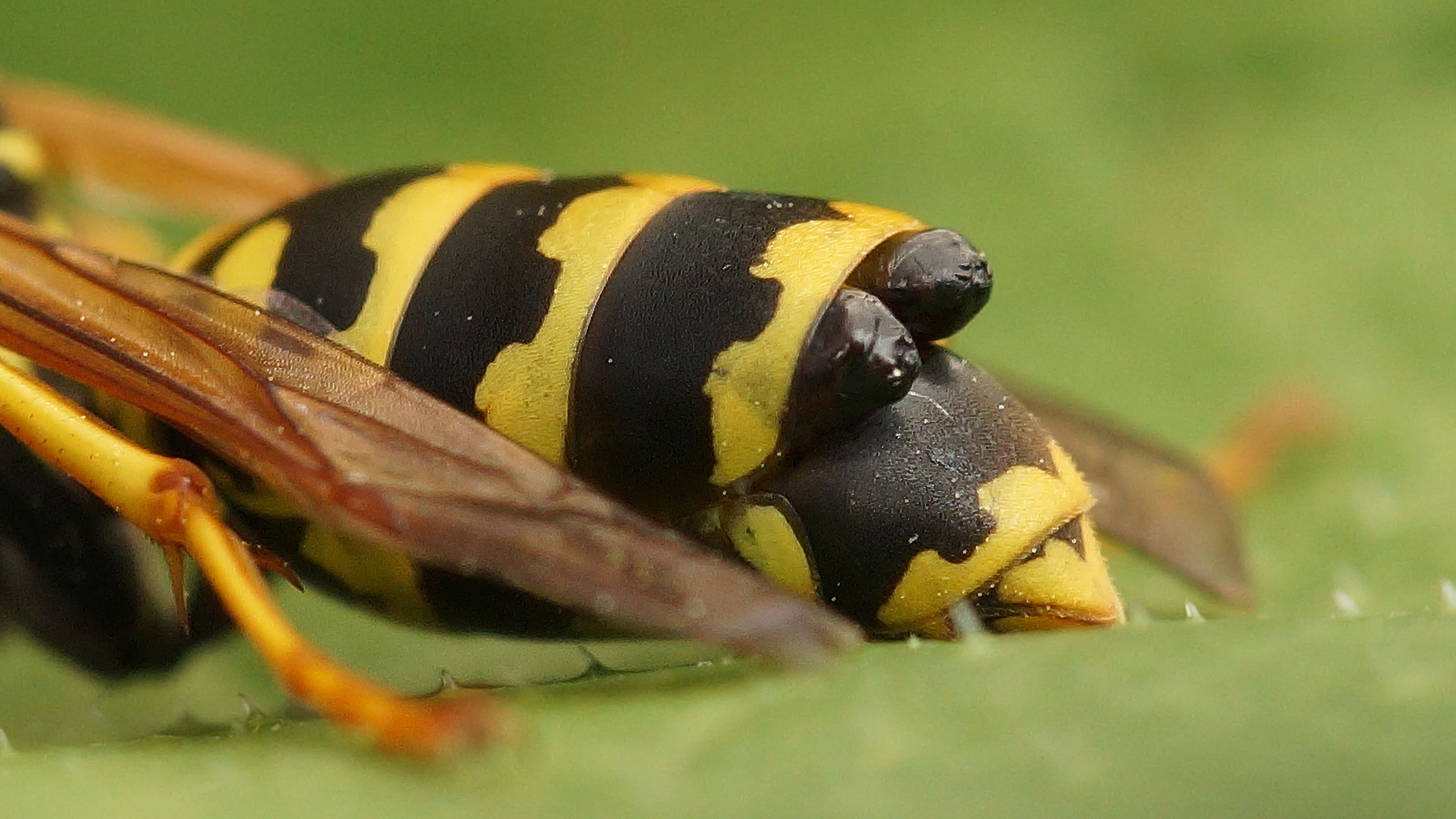
The research was inspired by the eyes of the Xenos peckii, a parasite that feeds on paper wasps. The eyes of the parasite are unusual in that they are built with several “eyelets” combined into a pair of bulbous eyes.
Like the parasite, the experimental microlens array camera uses separate microlenses that correspond to a designated pixel region, capturing a view from a specific direction. Stitched together, those separate views create an ultra-wide 140-degree view on a rather tiny lens system.
Researchers note that varying the aperture arrays allows the tiny camera system to correct for some of the curvatures common on ultra-wide lenses.
The experimental camera isn’t going to replace bulky mirrorless lenses – the sample camera that the researchers built is just 1 MP. But the researchers are hopeful that the concept could fuel additional research to create ultra-thin wide-angle lenses for use in smartphones, machine vision, and medical imaging. In fact, it’s not the first time KAIST researchers have built tiny cameras inspired by the Xenos peckii eyes.
The presented research is only an early access publication, and Nature notes that the paper may undergo further editing. But the new research is an interesting insight into a growing number of ways the eyes of insects and other tiny creatures are inspiring smaller camera systems.
You may also like
Browse the best macro lenses for insect photography, or the best ultra-wide lenses.