Temperatures could soar to as high as 36C this week as parts of the UK face their fifth heatwave this summer.
The country will continue to swelter through more extremely hot and dry conditions that will potentially impact railway lines and power networks.
Highs of 28C are expected on Monday, with the mercury set to climb to 29C in parts of the South on Tuesday. Temperatures will then soar into the mid-30s across the country on Wednesday, Thursday, and Friday, before dropping back to the mid-20s at the weekend.
Met Office meteorologist Tom Morgan said: "We’ll probably see highs reaching the mid-30s quite widely on Wednesday, and indeed on Thursday too for England and Wales.
“On Wednesday, probably the Midlands, maybe a little bit further south, the M4 corridor, west of London, up towards the Midlands, is where we might have a small chance of reaching 36C in one or two spots.
“But Thursday at this stage looks the most likely hottest day of the week. So 36C is a fairly reasonable probability locally on Thursday and there’s a small chance it could get even higher than that.”
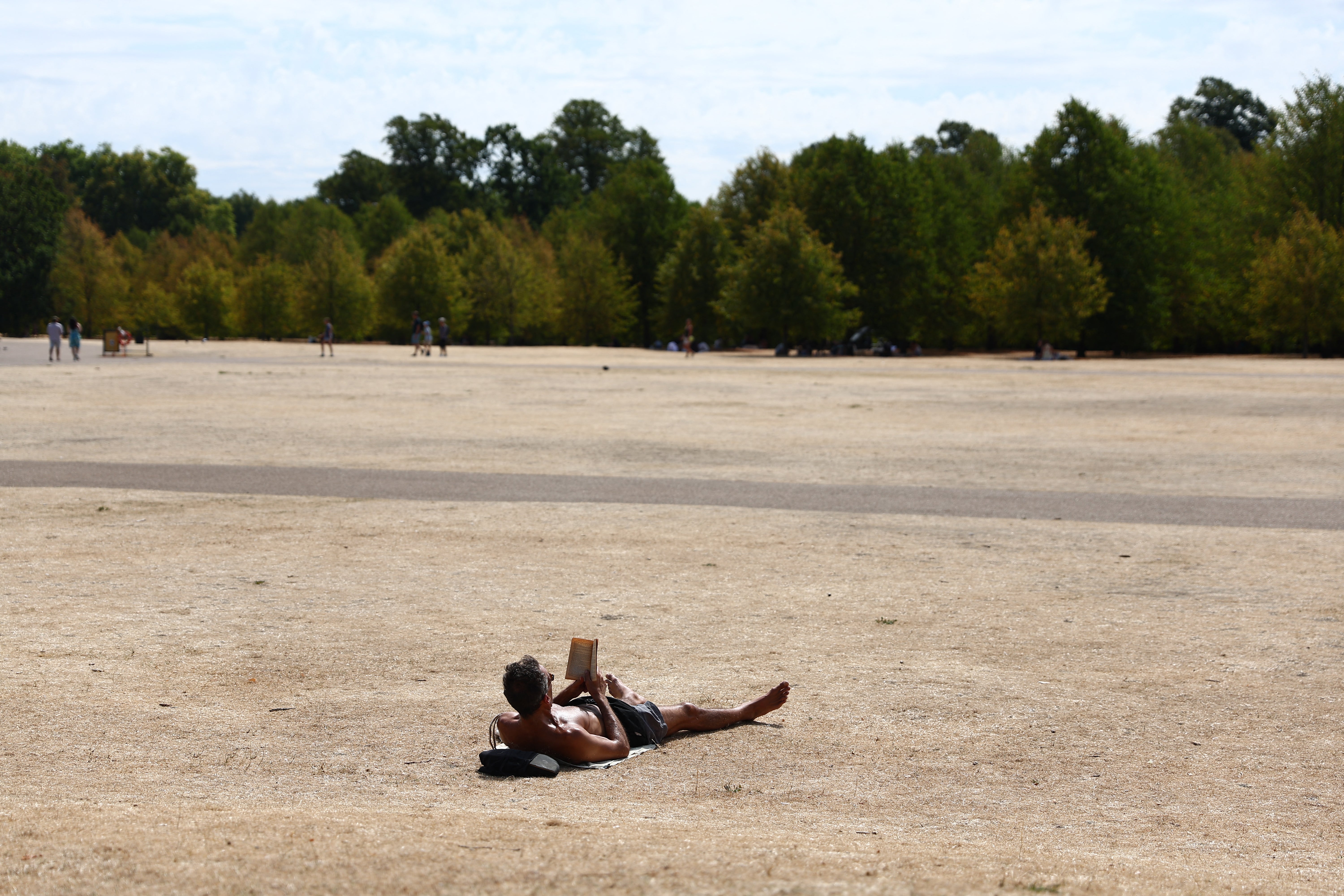
Almost three-quarters of England is now suffering from drought as weather conditions continue to worsen into August, piling pressure on vital industries.
The East Midlands, Lincolnshire and Northamptonshire, Kent and East Sussex, and Solent and the South Downs moved into drought status on Monday, bringing the total number of people affected up to 45 million as a fifth heatwave of the summer sweeps through England and Wales.
Mr Morgan said: “If it wasn’t for this incredible summer that we’re currently seeing, then we’d be talking about these temperatures as being really, very unusual.
Unprecedented heat has affected much of Europe this summer and this week will be no exception🌡️
— Met Office (@metoffice) August 9, 2026
Yet another spell of extremely hot weather is set to spread north across much of the UK with temperatures reaching the mid 30s Celsius in places📈🌍 pic.twitter.com/pOdPGhT8yL
“But of course, we’ve had such an exceptional summer, people have become a bit used to it.
“There is a potential for impacts, so impacts to infrastructure, things like railway lines and power networks, impacts to vulnerable people as well.”
Health officials have warned of the effect on vulnerable people in the upcoming hot weather, with significant impacts possible in health and social care settings and a potential rise in deaths because of the heat.
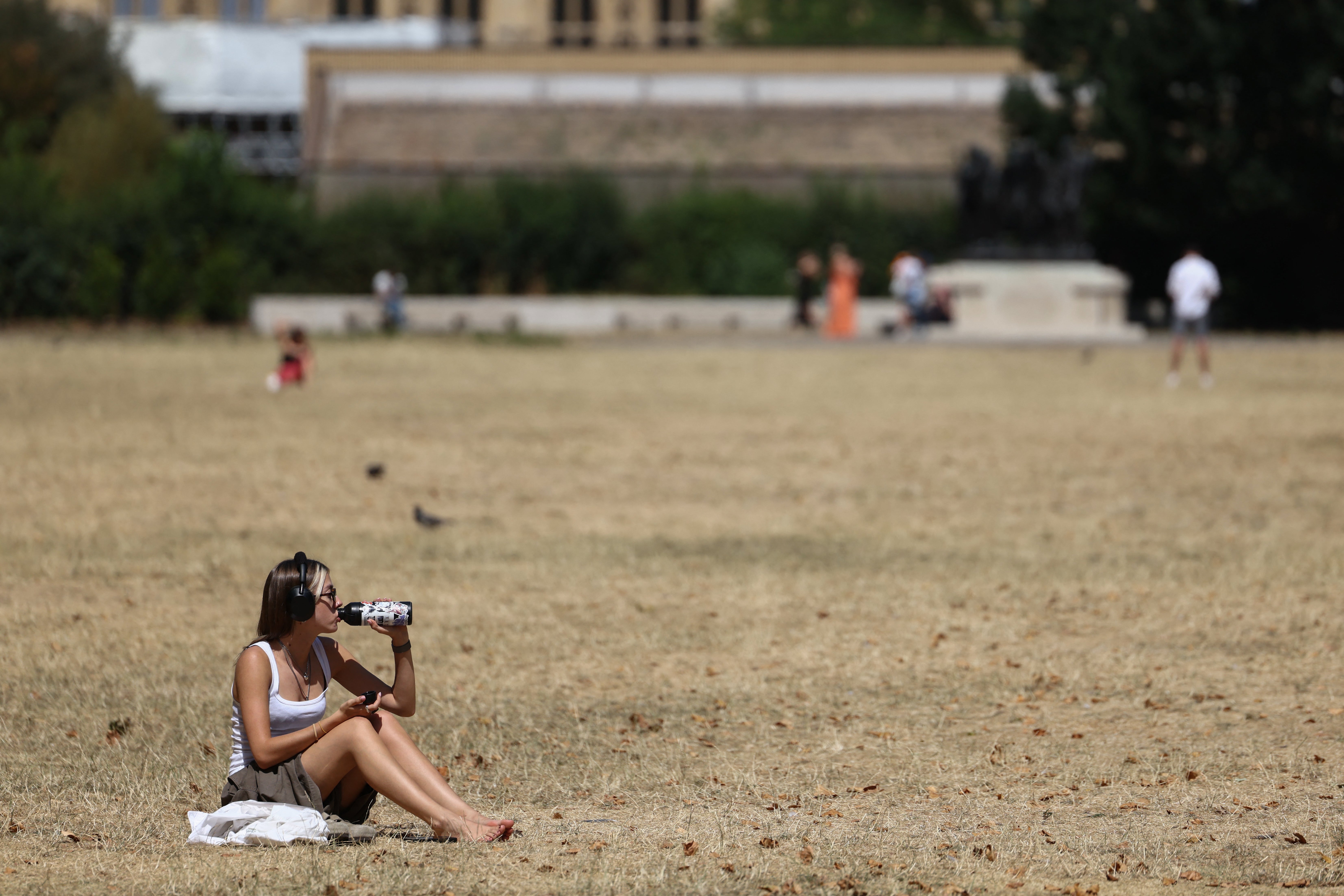
Amber heat health alerts issued by the UK Health Security Agency are in place for the East Midlands, West Midlands, South East, South West, East of England, Yorkshire and the Humber, and London.
The alerts continue until 9pm on Tuesday, but may well be extended as the hot weather continues.
More than 25 million people have restrictions on water use, the Environment Agency said, with millions under hosepipe bans, including all South East Water and Thames Water customers.
Mr Morgan said people may see some rain towards the end of August, but that signs are “tentative”.

“Unfortunately, in the south of the UK it’s looking really dry for the next week or so,” he said. “Where we desperately need it (rain) in the particularly drought-affected areas, the week ahead is expected to be dry.
“There are tentative signs from around August 18, 19, but a long way in the future, that we might see a little bit more in a way of rain getting further south across the UK, but nothing definitive at this stage.”
Nottinghamshire Fire and Rescue Service declared a major incident on Sunday as two large fires in woodland put a strain on resources.
Another record is set to tumble this week after Sunday was the 34th day so far this year when temperatures exceeded 30C somewhere in the UK, equalling the record from 1995.
So far, the extreme weather of summer 2026 has included two record-breaking heatwaves in May and June that led to more than 2,800 excess deaths.
Two more heatwaves in July, the driest July in England and Wales since records began in 1836, have fuelled drought and wildfires.
The European Union’s earth observation programme Copernicus said average temperatures across western Europe reached 21.61C for June and July, breaking the record set in 2022.
Globally, this year is just behind 2024 and 2025 as the third hottest year on record.