Unions are calling for "essential" maximum temperature rules in workplaces, as the government faces increasing pressure to protect the UK from the escalating impacts of climate change.
The advisory Climate Change Committee (CCC) has outlined a comprehensive set of measures to safeguard Britons against worsening heatwaves, floods, and droughts.
Among the CCC's recommendations are mandatory maximum temperature regulations for workers, alongside the installation of air conditioning in critical public services such as hospitals and care homes, as well as in the residences of vulnerable individuals.
Ministers should even consider changing the school year so pupils are not forced to sit important national exams in summer heat, when they may not have been able to sleep properly and are “absolutely not at their best”, the CCC’s Baroness Brown said.
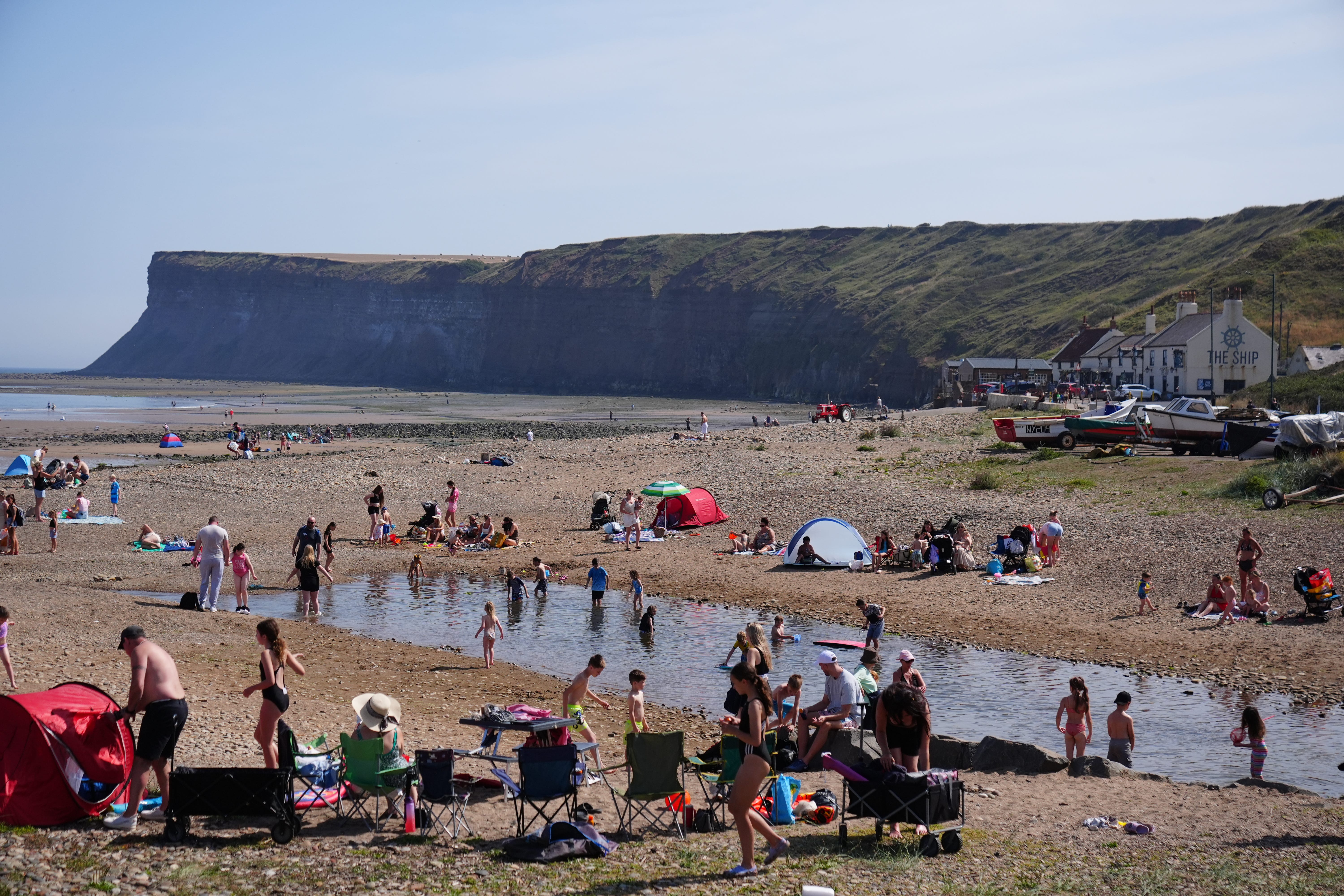
The committee warns that worsening extremes of heat, flooding and drought are threatening the British way of life, from lives and livelihoods to the NHS, “gently changing seasons”, children’s football games, music festivals and weekend visits to National Trust venues.
The CCC estimates that investing to protect the UK from climate change will cost around £11 billion a year of public and private money up to 2050.
But the advisers said climate change impacts were already costing up to £60 billion a year in flood damages, crop losses, excess deaths, decreases in productivity, and disruption to transport and health services, with that figure set to rise to as much as £260 billion a year by 2050.
Air conditioning will need to become a key part of keeping people cool in heatwaves, said advisors, in private homes as well as public buildings, and the Government needs to run public information campaigns telling people what steps they can take – such as closing blinds and curtains in the daytime to keep out the heat.
The world has already warmed by 1.4C as a result of human activities such as burning fossil fuels, and on current trajectories will be 2C above pre-industrial levels by 2050 – with a “real risk” of hitting 4C heating by 2100 under worst-case scenarios, he said.
Without action to help people adapt, the increasing risk of heatwaves in the 40Cs by mid-century could lead to as many as 10,000 excess deaths a year, the committee said.
By 2050, heavy rainfall could become more intense, sea levels could rise 20-45cm and peak river flows could nearly double, raising the risk of flooding, it said.

But the changing climate could also make drought very common, with water shortages of up to five billion litres a day, the committee added.
“We are facing a potential world where in 2050 you could turn the tap on and nothing would come out,” Baroness Brown, who is chairwoman of the CCC’s Adaptation Committee, said.
The committee is urging the Government to set targets to ensure there are no more heat deaths by 2050 than today, no more homes are at risk of flooding, and that by 2040, water supplies should be resilient to a one-in-500-year drought.
Solutions include:
– Setting workplace maximum temperature regulations, to protect workers from excess heat and encourage companies to install cooling measures.
– Ensure cooling measures are installed in hospitals and care homes by 2035 and schools by 2050, ranging from shading through to air conditioning.
– Support for vulnerable people to install cooling technology, including heat pumps that can provide both warmth in the winter and cooling in the summer.
– Investing more in flood defence programmes, with annual spend rising to £1.6 billion-£2.2 billion across the UK to pay for both “natural” and hard defence schemes.
– Ensuring new homes are not built in undefended areas at risk of existing or future flooding and coastal erosion.
New homes should also be built to be water efficient, there should be water efficiency standards for appliances, and data centres should be built where they will not add to a region’s drought risk, the report advises.
Trade unions have strongly endorsed the demand for a workplace temperature cap. The GMB union highlighted the current inconsistency, stating it makes "no sense whatsoever" that a minimum temperature standard exists without a corresponding legal limit for heat.

Lib Whitfield, GMB senior organiser, said the union had long campaigned for a maximum heat limit of 25C.
“Sweltering heat is loads of fun if you’re swanning around by the pool – but if you’ve got a job to do it can be downright dangerous,” she said.
“Bosses need to do everything possible to keep workplaces cool, and more importantly, safe.”
Unison assistant general secretary Jon Richards said setting a maximum temperature for workplaces “is essential”, as climate change means staff are ever more likely to face fluctuating conditions.
“Being too hot at work puts people’s health at risk and leads to poorer performance and lower productivity,” he said.
“Any decent employer would want their staff to be at their best to do their job efficiently. After all, everyone works best at a comfortable temperature.”
Unite national health and safety officer Rob Miguel said the recommendations are “very welcome” but did not go far enough, with some types of work – such as people in PPE – requiring lower temperatures to be incorporated, and said laws must include those working outside.
He said: “We expect if introduced that any new laws must be fully enforced with meaningful penalties for those breaking the law.
“Workers must be easily able to report bad employers for breaking the law, without fear of retribution.”
Ruth Wilkinson, head of policy and public affairs at the Institution of Occupational Safety and Health, said climate impacts are already affecting all workers.
She called for climate-related risks to be included in labour and health and safety laws, for businesses to include risks in their internal processes and training and awareness for all workers.
.jpeg)
Sam Alvis, associate director at think tank IPPR, warned that impacts today are making it harder for governments to improve lives – while populists exploit the anger to further their own agendas and undermine climate action more broadly.
“Extreme heat is affecting children’s exam performance, forcing NHS surgeries to be cancelled, and making it harder for farmers to grow food,” he said.
“It is no surprise that frustration is growing.
“Pairing long-term emissions cuts – such as rolling out solar panels on schools – with immediate adaptation measures, like air conditioning in classrooms, will both protect communities and strengthen public confidence in climate action.”
Hilary McGrady, director-general of the National Trust, said: “Climate change is putting our heritage under enormous strain, from fires in the countryside and farmers struggling with drought, to flooding of historic buildings.
“What’s at stake is even greater than the sum of its parts – it’s our shared inheritance.”
But she said the UK had risen to huge societal challenges before and the committee’s report provides a “practical handrail” to do it again, adding: “We owe it to past and future generations to use it.”

Eleanor Johnston, climate change manager at The Wildlife Trusts, said the solution to the escalating impacts of climate change lays with nature.
“A well-managed transition to nature-friendly farming, healthy soils that absorb extreme rainfall, green spaces that cool our towns and cities, and rivers and wetlands that slow and store floodwater are all essential to keeping food on our shelves and helping to protect people, places and wildlife,” she said.
“These nature-based solutions are among the most cost-effective approaches to build resilience to climate change and biodiversity loss, while also providing significant benefits for people’s health, wellbeing and communities – bringing people together in an age of division and challenge.”
She urged the Government to put nature at the heart of climate adaptation, restoring and protecting habitats, investing in nature recovery and ensuring planning decisions work with nature.