UK Sport is hoping medal success at the Rio 2016 Olympics will help convince the new government to keep funding at existing levels following the election.
After the elite funding agency confirmed plans to largely retain its “no compromise” focus on supporting potential Olympic medallists, following public consultation, the UK Sport chief executive Liz Nicholl said success in Rio would underpin future finance.
It had previously promised to become the first Olympic host to win more medals in more sports four years after a home Games. Team GB finished third in the medal table at London 2012.
During the current Olympic cycle, the agency will invest £350m in Olympic and Paralympic sport. But all areas of public spending are expected to come under fresh scrutiny after the general election, whatever the make up of the next government, ahead of a likely Comprehensive Spending Review in the autumn.
“Our aim would be to protect the investment we’ve got and I’m sure we’ll be fine in terms of Rio,” she said. “It is up to us to make the nation proud again in Rio to the point where there is no doubt we are providing value for money.”
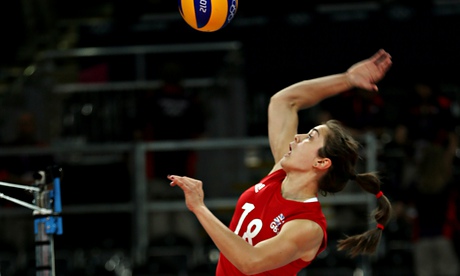
After publishing the consultation, UK Sport pledged to continue focusing its investment on the chase for Olympic medals. The decision will come as a bitter disappointment to sports such as basketball, volleyball and table tennis that had lobbied for a change in emphasis to take into account wider factors.
In a minor concession, where two sports have equal medal potential, UK Sport has promised to consider factors such as the effect on participation and the number of medallists in its calculations for the first time.
That should favour team sports that claimed to be disadvantaged by the old rules, which focused exclusively on medal chances.
In the wake of funding cuts for sports such as basketball and volleyball, there was criticism from some who said the medal-centric funding approach that had underpinned Great Britain’s rise from 36th in the medal table in Atlanta in 1996 to third at London 2012 had gone too far and was damaging grassroots sport.
Critics, including a House of Lords select committee, argued that focusing disproportionately on sports such as cycling, sailing and rowing had meant those such as basketball risked withering on the vine because they were unable to demonstrate they would win a medal at either of the next two Olympics.
In response UK Sport decided to hold a wide-ranging public consultation to inform its approach from 2017 onwards.
But it said that 86% of the sports it funds and 70% of public respondents said it should continue to focus on Olympic and Paralympic medal success as its key goal. Instead, in a minor change of emphasis, it will factor in participation and the number of medallists to help prioritise sports of equal medal potential.
It will also look beyond the existing eight-year talent pathway “if finances allow”, enabling it to take a longer-term approach to encouraging talent in sports where Britain does not traditionally excel. And it promised to work more closely with the sports councils in each nation that makes up Team GB to build better pathways between promising young athletes and the high performance system.
Meanwhile Sport England, which focuses on grassroots sport, invests £300m a year and the two bodies recently moved into the same building in a bid to reduce costs and increase co-operation.
The sports minister Helen Grant, who helped broker a deal that found more funding for elite basketball from within the Sport England budget, welcomed the outcome of the review.
“UK Sport has played a vital role in Britain’s medal success over the years, backed by significant investment from the government and the national lottery. But it is right that it looks at what more it can do to help maintain that success,” she said.
“I welcome UK Sport continuing to focus on medals and medallists to help Britain succeed in future Olympic and Paralympic Games, and to keep up the momentum from London 2012 and Sochi. But I am also pleased that it is open to taking the broader value of its investment into account in its funding decisions.”
Meanwhile, sports governing bodies for swimming, rugby league, gymnastics and equestrian have been stripped of £1.53m in funding by Sport England for failing to hit participation targets. The money will be reinvested within the sports through different avenues.