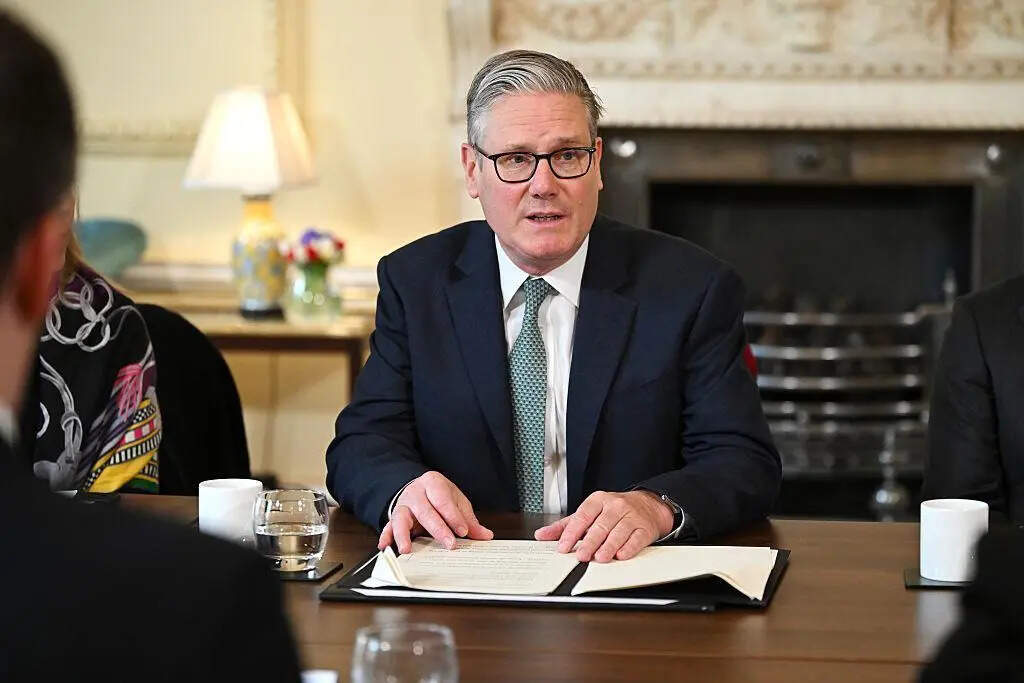
Prime Minister Keir Starmer announced that children under the age of 16 will be banned from using major social media platforms under what the government calls the most significant overhaul of online child safety rules in a generation.
Get breaking news anytime, anywhere. Download the TOI app now!
Unveiled at Downing Street on Monday, the measures are designed to tackle growing concerns over social media's impact on young people's mental health, exposure to harmful content and contact with strangers online.
The plans go beyond Australia's recently introduced restrictions and have been described by government sources as an "Australia-plus" model.
The crackdown is expected to cover major platforms including TikTok, Instagram, Snapchat, Facebook, X, YouTube, Reddit, Threads, Twitch and other services deemed to pose risks to children. Additional restrictions will also be introduced for gaming platforms and AI-powered chatbots.
PM Starmer says system has 'failed children'
Announcing the policy, Starmer described the move as a "big moment for our country" and argued that social media companies have operated for too long without sufficient safeguards for young users.
He said children are routinely exposed to harmful content, online bullying and addictive features designed to maximise screen time. The Prime Minister acknowledged that social media can offer benefits but insisted that protecting children must come first.
Speaking at Downing Street, Starmer said he was "not prepared to compromise on the safety and happiness of our children," adding that the current system had failed to adequately protect young people online.
The Prime Minister also stressed that the government would not be deterred by concerns that some teenagers may try to bypass restrictions, arguing that laws are designed to set standards and protect children even when enforcement is challenging.
Which platforms could be affected?
While the government has yet to publish a final list of platforms covered by the ban, ministers have indicated that the restrictions will apply to many of the world's largest social media networks.
Platforms expected to be included are TikTok, Instagram, Facebook, Snapchat, X, YouTube, Reddit and Threads, with further details to be announced during implementation.
The government is also targeting features that allow children to interact with strangers online. Under the proposals, gaming platforms will face tighter controls and younger users may lose access to functions such as direct messaging with unknown adults.
Officials say the objective is not simply to limit access to social media but to reduce opportunities for grooming, bullying and harmful interactions that can take place across digital platforms.
Ban on AI and late-night scrolling
The government's plans extend beyond traditional social media.
Under the proposed rules, under-18s will be barred from accessing romantic or sexual AI chatbots amid growing concerns about inappropriate interactions between minors and artificial intelligence tools.
The government is also preparing restrictions aimed at reducing excessive social media use among older teenagers. These include measures designed to limit late-night scrolling and curb addictive features such as infinite scrolling algorithms. Reports suggest specific restrictions could apply after evening hours, though final details have not yet been confirmed.
Ministers argue that many online products have been deliberately designed to maximise engagement and keep young users online for extended periods, often at the expense of sleep, wellbeing and mental health.
UK parents back tougher rules
The announcement follows one of the largest consultations on children's online safety ever conducted by the UK government.
More than 116,000 responses were submitted, and ministers said the findings showed overwhelming public support for tougher action. According to the government, around 90% of parents backed raising the minimum age for social media access to 16, while 83% said the risks of social media outweigh its benefits for children.
Government sources said the Prime Minister's position hardened after reviewing consultation responses and hearing concerns from parents, campaigners and families affected by online harms.
At the Downing Street event, Starmer was joined by campaigners and parents who have long called for stronger safeguards for children online, with the Prime Minister acknowledging their role in pushing for change.
When will the ban be enforced?
The government says the new rules are expected to take effect from spring 2027, giving technology companies time to introduce age-verification systems and adapt their services.
Ministers are exploring various enforcement options, including age-assurance technology and strengthened regulatory powers. The government has indicated it may use existing legislation as well as new legal measures where necessary to ensure compliance.
Technology companies are expected to face significant pressure to implement the changes, with Starmer signalling that the government is prepared to challenge major tech firms if they resist.