As America’s public fast-charging network continues to grow despite the broader cooling of electric vehicle sales, Uber is taking up a more active role in deciding where new charging stations should be built and how efficiently they’re managed.
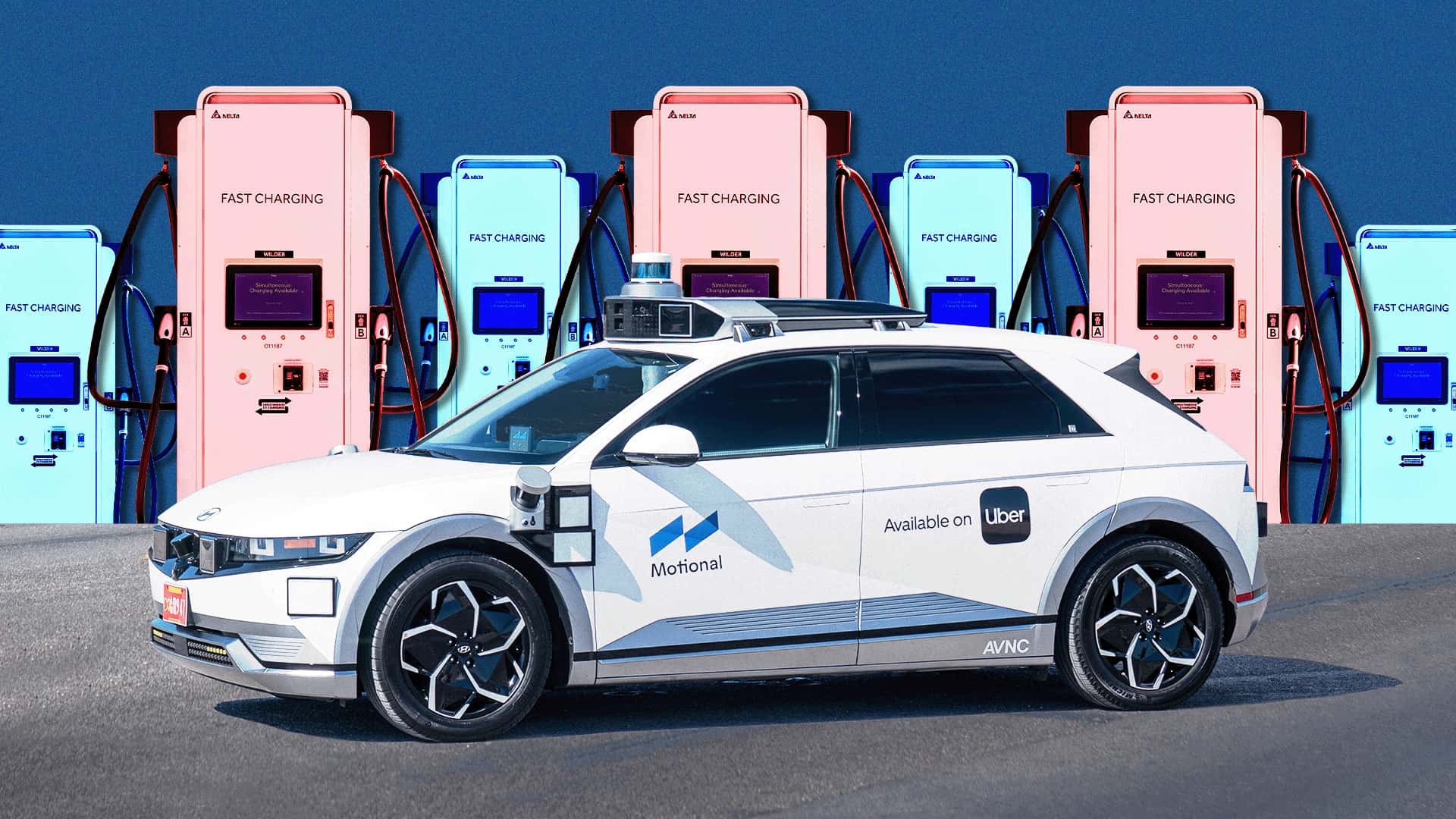
The ride-hailing giant is amid a tectonic shift, brokering dozens of deals worldwide to bring autonomous vehicles to its platform. The vast majority of these partnerships involve modern EVs, which will need consistent and reliable spaces to charge.
To address that, Uber is now aiding the build-out of new fast-charging stations to support the incoming wave of robotaxis on its platform and also providing more plug-in options to its human drivers, who are increasingly going electric.
“One of Uber's superpowers is the fact that we have just so much data,” Andrew Cornelia, Uber’s global head of electrification and sustainability, told me in an interview at the BloombergNEF Summit in New York City. “We're using that data to essentially tell us where charging needs to be.”

Armed with vast amounts of real-world trip data, the company says it could help solve one of the industry’s most persistent problems, which is matching charging supply with real-time demand from drivers who can’t afford to waste time waiting around.
In February, Uber announced a $100 million investment in building public fast-charging stations. It will partner with networks including EVgo in the U.S. and Ionity in Europe to build charging stations in high-traffic regions.
Uber is also providing these networks with utilization guarantees. Fast-charging stations require millions in upfront capital to build and only make sense financially if utilization rates are consistently high.
Cornelia is confident that demand for these chargers will be high. “Charging now tops vehicle cost in terms of concerns for Uber drivers,” he said. “We actually have a fairly high conviction and confidence that if you build it, they will come.”
New York City has among the most severe examples of charging shortages for Uber drivers. Drivers were incentivized to go electric due to new Taxi and Limousine Commission (TLC) rules in 2023, but got little charging support in return.
More charging stations have come online in the city ever since, but congestion hasn’t improved meaningfully at many locations. There aren't enough stations to support the tens of thousands of rideshare drivers who have since opted to drive EVs.
Uber is trying to alleviate some of these concerns with a new recommendation technology within its app, showing drivers nearby EV chargers and locations with the shortest queues.
But Uber’s ‘superpower’ is being stress tested regardless by rivals and investors alike. Its stock is down nearly 10% this year as of writing. Rival Waymo is a partner in Austin and Atlanta, but also a huge competitor in nine other cities where it serves riders on its own app.
And the threat from Tesla is also looming—Elon Musk’s company builds its own robotaxis, which will charge on its own hardware and serve riders through its own app. This vertical integration brings inherent advantages, giving Tesla tighter control over its software, hardware, and operations.
Uber’s horizontal approach gives it less direct influence over parts of its business. But it also enables its massive scale, which is its own advantage. Only time will tell whether the bet on AVs will pencil out. The bet on charging, on the other hand, seems less risky in comparison.
Drivers are already going electric, and having more chargers would address their needs more immediately. Chargers themselves are a proven technology, and they’re getting better every day. Newer stations are now higher-powered and have better reliability. More of them are popping up in locations with amenities like convenience stores, bathrooms, and WiFi.
“The future of mobility is really electric, autonomous, and digitally enabled,” Cornelia said. “Public charging is a concern, and that’s why we’re spending so much time on it.”
Contact the author: suvrat.kothari@insideevs.com