In an interview with Fox Business on Thursday, Treasury Secretary Scott Bessent said that the Trump administration is considering a striking short-term move to cool oil prices, temporarily lifting sanctions on roughly 140 million barrels of Iranian crude already sitting on tankers at sea.
The idea, he said, is to use oil that Iran had already pushed into the market, much of it likely bound for China, to add supply quickly and blunt the latest price spike. "In the coming days, we may unsanction the Iranian oil that's on the water," Bessent said in an interview on Fox Business.
He estimated the volume at about 140 million barrels, which he described as equal to "10 days to two weeks of supply," depending on how it is counted. He went further, framing the proposal as both an economic and geopolitical tool. "In essence, we'd be using the Iranian barrels against the Iranians to keep the price down for the next 10 or 14 days, as we continue this campaign. So, we have lots of levers."
.@SecScottBessent: In the coming days, we may unsanction the Iranian oil that's on the water. It's about 140 million barrels, so depending how you count it, that's 10 days to 2 weeks of supply, that the Iranians had been pushing out, that would have all gone to China. In essence,… pic.twitter.com/BFaLu1NzSJ
— Rapid Response 47 (@RapidResponse47) March 19, 2026
"In the coming days, we may unsanction the Iranian oil that's on the water," Bessent said in an interview on Fox Business. He estimated the volume at about 140 million barrels, which he described as equal to "10 days to two weeks of supply," depending on how it is counted. He went further, framing the proposal as both an economic and geopolitical tool. "In essence, we'd be using the Iranian barrels against the Iranians to keep the price down for the next 10 or 14 days, as we continue this campaign. So, we have lots of levers."
The possible release of sanctioned Iranian oil would not be the administration's only lever. Bessent also said the United States is prepared to release additional crude from the Strategic Petroleum Reserve beyond the coordinated 400 million barrel release announced last week by the Group of Seven. Reuters reported that the Treasury Department recently took a similar step with sanctioned Russian oil stranded on tankers, a move officials said added another 130 million barrels to global supplies.
Iran has long been a central target of U.S. sanctions policy, especially on oil exports. But with crude prices surging and concerns mounting over inflation, gasoline costs, and shipping disruptions, Bessent is signaling that the White House may be willing to make a temporary exception if it buys time and eases pressure on consumers and allies. Bloomberg reported that the administration is weighing the step specifically as a way to lower energy prices triggered by the conflict in the Gulf.
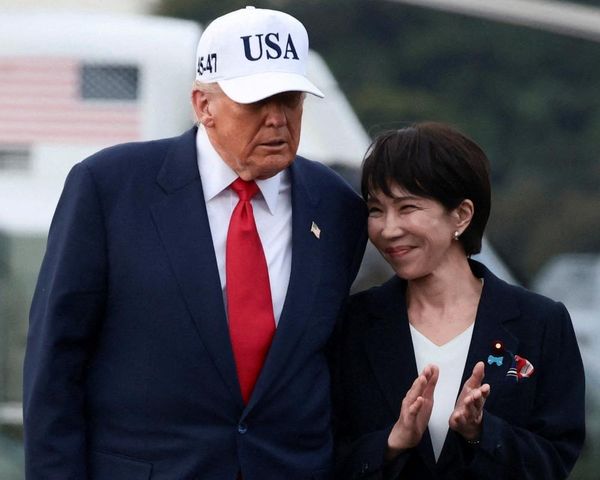
Bessent also linked the oil plan to wider international efforts to stabilize supply routes. President Donald Trump met with Japanese Prime Minister Sanae Takaichi on Thursday to discuss possible Japanese naval participation in efforts to secure safe passage for vessels. Bessent added that Japan could also be asked to release more crude from its own strategic reserves. For now, the administration has not formally announced that the Iranian barrels will be cleared for sale.