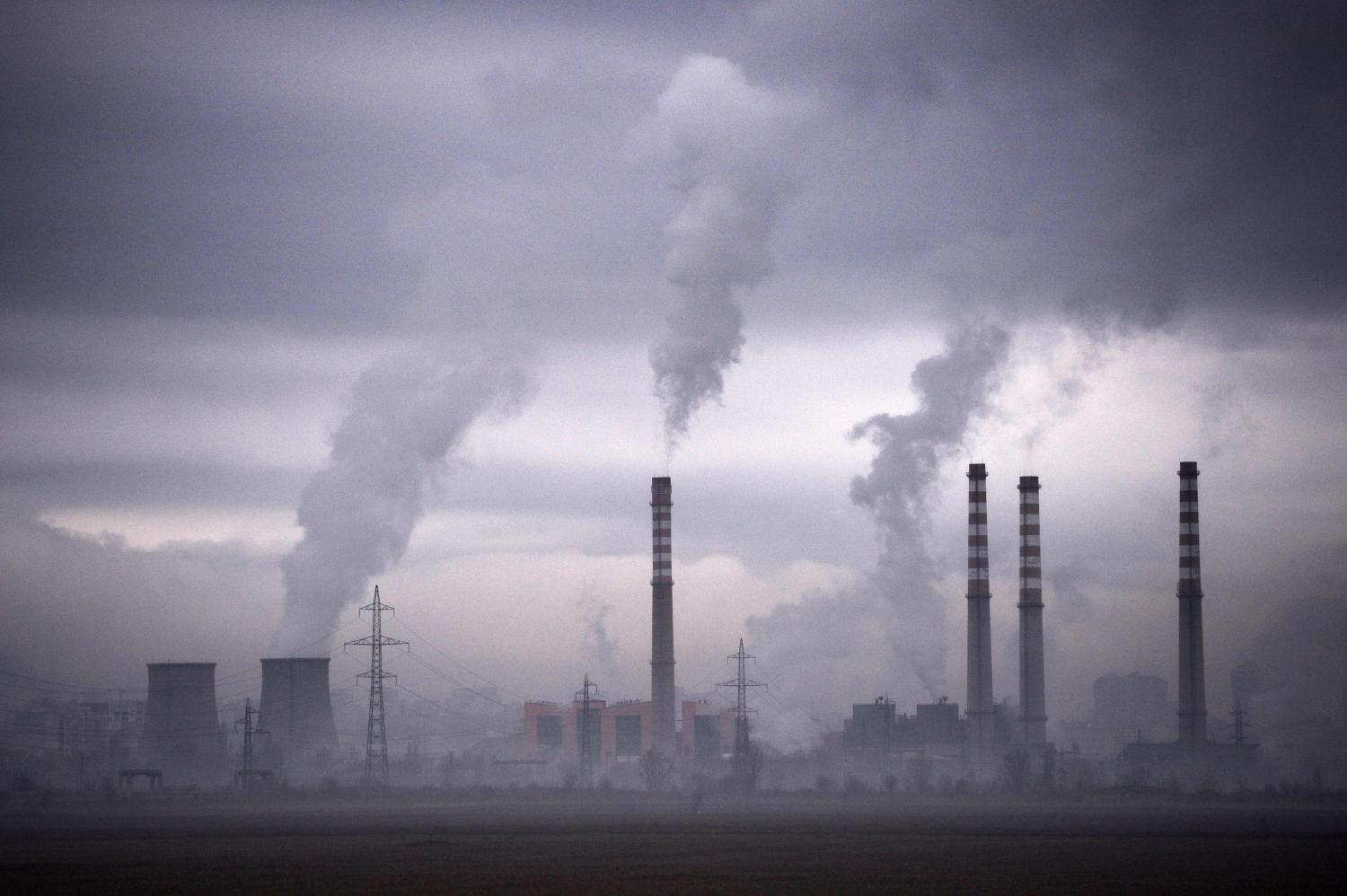
Sustainable-investing experts called for companies to step up their decarbonization plans after the United Nations' latest report on climate change said steep emissions cuts were required to limit the damage from global warming.
On Monday, the Intergovernmental Panel on Climate Change, an organization of 195 governments, said that human activity has warmed the atmosphere and is driving more frequent and severe extreme-weather events, and that the world isn't on track to meet the targets enshrined in the Paris Agreement, a 2015 international accord that aims to limit climate change.
"Unless there are immediate, rapid and large-scale reductions in greenhouse gas emissions, limiting warming to close to 1.5 degrees Celsius or even 2 degrees Celsius will be beyond reach," the IPCC said.
The warning should spur more companies to introduce verified plans for emissions reductions, said Randeep Somel, a portfolio manager at M&G Investments who works on environmental, social and governance-focused investing.
"We have the climate solution tools available to us, whether it be the transition to renewable energy, adoption of electric vehicles, improving building efficiency, increasing levels of recycling and the incorporation of greener technology for industrial processes," he said.
Meanwhile, many companies with plans in place should make them more ambitious, investors and analysts said. Engie Impact, a consulting firm owned by French utility Engie SA, estimates that only 25% of companies with targets to achieve net-zero carbon emissions are on pace to meet them.
"Businesses should see the recent IPCC report as a major prompt to get their net-zero strategies straight, ensuring strategic business transformation with clear, science-based frameworks," said Mathias Lelièvre, chief executive of Engie Impact. "Net zero must extend beyond their walls into scope 3 and within their products and services."
"Scope 3" refers to emissions from companies' supply chains and the way their products are used.
The Science Based Targets Initiative, a nonprofit that verifies corporate climate-change plans, is pushing for more urgent carbon-reduction goals.
In anticipation of the IPCC report, SBTI said last month it would no longer validate targets that don't go far enough to help keep global temperature rise to 1.5 degrees.
More than 800 companies have had their emissions-reduction targets validated by SBTI, with 221 companies aimed at a "well-below 2 degree" plan, instead of 1.5 degrees.
"Given the state of climate emergency that we are facing, we urge companies and financial institutions to align their climate strategies to a 1.5 degrees Celsius pathway as soon as possible," SBTI co-founder Alberto Carrillo Pineda said in an email.
From July 2022, SBTI will only assess plans with timespans of five-to-10 years, having previously endorsed plans over 15-year periods.
Companies whose less-ambitious plans were approved will have to re-validate them within 5 years of their approval, Mr. Carrillo Pineda said.
Sustainability analysts at Swiss bank Lombard Odier said the report bolsters the case for businesses to make more aggressive emissions-reduction plans -- including earlier targets, clearer intermediate targets for 2030 and less reliance on carbon offsets -- and to take action to adapt to the impacts of climate change.
"[If] extreme events become more dire/frequent, then net zero by 2050 might no longer be sufficient," the analysts wrote. "Or, if net zero by 2050 is the best we can do, then more adaptation initiatives will be needed to minimize the adverse effect of climate change."
They said the IPCC report "should strengthen an already buoyant demand for investment solutions that tackle climate mitigation and adaptation."
Analysts at investment bank Jefferies Financial Group Inc. predicted that "capital markets will reward companies that are making faster and more immediate CO2 reductions compared to those with far away targets."
To be sure, the response to climate change will be shaped largely by governments -- for example at the U.N. climate conference scheduled to be held in Glasgow, Scotland, later this year. But companies can influence those deliberations, said Mindy Lubber, CEO of Ceres, a nonprofit advocacy organization that works to coordinate investor action on sustainability.
"We do expect that companies are not only going to change their commitments of 2050 to 2040 and lay out a plan, but they're going to stand up and support policy changes," Ms. Lubber said. "Companies -- as voices of reason on climate, as trusted voices, as highly impacted constituencies -- need to be part of the message."