
Having a second camera may sound like a bit of a luxury, but it's essential for working pros who not only need a backup camera in case one fails on an important photoshoot, but also to allow you to switch between two different lenses easily without having to spend time faffing around in your camera bag. This goes for any photographer making a living from things such as big occasions, sporting events and weddings.
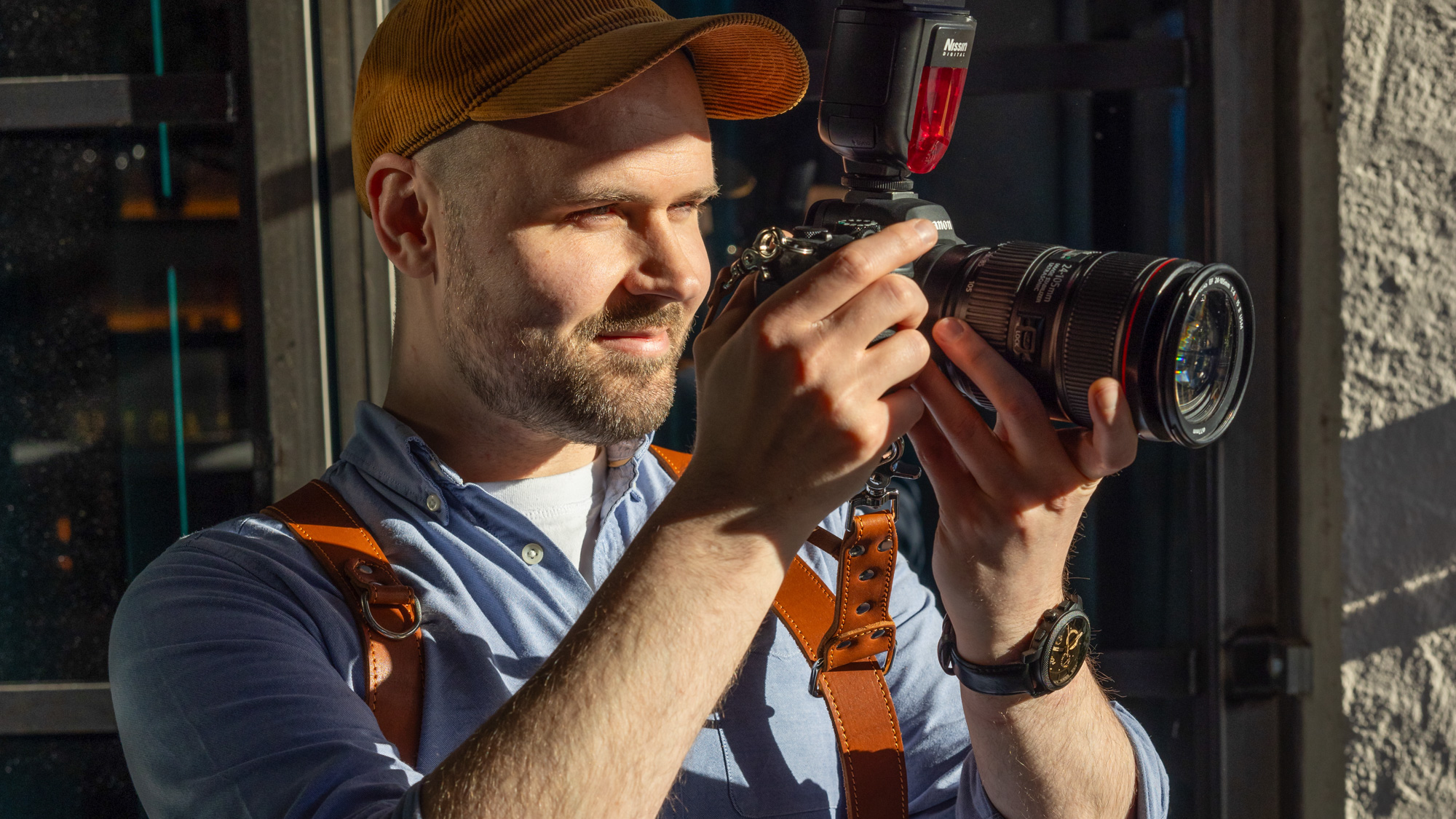
So having two cameras is the important first step, a little secret tip is I also have my old DSLR in my car as a third backup too, just in case things go really pear-shaped! When choosing two cameras they don’t have to be identical models, though you may prefer them to be if you're after consistency between the files. It’s more important that they’re the same sensor size, such as APS-C or full-frame, and also from the same camera brand so that you can interchange the lenses easily. I currently use a Canon EOS R5 and Canon EOS R6 Mark II for my weddings, as this allows me to change cameras when I need the larger 45MP files from the EOS R5, or the lower megapixels and better noise handling of the 24.2MP R6 Mark II for low light situations.
You obviously can’t wear them both around your neck, so a dual camera harness is usually the way to go, though you can also get waist holsters if this is more comfortable for you. You’ll find a list here of what that I deem to be the best camera harnesses on the market.
When working with two cameras it’s best to do some house keeping by synchronising the date and time and setting custom filenames too, this will save you hours back at your computer.
Ensure RAW shooting is enabled on both and use cameras with dual memory card slots if possible so you can create a backup. If your camera has a CFexpress card and a slower SD card slot, you could save RAWs to the faster card and JPEGs to the SD, so at least you’ll have something in case one of the cards fails and take pressure off the camera’s buffer.
Note, you don’t have to wait until your cards are full before you change them – it’s actually not a bad thing to shoot on several smaller cards – if one corrupts, you’ll have mitigated your losses.
Now you’ve got your two camera bodies set up it’s time to decide on lenses. This is down to personal preference but having two cameras allows you to switch between two lenses rapidly and cover a larger range of focal lengths.
Many pros swear by 16-35mm, 24-70mm and 70-200mm optics all with fast f/2.8 apertures, often called the ‘Holy Trinity’ lenses. Though others prefer the shallower depth of field and better light gathering ability of primes like a 50mm f/1.8. It’s all down to personal choice and which glass suits your shooting style as well as help you get the job done. If you need a third lens handy, you could keep a rucksack of spare lenses in your car, or have a lens pouch attached to your belt – this also comes in handy for stashing spare cards and batteries.
You might also like…
Want to know more? Take a look at the best camera harnesses as well as our top picks of the best camera straps.