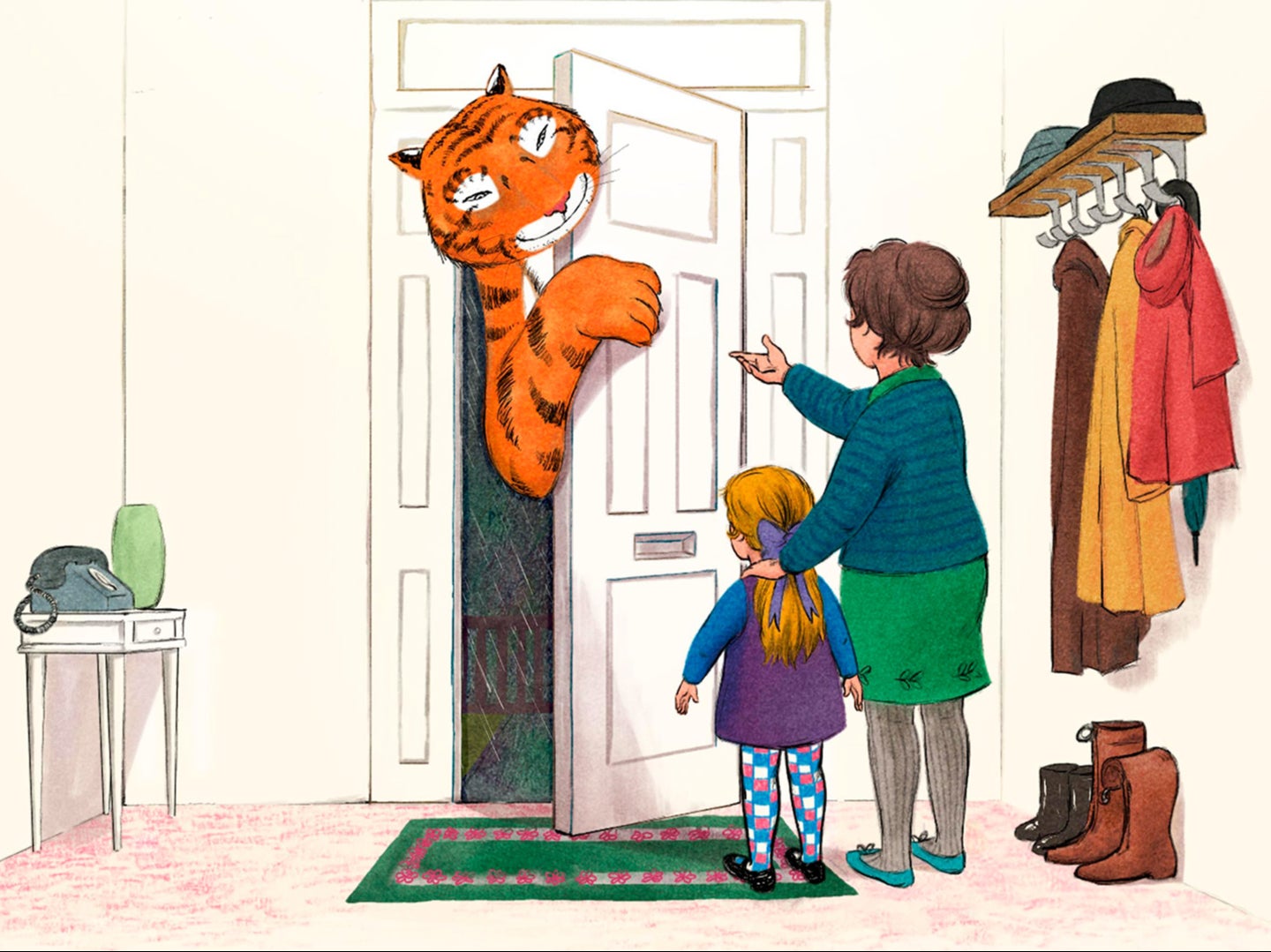
A storm in a teacup has been brewing on social media over one of the UK’s best-loved children’s books.
Judith Kerr’s ‘The Tiger Who Came to Tea’ has delighted kids and parents for more than four decades, but it now finds itself at the centre of an impassioned Twitter debate.
The furore stems from comments made by Scottish campaign group Zero Tolerance, which works to promote gender equality and end violence against women.
Their co-director Rachel Adamson argued that the colourful story features gender stereotypes – such as the father sweeping in at the end to “save the day” – with such tropes having a damaging long-term impact on society.
“We know that gender stereotypes are harmful and they reinforce gender inequality, and that gender inequality is the cause of violence against women and girls, such as domestic abuse, rape and sexual harassment,” Adamson told an interview with BBC Scotland, cited by The Telegraph.
She added: “I know this will make a lot of people unhappy, but one of the books is ‘The Tiger Who Came to Tea’... Judith Kerr is a wonderful author. However, it is reflective of a society that we need to think more closely about.”
She clarified that she was not pursuing a “great burning of books agenda”, but suggested parents and nurseries should “look closely at their bookshelves” and consider the narratives they’d like their children to absorb.

However, inevitably, scores of Twitter users ignored the intricacies of her argument, instead jumping on the suggestion that someone was trying to “cancel” ‘The Tiger Who Came to Tea’.
The book’s title was trending on the platform on Tuesday afternoon, as commentators voiced their fury at what they took to be a “woke” smear campaign.
Here’s a look at what some of them had to say:
The Tiger Who Came To Tea reinforces gender stereotypes and could lead to rape and harassment of women, a gender campaigner claims.
— Julia Hartley-Brewer (@JuliaHB1) August 24, 2021
These people are stark staring mad. God knows what she makes of The Cat In The Hat or We're Going On A Bear Hunt. 🤷🏻♀️🙄🤪 https://t.co/5i96IIUhvD
'Are you offended? Of course not, because chances are you’re not insufferable.'
— GB News (@GBNEWS) August 24, 2021
Mercy Muroki responds to a Scottish campaign group which has criticised books like The Tiger Who Came to Tea because they say the books are reinforcing ‘harmful’ gender stereotypes. pic.twitter.com/rK3UITccKS
Judith Kerr’s children’s story “The Tiger Who Came to Tea” (1968) has been criticised for reinforcing “harmful” gender stereotypes.
— Andrew Doyle (@andrewdoyle_com) August 24, 2021
My thought this morning on @GBNEWS… pic.twitter.com/AbbjQY1FT0
Activists say children's book 'The Tiger Who Came to Tea' causes rape and harassment
— Bella Wallersteiner (@BellaWallerstei) August 24, 2021
Absurd. Woke zealots won't stop until they purge our culture entirely. My mother read this book to me as a child. I will be keeping my copy for the next generation.https://t.co/lhuHGy4NOe
Meanwhile, others shared their exasperation at the “meta outrage”, with one Twitter user pointing out that Zero Tolerance weren’t calling for the book to be banned:
And they haven't even called for The Tiger Who Came To Tea, to be banned.
— @Carole29 (@Carole29) August 24, 2021
People are getting outraged over a non story, slating "the woke generation" for getting outraged.
It's meta outrage and it's becoming exhausting. https://t.co/ow55rfQrZw
In an interview with LBC’s Nick Ferrari, barrister and family law specialist Dr Charlotte Proudman, argued that Adamson’s point was “more about having a conversation about more harmful gender stereotypes and tropes that are played out within children’s books”.
She explained: “For example, ‘Sleeping Beauty’ – waiting for the prince to come and wake up this beautiful young woman and bring her back to life, or ‘Cinderella’ to be rescued from this evil stepmother and sisters, and only a prince, of course, can do that – these types of books, are very gendered in nature and I do think that they had quite a big role to play in terms of my understanding of beauty, needing a man, having someone to fill that void, so to speak.”
'These books are very gendered and have a big role to play.'
— LBC (@LBC) August 24, 2021
Human rights barrister @DrProudman reacts to claims the children's book The Tiger Who Came To Tea 'could lead to rape and harassment' as it reinforces gender inequality.
@NickFerrariLBC pic.twitter.com/IJ9sGNchQe
Ferrari then retorted: “I’m not seeking to belittle your argument, but are you honestly going to take me to the stretch that you might actually be looking at someone in court accused of rape because he read ‘The Tiger Who Came to Tea’ as a child?”
Her response was, obviously, “no”. But, she refuted his suggestion that the whole debate was just “gesture politics” stemming from society’s obsession with so-called cancel culture (more on that here, from today).
Instead, she pointed to a “bigger narrative” that “gender-based stereotypes, domestic abuse – all those forms of harmful behaviour often start off when children are very young.”
“So if we look, for example, at stories about rape culture in schools, this is pervasive and it is endemic unfortunately, and it’s happening amongst very young children,” she continued.
“And so the idea is that if you tackle it when children are very young, then hopefully we have a better chance when they get older [...] to mould their mindsets and their attitudes and make them respect and care for each other.”
Her interviewer’s response was to suggest that any children’s book could be “spun” and read as “evil”.
It’s clear to see from Ferrari’s expression that the likes of Adamson and Dr Proudman have a long way to go when it comes to hitting home their message.