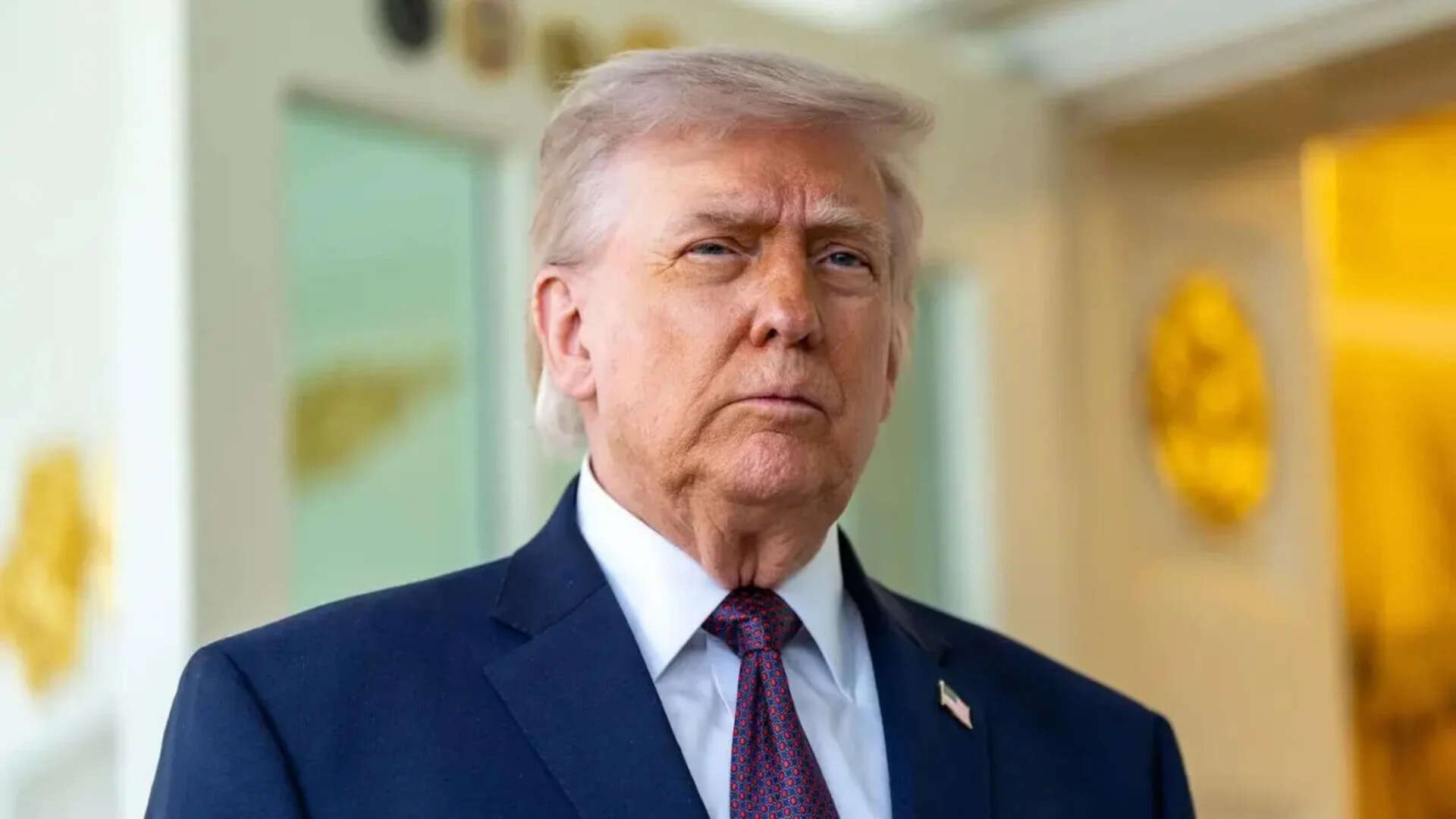
WASHINGTON : The US military said it would begin enforcing President Donald Trump-announced blockade of the Hormuz Strait at 10am EST on Monday (7.30pm IST), while clarifying that the embargo will only apply to vessels entering or departing Iranian ports and not other Gulf entrepôts. Iran responded by saying “no port in the Persian Gulf and the Arabian Sea will be safe” if the security of its ports is threatened.
It was not clear if the blockade had started when the designated time arrived.
Trump later claimed in a social media post that “Iran’s Navy is lying at the bottom of the sea, completely obliterated —158 ships”. He claimed what the US had not struck were what Iran called “fast attack ships because we do not consider them much of a threat”. He threatened to eliminate these smaller craft if they came “anywhere close to our BLOCKADE” using the same “system of kill that we use against the drug dealers on boats at sea. It is quick and brutal.”
Trump naval blockade is being seen not only as an escalation against Iran, but also as a move that edges perilously close to an indirect or de facto declaration of war against China, which is the primary consumer of Iranian crude.
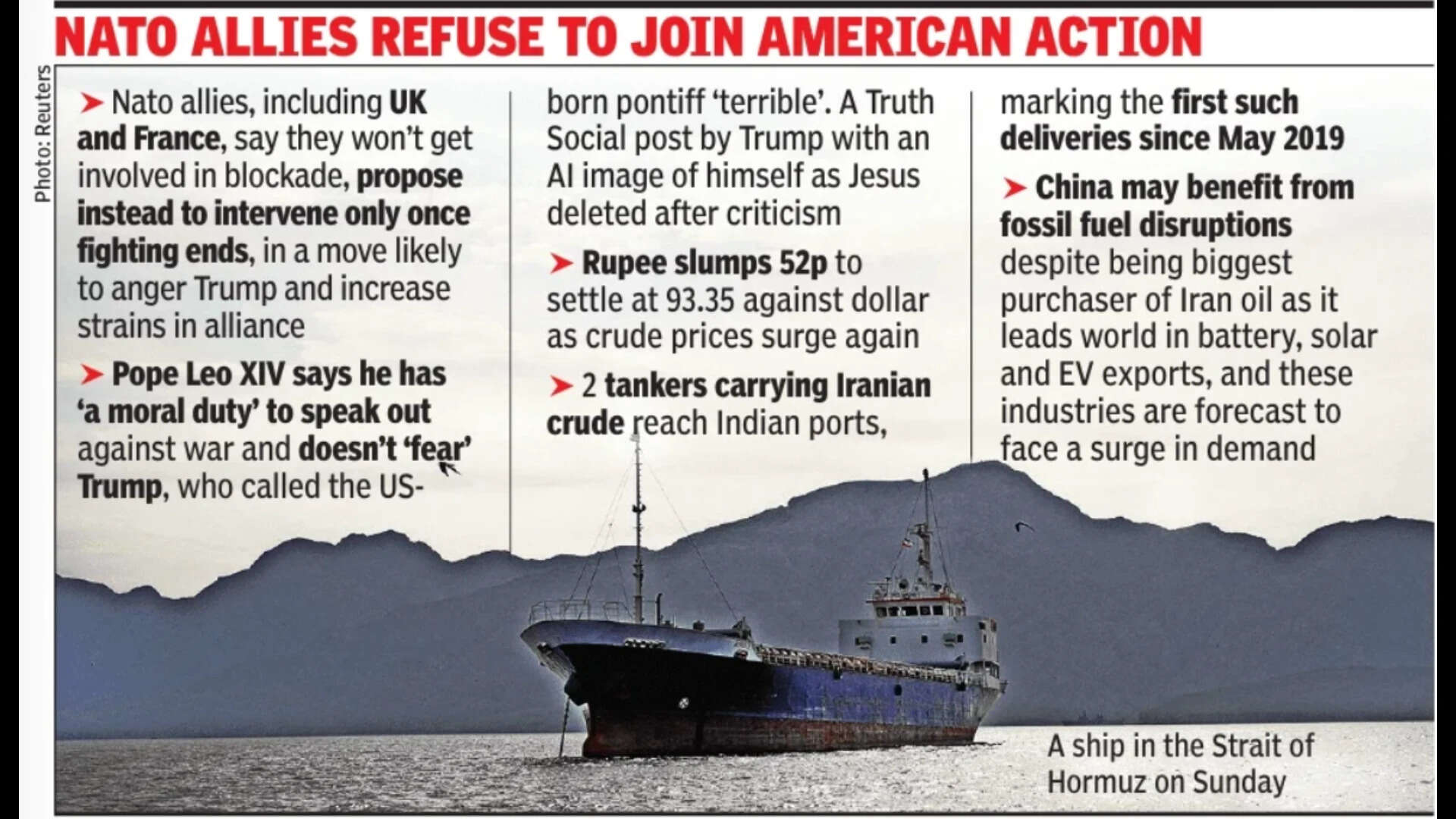
‘Under int’l law, blockade is regarded as act of war’
This is because, as in the case of Russia, Trump believes oil revenue is keeping Iran afloat. “CENTCOM forces will not impede freedom of navigation for vessels transiting the Strait of Hormuz to and from non-Iranian ports,” the Tampa-based military command had said in statement on Sunday, underlining free passage for countries trading with Gulf allies such as the UAE, Qatar, and Saudi Arabia that also use the Strait of Hormuz for trade and commerce.
“The blockade will be enforced impartially against vessels of all nations entering or departing Iranian ports and coastal areas, including all Iranian ports on the Arabian Gulf and Gulf of Oman,” Centcom said.
Iran’s military said a naval blockade “imposed by criminal America” would be “illegal and constitute an example of piracy”, AFP quoted a statement issued by the Iranian military’s central command centre, Khatam Al-Anbiya, that was read on state television.
Under international law, a blockade is widely regarded as an act of war, according to legal experts. The principle dates back to customary maritime law and has been codified in various legal interpretations: when a state uses force to prevent ingress or egress of vessels to another state’s ports, it is viewed as engaging in belligerent activity. During the Cuban crisis, Washington deliberately called its blockade a “quarantine” to avoid the legal implication of declaring war on the Soviet Union, but the Trump dispensation has dispensed with such niceties while indirectly taking aim at China.
What elevates the stakes further is China’s exposure to Iranian oil, with the country accounting for more than 90% of Iran’s oil exports, importing roughly 1.5 to 1.6 million barrels per day through a complex sanctions-evasion network. This constitutes approximately 15% to 16% of China’s total crude imports, making Iran one of Beijing’s most critical external suppliers.
The trade itself is said to operate in a legal grey zone. Iranian oil is shipped via a “shadow fleet” of tankers operating under flags of convenience, with frequent ship-to-ship transfers in waters near Malaysia and the UAE. Cargoes are often relabelled before being processed in China’s independent “teapot” refineries. Payments are increasingly denominated in yuan, further insulating transactions from US scrutiny.
With Western markets closed due to sanctions, China is effectively said to be the sole large-scale buyer sustaining Iran’s export revenues. Severing this lifeline would cripple Iran’s fiscal capacity to sustain both its domestic economy and military posture.
In comparison, New Delhi’s purchase of Iranian oil is negligible. India’s recent resumption of imports from Iran, enabled by a temporary US sanctions waiver, is small. A single cargo delivered to Indian Oil Corporation recently marks a tentative reopening rather than a structural shift. Historically, India imported 15-20% of Iran’s exports before 2019, but that share went to near zero after sanctions tightened.
India then moved on to Russian oil, but even that was whittled down with US tariffs amounting to sanctions, forcing it to go further afield to the US and Venezuela. If the blockade persists, India’s exposure will remain minimal in direct terms, but it will feel the secondary effects: higher global prices, tighter supply, and increased competition for alternative sources. Also squeezed out by the blockade will be basmati rice, which India exports in significant quantity to Iran. The most immediate uncertainty lies with other Gulf exporters — Saudi Arabia, the UAE, Qatar, and Kuwait — all of whom rely on Hormuz to ship their oil and gas.