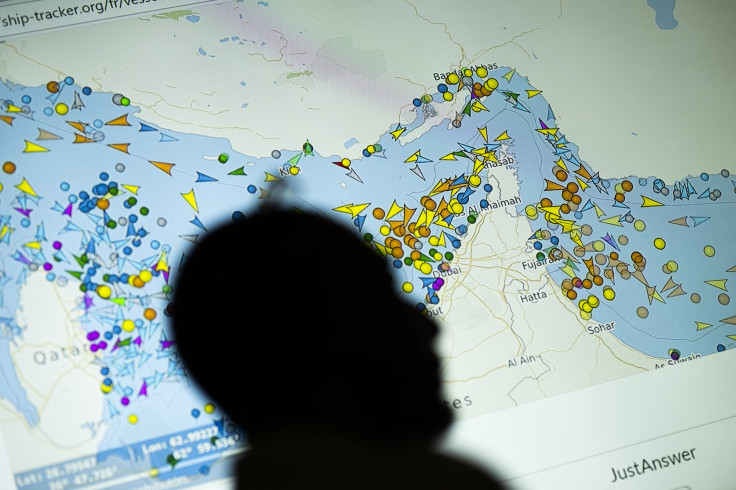
Iran's top diplomat said Tehran "cannot trust the Americans at all" as President Donald Trump claimed the United States now controls the Strait of Hormuz, which remains essentially closed and without traffic.
Iranian Foreign Minister Abbas Araghchi made the comments in New Delhi in the context of a BRICS meeting. He said talks aimed at ending the war remain on hold and accused the United States of sending conflicting messages.
"We cannot trust the Americans at all," Araghchi said, according to CBS News. He added that Tehran would negotiate only if it believed the United States was serious.
Trump, in turn, told reporters aboard Air Force One after meeting Chinese President Xi Jinping, said the U.S., not Iran, was in control of the Strait of Hormuz.
"We control the Strait," Trump said. "We wiped out their armed forces, essentially." He also said Iran had "done no business" and that the U.S. was doing "very well on all fronts." Reuters reported that talks mediated by Pakistan have stalled after both sides rejected proposals, while Iran continues to insist any future negotiation must acknowledge its security demands and sovereignty claims around Hormuz.
Araghchi said Tehran is attempting to maintain what he called a "shaky" ceasefire "to give diplomacy a chance," but warned Iran was ready to respond if attacked again. Trump, meanwhile, has portrayed U.S. pressure as leverage. He also said vessels can pass through the Strait of Hormuz, except those belonging to countries "at war" with Iran, if they coordinate with Iran's navy.
Trump, speaking after he met with Xi, said the United States and China agreed Iran should not obtain nuclear weapons and that Tehran must reopen the Strait of Hormuz. Xi did not publicly make the same statement, but China has a direct stake in Hormuz because of its dependence on Gulf energy imports.
The U.S. Energy Information Administration describes the Strait of Hormuz as one of the world's most important oil chokepoints, noting that about a quarter of all crude and petroleum products move through the narrow passage between Iran and Oman and that few alternatives exist if its closed.
The International Energy Agency says about 20 million barrels per day of crude oil and oil products moved through the strait in 2025, roughly a quarter of global seaborne oil trade.