The Trump administration will launch investigations into forced labor practices on imported goods from 60 countries, including the entire bloc of the European Union, as it seeks methods to restore President Donald Trump’s global tariffs.
Trade Representative Jamieson Greer initiated the probe under Section 301 of the 1974 Trade Act – which Trump said his administration planned to do after the U.S. Supreme Court struck down his tariff policies last month.
Since the reversal of the president’s key economic policy, the administration has been quickly searching for statutes that would allow Trump to reinstate his tariffs that brought in roughly $170 billion in revenue. Lawyers for the administration have even attempted to postpone issuing refunds to companies that were forced to absorb extra costs or pass them along to consumers.
The new trade investigation will focus on the top 60 U.S. trading partners, accounting for 99 percent of the U.S.’s imports, to determine whether forced labor is used in production.
“For too long, American workers and firms have been forced to compete against foreign producers who may have an artificial cost advantage gained from the scourge of forced labor,” Greer said in a statement.
The U.S. bans imports that are made with forced labor.
For example, in 2021, the U.S. banned imported goods made in the Xinjiang Uyghur region of China unless documentation proves the goods were made without forced labor, after accusations of the practice emerged.
The new probes are avenues the administration can take to eventually reenact Trump’s tariffs, which the president had constantly bragged about and insisted were necessary for national security.
However, the Supreme Court disagreed, ruling that the 10 percent global tariff, in addition to the “reciprocal” tariffs were unlawfully enacted under the 1977 International Emergency Economic Powers Act.
The ruling appeared to infuriate the president, who called the decision “deeply disappointing” and said he was “absolutely ashamed” of the Republican appointees on the court who’d failed to back his signature policy.
The forced labor investigation is one of two that the administration has already announced under Section 301.
Already, Greer announced earlier this week that the U.S. would open an investigation into structural excess capacity and production in manufacturing in China, the EU, Switzerland, Malaysia, Thailand, Japan, Mexico, India and more.
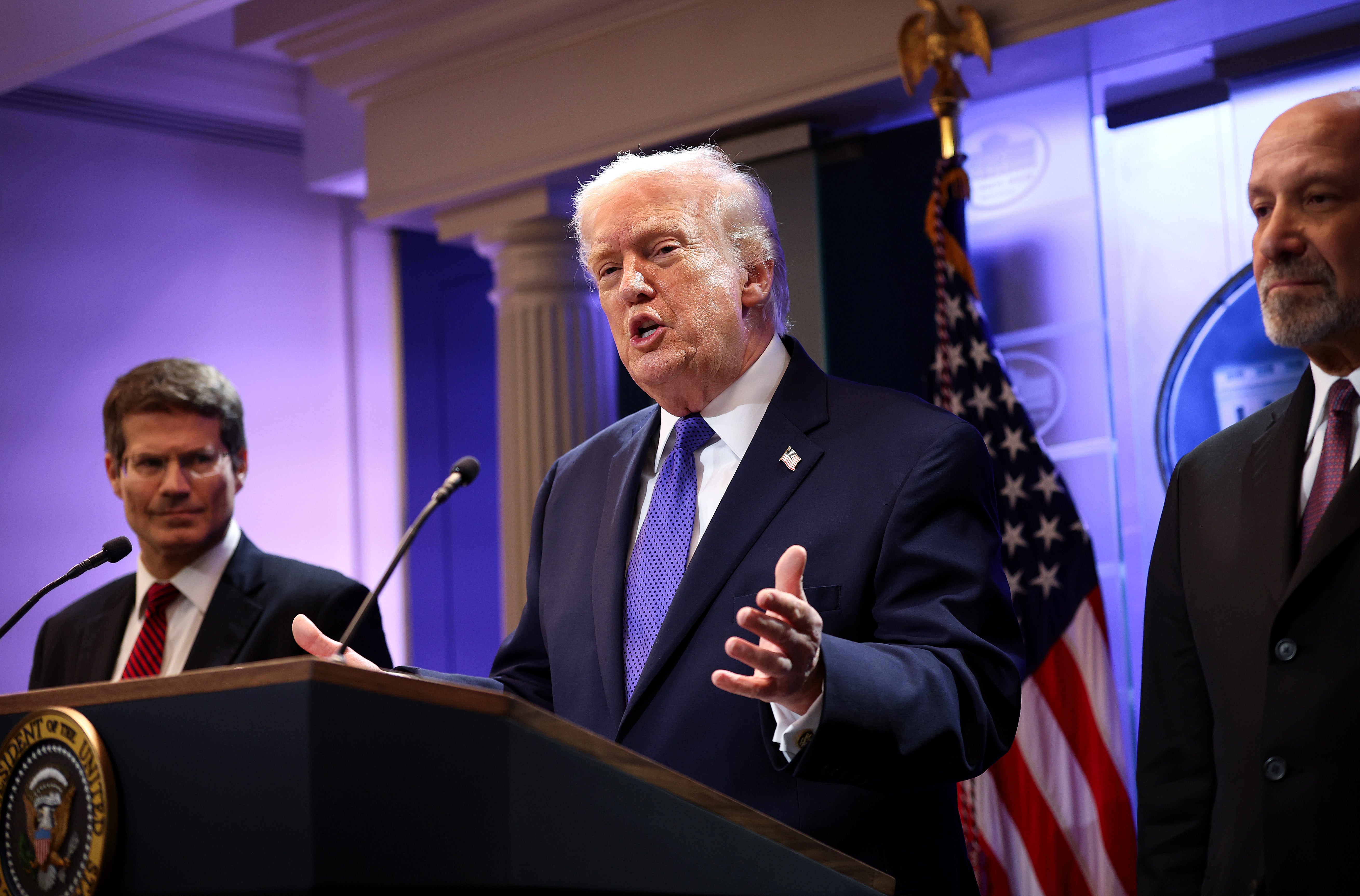
On a call with reporters Wednesday, Greer said people could expect other Section 301 investigations on a “country-specific basis.”
Section 301 of the 1974 Trade Act allows the president to take action, including tariff-related action, when a foreign government violates an international trade agreement or engages in a discriminatory, unreasonable, burdensome or economically restrictive practice.
Once the investigation is launched, a committee will conduct a review, which could include public hearings and a public comment opportunity, and then make recommendations to the trade representative.
At the direction of the president, the trade representative can take action in the form of tariffs, suspend trade agreement concessions or create new agreements with foreign governments.
However, when the trade representative initiates the investigation, it must negotiate a settlement, in the form of compensation or elimination of a trade barrier, with a foreign country.
Trump’s Kennedy Center chief to step down ahead of closure for renovations
Trump’s own Religious Liberty Commission adviser resigns in protest over Iran war
US faces elevated terrorism threats against backdrop of Iran war and cuts at FBI, Justice Department
Vance was ‘skeptical’ over attacking Iran in discussions, report says
US slashes citizen renunciation fee by 80%
Republican Islamophobia in the US comes unleashed amid Trump’s war with Iran