Donald Trump has asked to delay his highly anticipated trip to China by about a month because of the ongoing US-Israeli war on Iran.
The American president confirmed on Monday that the White House had “requested that we delay it a month or so” as the war in the Middle East entered its third week.
The request to reschedule his 31 March-2 April visit to meet Chinese leader Xi Jinping underscores how the Iran war has upended Mr Trump’s foreign policy agenda and cast a shadow over mutual ties that have been mostly stable since their October meeting.
Mr Trump said he had proposed the delay to ensure he remained in place to manage the war. "I'm looking forward to being with him," he said, referring to Mr Xi. "We have a very good relationship."
"There's no tricks to it either," he added. "It's very simple. We have got a war going on. I think it is important that I be here."
On Sunday, however, Mr Trump had told the Financial Times he might postpone the meeting if China did not help unblock the Strait of Hormuz. The next day, his treasury secretary Scott Bessent said Mr Trump might need to delay the visit to coordinate the ongoing war effort and not because China had turned down his request to help police the strait or because of any trade disagreements.
Chinese foreign ministry spokesperson Lin Jian said on Tuesday that Beijing and Washington were in talks over “the timing and related matters of president Mr Trump's visit to China”.
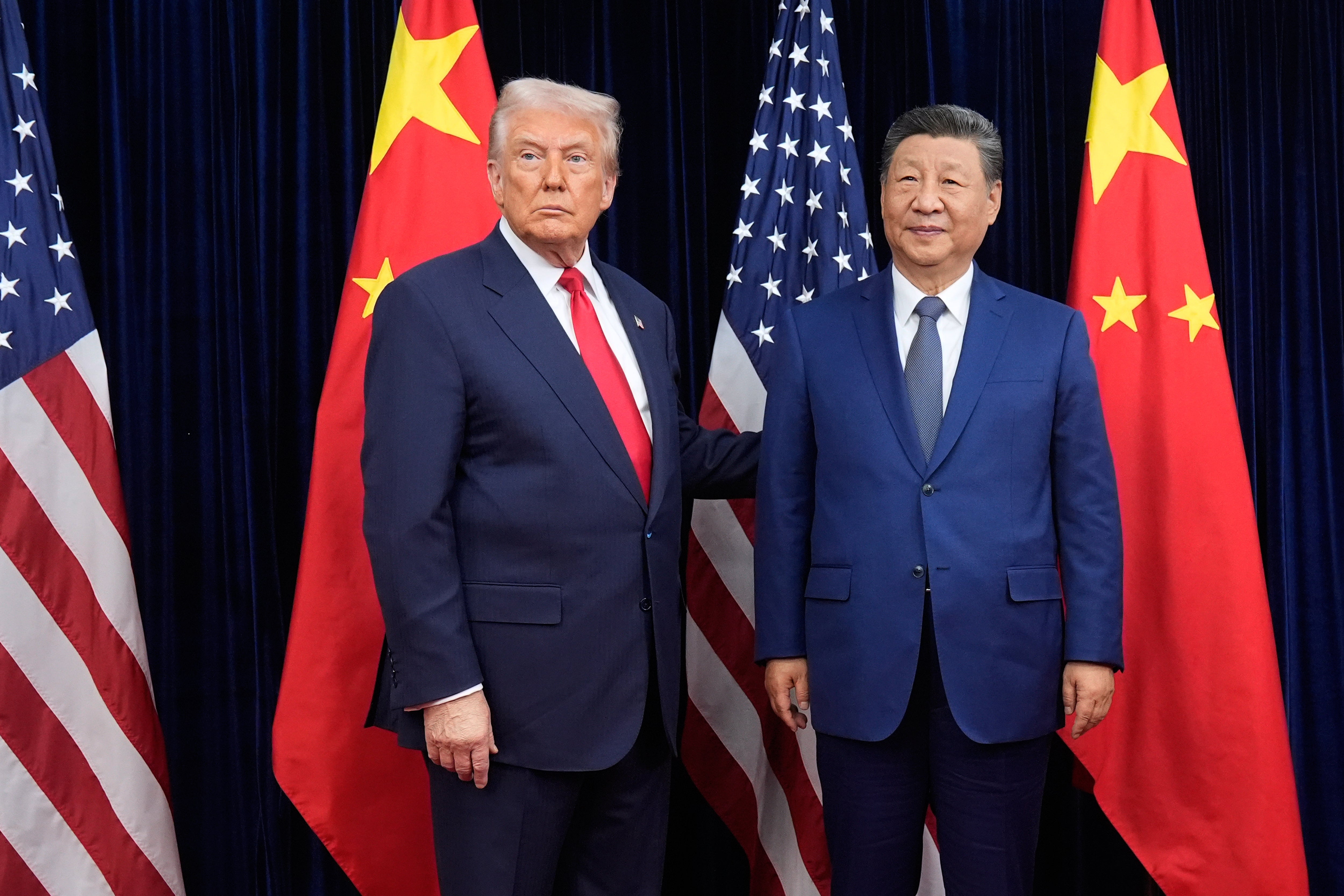
The delay in Mr Trump’s visit further complicates what Beijing’s top diplomat Wang Yi has described as a “big year for China-US relations” and hits pause on the renewal of bilateral relations. The two sides concluded high-stakes trade talks in Paris on Monday to lay the groundwork for Mr Trump's trip.
The negotiations followed Washington’s launch of new investigations into “unfair trade practices” to rebuild pressure on countries, including China, after the US Supreme Court struck down Mr Trump's global tariffs last month.
“The situation is not in jeopardy, and Beijing still wants to organise the summit, but the US-Iran conflict and the Supreme Court ruling on tariff policies have complicated the efforts,” said Zhao Minghao, an international relations expert at Shanghai's elite Fudan University.
"It makes US-China interactions this year more difficult because of Trump's 'war of choice' in Iran."
Mr Zhao said the postponement would also mean there was time for more trade actions.
“The White House says it will continue its tariff policy, but without a doubt, we could see new uncertainties in this regard that impact Beijing's calculations on dealing with the US,” he said.
A source familiar with the Paris talks told Reuters that China showed openness to potential additional purchases of US agricultural goods including poultry, beef and non-soybean crops.
The two sides also discussed the flow of rare earth minerals, an industry dominated by China, and new approaches to manage trade and investment.
China Daily described the negotiations in an editorial published on Tuesday as "constructive", but warned Mr Trump that Beijing's "openness should not be mistaken for acquiescence”.
"The US side should refrain from taking any further actions that could disrupt or undermine a stable China-US economic relationship,” it said.
“Actions that inject uncertainty – whether tariffs, restrictive measures or unilateral investigations – do just that.”
That sentiment would similarly apply to the setting up of the summit, according to Alfred Wu of the Lee Kuan Yew School of Public Policy.
"The fluctuations in plans are not ideal from China's perspective, China actually wants something more predictable,” he said.