The Trump administration has moved to relax federal regulations requiring grocery stores and air-conditioning companies to reduce greenhouse gases used in cooling equipment, a step President Donald Trump claims will help lower grocery costs for consumers.
Speaking at a White House ceremony, Trump asserted that the Environmental Protection Agency’s action would "substantially lower costs for consumers" by delaying expensive restrictions on the types of refrigerants US businesses and families can utilize.
The decision to ease what were described as "Biden-era rules" on harmful pollutants known as hydrofluorocarbons, emitted by refrigerators and other appliances, marks the latest attempt by the Republican administration to address rising voter concerns over the cost of living ahead of pivotal elections in November.
However, it remains unclear how significantly or quickly grocery prices might be affected. Industry groups have warned the change could even lead to price increases, citing that manufacturers have already redesigned products, retooled factories, and trained workers to build and service next-generation refrigerant equipment.
The move comes as inflation in the United States climbed to 3.8% annually in April, exacerbated by price spikes linked to the Iran war and Trump’s sweeping tariffs. Inflation is currently outpacing wage gains, with the conflict keeping oil and petrol prices elevated.
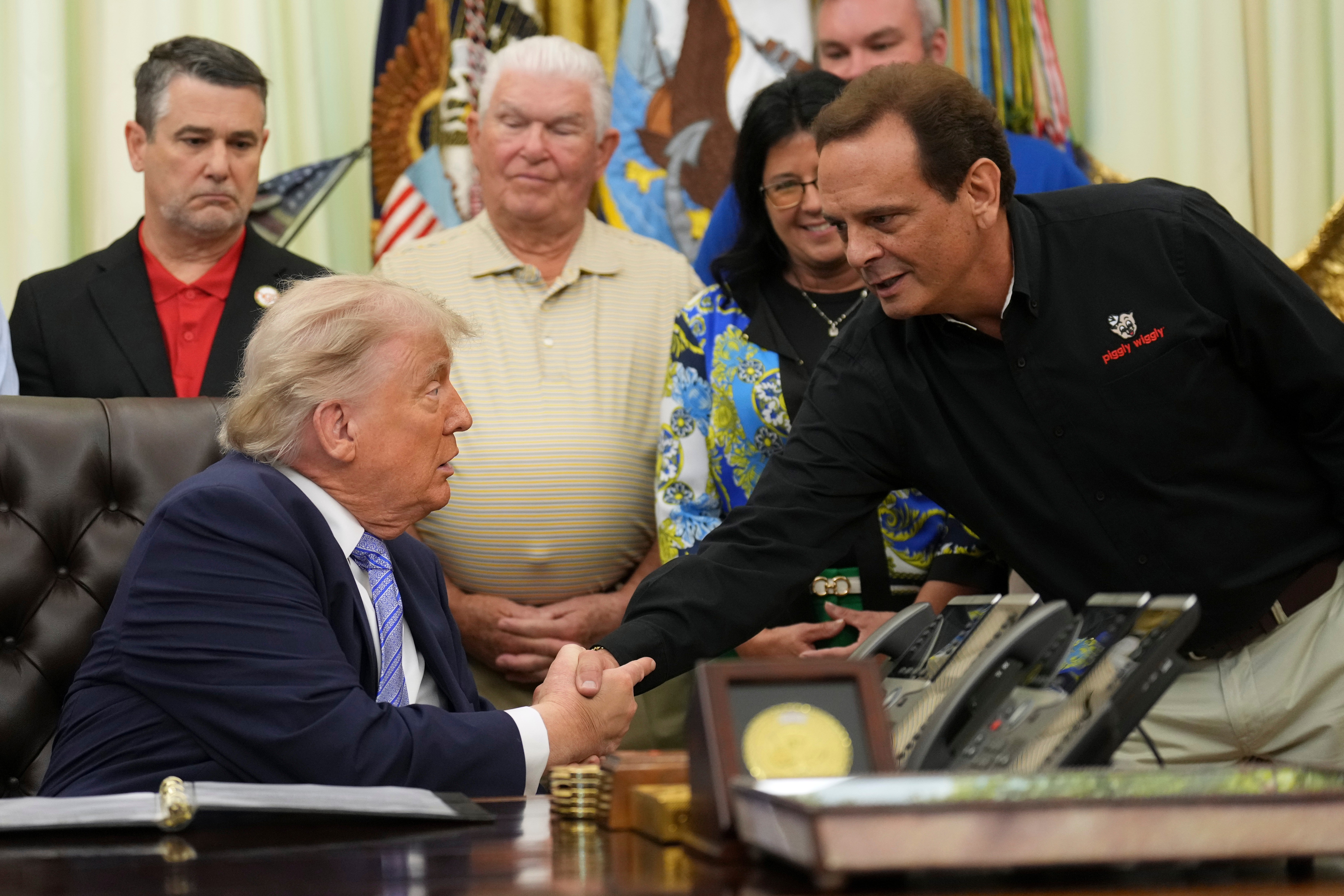
Trump, joined by top executives from Kroger, Piggly Wiggly, and other grocery chains, labelled the regulation from the Democratic Biden administration as "unnecessary and costly and actually makes the machinery worse." He claimed the EPA’s action would safeguard hundreds of thousands of jobs and save Americans more than $2bn (£1.6bn) annually.
The Air-Conditioning, Heating and Refrigeration Institute, representing over 330 HVAC manufacturers and commercial refrigeration companies, stated that the shift in approach would "inject uncertainty across the market" and potentially drive up prices.
Stephen Yurek, the group’s president and CEO, commented: "This rule works against basic supply and demand. By extending the compliance deadline" for phasing out HFCs, the administration "is maintaining and even increasing demand in the market for existing refrigerants while supply continues to fall."
These greenhouse gases are thousands of times more potent than carbon dioxide and are considered a significant contributor to global warming.
Trump once supported limits on refrigerant pollutant
It is a reversal after Trump signed a law in his first term that aimed to reduce harmful, planet-warming pollutants emitted by refrigerators and air conditioners. That bipartisan measure brought environmentalists and major business groups into rare alignment on the contentious issue of climate change and won praise across the political spectrum.
The 2020 law reflected a broad bipartisan consensus on the need to quickly phase out domestic use of HFCs.
The EPA action highlights the second Trump administration’s drive to roll back regulations perceived as climate friendly. The plan is among a series of sweeping environmental changes that the agency's administrator, Lee Zeldin, has said will put a “dagger through the heart of climate change religion.”
Environmentalists criticized the administration’s actions, saying the new rule would exacerbate climate pollution while disrupting a yearslong industry transition to new coolants as an alternative to HFCs.
The law pushed industry toward less harmful alternatives
The 2020 law signed by Trump, known as the American Innovation and Manufacturing Act, phased out HFCs as part of an international agreement on ozone pollution. The law accelerated an industry shift to alternative refrigerants that use less harmful chemicals and are widely available.
The U.S. Chamber of Commerce and the American Chemistry Council, the top lobbying group for the chemical industry, were among numerous business groups that supported the law and an international deal on pollutants, known as the Kigali Amendment, as victories for jobs and the environment. U.S. companies such as Chemours and Honeywell developed and produce the alternative refrigerants sold in the United States and around the world.
The 2023 rule now being relaxed imposed steep restrictions on HFCs starting in 2026. Zeldin said the rule from the Democratic Biden administration did not give companies enough time to comply and that the rapid switch to other refrigerants caused shortages and price increases last year. Some in the industry dispute this.
The Food Industry Association, which represents grocery stores and suppliers, applauded the EPA action.
The earlier rule “imposed significant costs and unrealistic compliance requirements and timelines that threatened to drive up grocery prices and create substantial implementation challenges for food retailers,'' said Leslie Sarasin, the group's president and CEO.
New rule ensures an ‘orderly transition,’ grocer says
Kroger CEO Greg Foran, whose company operates 2,700 U.S. stores, told Trump the EPA action ensures “an orderly transition” that allows the company to update its equipment “in a way which keeps the price of groceries down. And that’s something that we’re desperately focusing on, Mr. President.”
Kevin McDaniel, whose company operates 14 Piggly Wiggly stores in Florida, Alabama and Georgia, said the Biden-era rule would have forced many independent grocers out of business.
“It was thrown together too fast,'' he said. ”The technology is not there yet. It’s just way too fast. That’s the problem. Good idea but it’s terrible."
David Doniger, a senior strategist at the Natural Resources Defense Council, called Trump's action “a lose-lose for the environment and the economy. It will harm consumers and the climate and reduce American competitiveness in the global markets emerging for environmentally-safer refrigerants.”
Rather than address affordability, Trump is imposing “thinly veiled environmental rollbacks that leave the United States stuck with outdated technologies of the past,” Doniger said.