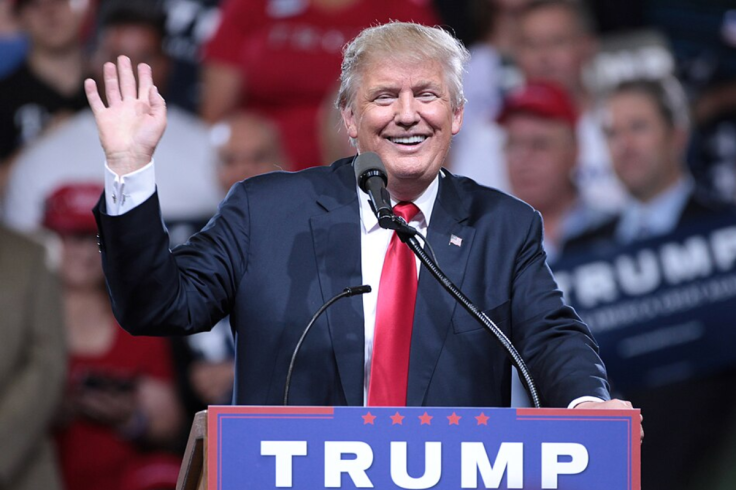
Donald Trump has rejected suggestions that Iranian hackers were behind a wave of cyberattacks on US water systems this week, instead alleging that Minnesota and its governor, Tim Walz, were responsible.
At least seven states have reported cyberattacks disrupting water or wastewater operations since Monday, with federal agencies still investigating a possible Iran link. Trump used a televised Cabinet meeting at Camp David on Friday to dismiss that theory outright.
'I Don't Think There Was an Iranian Cyberattack'
'I think that Minnesota is behind it,' Trump said. 'You know who's behind it? Minnesota. Because they're grossly incompetent. I think the governor's behind it. I don't think there was an Iranian cyberattack. I think that Minnesota ought to get its act together.'
He went further, dismissing the Iran theory as implausible. 'They like to say it was Iran. Iran should be so lucky. Iran's got bigger problems than worrying about Minnesota,' he said.
Walz Blames DOGE Cuts to Cybersecurity Agency
Walz responded directly to the president on X, rejecting the claim that Minnesota was responsible and instead pointing to federal budget cuts. Walz did not provide evidence to support the claim that DOGE cuts were directly responsible for the specific vulnerabilities exploited in this week's attacks.
'DOGE took an ax to CISA and left the U.S. exposed to cyber attacks,' he wrote. 'Thankfully, our experts in Minnesota were able to identify the vulnerability quickly and work with local communities to stop it.'
DOGE took an axe to CISA and left the U.S. exposed to cyber attacks. Thankfully, our experts in Minnesota were able to identify the vulnerability quickly and work with local communities to stop it.
— Governor Tim Walz (@GovTimWalz) July 31, 2026
CISA Confirms Significant Increase in Cyber Threat Activity Targeting Water Systems
The Cybersecurity and Infrastructure Security Agency (CISA) said it is 'observing a significant increase in cyber threat actors targeting programmable logic controllers in the Water and Wastewater Systems sector.' The agency said hackers had modified passwords to lock operators out of systems and changed IP addresses on affected controllers.
More than 30 community water systems in Minnesota reported disruptions, while Michigan confirmed a smaller number of incidents. Dale George, communications director for Michigan's environment department, said that 'all systems continued to operate safely' and there were 'no known impacts that posed a public health concern.'
Braham Mayor Says Officials Pretty Sure It Is Iran
Away from the political sparring, local officials in Minnesota say they have been given a clearer private picture than the public dispute suggests. Braham Mayor Nate George said that state and federal investigators believe Iranian actors are responsible, even though they have been reluctant to confirm this publicly. George, speaking as a local official, said he had been briefed by state and federal investigators, though he acknowledged they had not made any formal attribution on the record.
'We're getting bits and pieces of information from the state of Minnesota and the FBI,' he said. 'They are pretty sure it's Iranian actors,' though officials have stopped short of saying so on the record. The mayor's comments offer a rare public counterpoint to the president's claims, but the lack of on-record confirmation from federal investigators means the attribution question remains unresolved.
The dispute matters beyond party politics because it plays out against a live federal investigation into an attack on critical infrastructure, at a moment when the US and Iran remain in active conflict. Iranian-linked groups have targeted American water systems before, including a 2023 campaign against Israeli-made controllers that prompted congressional demands for a Justice Department investigation. If a president publicly waves away a suspected foreign attack on infrastructure that supplies drinking water to millions, it risks complicating the public's ability to judge how serious the threat actually is, and puts pressure on state officials to defend their own competence rather than focus on the response.