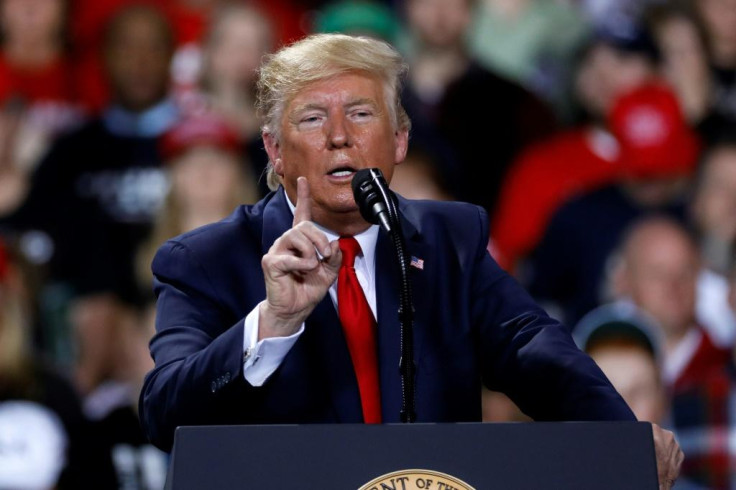
Donald Trump was branded a 'liar-in-chief' on Thursday after insisting he had no prior knowledge of his family's reported $500 million cryptocurrency haul, during a combative Oval Office interview at the White House. The clash came as Trump defended a new digital asset venture linked to his sons and their family business, following the release of financial disclosure forms showing vast earnings from the crypto sector.
Trump's latest disclosure, published on Tuesday, listed more than $500 million in income from World Liberty Financial, a cryptocurrency platform he co-founded with his sons Donald Trump Jr and Eric Trump. The scale of the windfall has raised awkward questions about conflicts of interest at the very top of US politics, and whether the Trump family is using the presidency to cash in on speculative financial products.
Donald Trump Pressed Over Crypto Millions
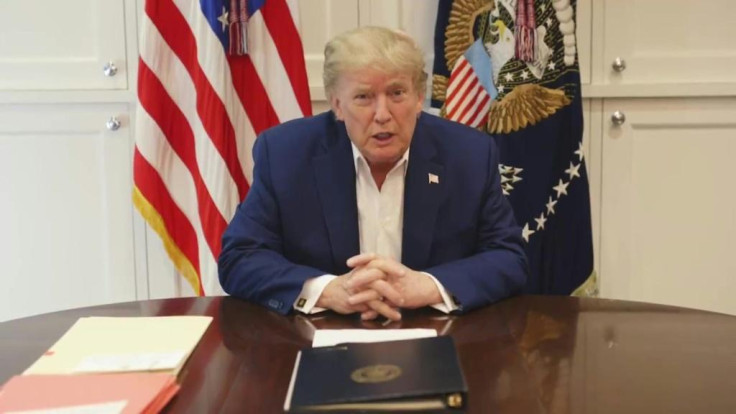
Sitting across from long-time business journalist Joe Kernen, Trump was forced to confront those questions head-on. Kernen noted that presidents and vice presidents are largely exempt from the strict conflict-of-interest laws that constrain other federal officials, but argued there is still a basic expectation that they steer clear of anything that looks like self-dealing.
He then zeroed in on what he called an 'outsized' crypto sum, asking whether Trump knew his family business would be making such a large move into digital assets. Rather than answering directly, Trump tried to widen the lens, folding crypto into a familiar narrative about American technological dominance and competition with China.
'Well, I was here before, I was there before I was in office, but the way I view crypto's a little differently, we have to be at the top, otherwise China's going to take it over,' Trump began, quickly shifting into a monologue about artificial intelligence and global rivalry.
He boasted that the US was 'leading substantially in AI over China and everybody else,' then launched into an anecdote about a recent meeting with Chinese President Xi Jinping, claiming Xi had praised him for reviving what Trump described as a formerly 'dead' country. Throughout, Kernen tried to pull him back to the specific question of the family's crypto venture and the financial disclosures now on the public record.
When Kernen finally pressed again, Trump gave a one-word denial. Asked if he knew about the crypto ventures tied to his family, he answered: 'No.' Almost in the same breath, he added that even if he had known, it would not have been improper. 'By the way, I could know about it,' he said, before insisting: 'I didn't, I mean, there's nothing illegal, there's nothing wrong with it. I could know.'
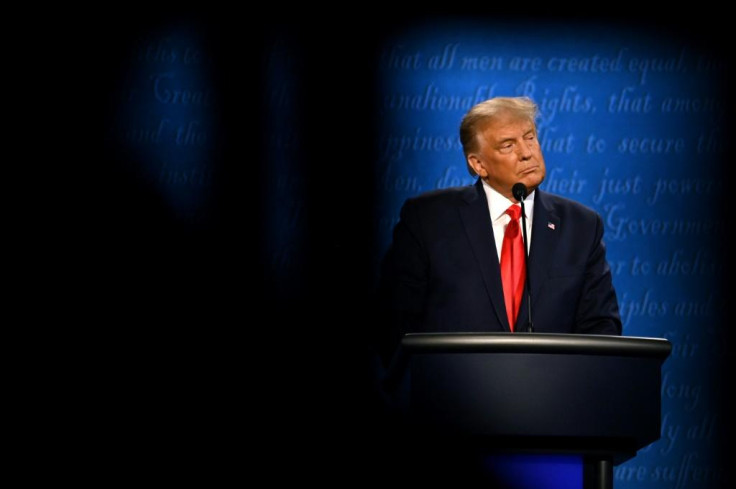
The answer was technically careful, but it did little to dampen online suspicion. Within hours, a political commentator on X, formerly Twitter, had clipped the exchange and labelled Trump 'liar-in-chief,' accusing him of dodging basic questions over a vast personal gain.
Nothing in the public record so far independently verifies whether Trump was or was not briefed on the timing or structure of the World Liberty Financial project before it launched. His denial has not been backed up by separate documentation or testimony. Without that, much of the argument is running on political instinct and partisan trust, and should be treated with a degree of caution.
Crypto Windfall Deepens Scrutiny Of Donald Trump
As Trump pushed back, he framed the controversy less as a question of ethics than as an example of what he sees as relentless scrutiny of his family. He said he felt 'bad' for his sons, arguing that almost any investment they make is instantly recast as a potential conflict because of their surname and his office.
'Almost anything they do... they have inside information,' Trump complained, suggesting critics assume his children are trading off confidential knowledge of his policies. He said he actively tells them to 'stay away' from as much business activity as possible, though the newly disclosed figures for World Liberty Financial suggest the family has not withdrawn from high-stakes ventures altogether.
The filings list more than $500 million in income from the crypto platform, positioning it as one of the most lucrative projects associated with the Trump brand. The disclosures do not spell out who put in money when, or how profits have been distributed between Trump and his sons, and there is no indication that regulators have opened a formal investigation. At this stage, the debate is largely playing out in the court of public opinion.
Kernen, for his part, repeatedly returned to the central point that presidents are held to a different standard, even without explicit legal prohibitions. Viewers watching the back-and-forth were left with two competing narratives: a president presenting himself as an aggressive champion of US tech leadership, and a businessman-politician whose family has quietly made a fortune from a speculative asset class while he sits in the Oval Office.
Until further documents emerge or an official body weighs in, the real extent of Trump's involvement in the $500 million crypto venture remains contested, and the 'liar-in-chief' label is, for now, a political epithet rather than a proven fact.